Commercial solar is one of the highest-returning capital investments available to Colorado businesses in 2026. The combination of falling panel prices, generous federal tax incentives, excellent Colorado sunshine, and rising electricity rates creates a financial proposition that most businesses cannot afford to ignore.
At ProGreen Solar, we have designed and installed commercial solar systems for offices, warehouses, retail centers, restaurants, and industrial facilities across Colorado. The economics are compelling: most commercial installations achieve payback in three to seven years and generate returns of 15 to 25 percent IRR over the system's 30-year life.
This guide covers everything Colorado business owners need to know about commercial solar — from system sizing and costs to the powerful tax benefits that make commercial solar one of the best investments available.
Commercial Solar System Sizes and Costs
Commercial solar systems range from small rooftop arrays for individual businesses to large installations spanning entire warehouse roofs or ground-mounted arrays on adjacent land.
System Size Ranges
| Business Type | Typical System Size | Annual Production | Roof/Land Needed |
|---|---|---|---|
| Small office | 15-30 kW | 22,500-48,000 kWh | 900-1,800 sq ft |
| Restaurant/retail | 25-75 kW | 37,500-120,000 kWh | 1,500-4,500 sq ft |
| Medium office building | 50-200 kW | 75,000-320,000 kWh | 3,000-12,000 sq ft |
| Warehouse/industrial | 100 kW - 1 MW | 150,000-1,600,000 kWh | 6,000-60,000 sq ft |
| Large commercial campus | 500 kW - 5 MW+ | 750,000-8,000,000+ kWh | Ground mount or multiple roofs |
Installed Costs (2026)
Commercial solar costs per watt are significantly lower than residential due to economies of scale:
| System Size | Cost per Watt | Total Installed Cost |
|---|---|---|
| 25 kW | $2.20-$2.50/W | $55,000-$62,500 |
| 50 kW | $2.00-$2.30/W | $100,000-$115,000 |
| 100 kW | $1.80-$2.10/W | $180,000-$210,000 |
| 250 kW | $1.60-$1.90/W | $400,000-$475,000 |
| 500 kW | $1.50-$1.80/W | $750,000-$900,000 |
| 1 MW | $1.40-$1.70/W | $1,400,000-$1,700,000 |
These are pre-incentive costs. After the Investment Tax Credit and accelerated depreciation, net costs drop by 50 to 65 percent. We will cover the tax benefits in detail below.
The Commercial Solar Tax Benefit Stack
The financial case for commercial solar rests heavily on two powerful federal tax incentives that, combined, can reduce the net cost of a system by more than half.
1. Investment Tax Credit (ITC) — 30 Percent
The federal ITC provides a dollar-for-dollar tax credit equal to 30 percent of the total installed system cost. For a $200,000 commercial system, the ITC is worth $60,000 — not a deduction, but a direct credit against federal tax liability.
Key ITC details for commercial systems:
- 30 percent base rate for systems under 1 MW or meeting prevailing wage/apprenticeship requirements
- Systems 1 MW and above must meet prevailing wage and apprenticeship requirements for the full 30 percent (otherwise 6 percent base rate)
- Battery storage also qualifies for the ITC when paired with solar
- Credit can be carried forward for up to 22 years if tax liability is insufficient in year one
- Transferability: under the Inflation Reduction Act, the ITC can be sold to another taxpayer
Bonus adders:
- Domestic content bonus: Additional 10 percent (40 percent total) for systems using specified percentages of American-made components
- Energy community bonus: Additional 10 percent (40 percent total) for systems in communities with closed coal mines or plants
See our detailed guide on the Inflation Reduction Act and solar for complete ITC rules.
2. MACRS Depreciation — 5-Year Accelerated Schedule
The Modified Accelerated Cost Recovery System allows businesses to depreciate their solar investment over just five years, generating substantial tax deductions that reduce federal and state income tax liability.
For 2026, bonus depreciation allows businesses to deduct 60 percent of the depreciable basis in year one, with the remainder spread over the following four years using the standard MACRS schedule.
Important: The depreciable basis is reduced by half the ITC amount. So for a $200,000 system with a $60,000 ITC, the depreciable basis is $200,000 - $30,000 = $170,000.
For a detailed walkthrough of the MACRS calculation, see our MACRS depreciation guide.
Combined Tax Benefit Example
Here is the complete tax benefit stack for a $200,000 commercial solar system:
| Benefit | Amount | Timing |
|---|---|---|
| Investment Tax Credit (30%) | $60,000 | Year 1 tax filing |
| MACRS Year 1 (60% bonus) | $102,000 deduction = $24,480 tax savings* | Year 1 |
| MACRS Years 2-5 | $68,000 deduction = $16,320 tax savings* | Years 2-5 |
| Total tax benefit | $100,800 | Over 5 years |
*Assuming 24% combined federal and state effective tax rate on the deductions.
Net system cost: $200,000 - $100,800 = $99,200 — a 50 percent reduction.
For businesses in higher tax brackets or those qualifying for bonus ITC adders, the net cost can drop even further. Some businesses achieve 55 to 65 percent total cost reduction through the combined ITC and MACRS benefits.
Electricity Savings Analysis
The ongoing savings from reduced electricity purchases compound the tax benefits into a powerful financial return.
Commercial Electricity Rates in Colorado
Colorado commercial electricity rates vary by utility and rate class:
| Utility | Rate Type | Approximate Rate |
|---|---|---|
| Xcel Energy | Small commercial | $0.10-$0.14/kWh + demand |
| Xcel Energy | Large commercial | $0.07-$0.11/kWh + demand |
| Colorado Springs Utilities | Commercial | $0.09-$0.13/kWh + demand |
| Fort Collins Utilities | Commercial | $0.08-$0.12/kWh + demand |
Commercial rates include both energy charges (per kWh) and demand charges (per kW of peak demand). Solar directly reduces energy charges and, when paired with battery storage, can significantly reduce demand charges.
Savings Example: 100 kW System
For a Colorado business installing a 100 kW commercial solar system:
| Parameter | Value |
|---|---|
| System size | 100 kW |
| Annual production | 160,000 kWh |
| Installed cost | $195,000 |
| ITC (30%) | -$58,500 |
| MACRS tax savings (5-year) | -$32,760 |
| Net cost after all tax benefits | $103,740 |
| Annual energy savings | $17,600 (at $0.11/kWh) |
| Annual demand charge savings | $2,400 (with battery) |
| Total annual savings | $20,000 |
| Simple payback (net cost) | 5.2 years |
| 25-year total savings | $700,000+ (with rate increases) |
After payback, the system generates essentially free electricity for another 20 to 25 years — with total returns exceeding $600,000 over the system's lifetime.
Demand Charge Reduction
For many commercial customers, demand charges represent 30 to 50 percent of their total electricity bill. These charges are based on the highest 15-minute power draw during the billing period and can range from $10 to $25 per kW.
Solar alone has limited impact on demand charges because peak demand often occurs in the late afternoon or evening when solar production is declining. However, solar combined with battery storage can dramatically reduce demand charges through peak shaving.
A battery system charges from solar during the day and discharges during peak demand periods, shaving the demand peak and reducing the billed demand. For a business with a 100 kW peak demand, shaving 30 to 50 kW of peak can save $300 to $1,250 per month.
Case Study Examples
Case Study 1: Denver Office Building
- Business: Professional services firm, 15,000 sq ft
- System: 60 kW rooftop
- Cost: $132,000 installed
- Net cost after ITC + MACRS: $62,800
- Annual savings: $12,500
- Payback: 5.0 years
- 25-year ROI: 680%
Case Study 2: Colorado Springs Retail Center
- Business: Multi-tenant retail, 40,000 sq ft
- System: 150 kW rooftop
- Cost: $285,000 installed
- Net cost after ITC + MACRS: $138,000
- Annual savings: $27,000
- Payback: 5.1 years
- 25-year ROI: 540%
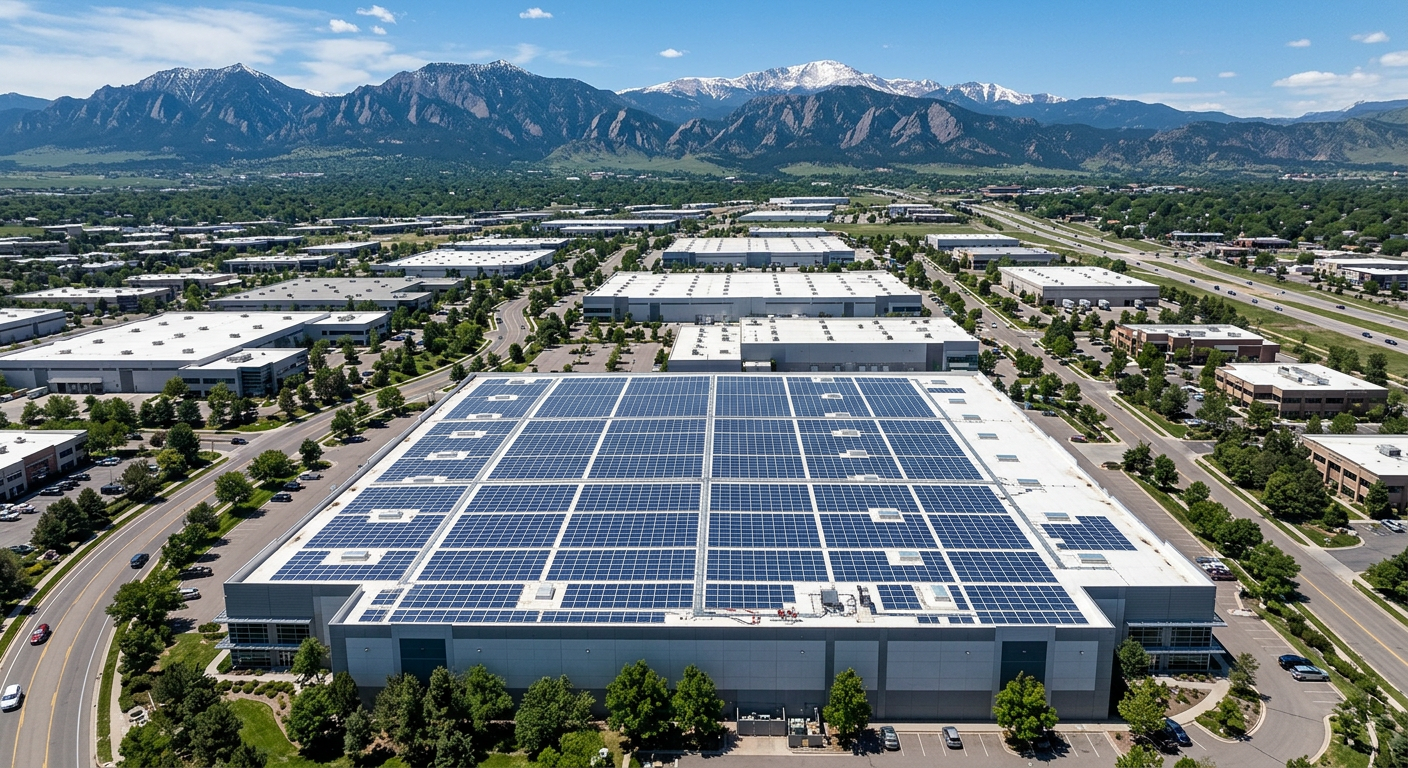
Case Study 3: Boulder Manufacturing Facility
- Business: Light manufacturing, 60,000 sq ft
- System: 300 kW rooftop + ground mount
- Cost: $510,000 installed
- Net cost after ITC + MACRS: $241,000
- Annual savings: $52,000
- Payback: 4.6 years
- 25-year ROI: 620%
Roof Considerations for Commercial Buildings
Commercial roofs present both advantages and challenges for solar:
Advantages
- Large, flat surfaces provide ample space for solar arrays with minimal shading
- Commercial roof structures are typically engineered for higher loads than residential
- Flat roofs allow optimal tilt angles using ballasted or attached racking systems
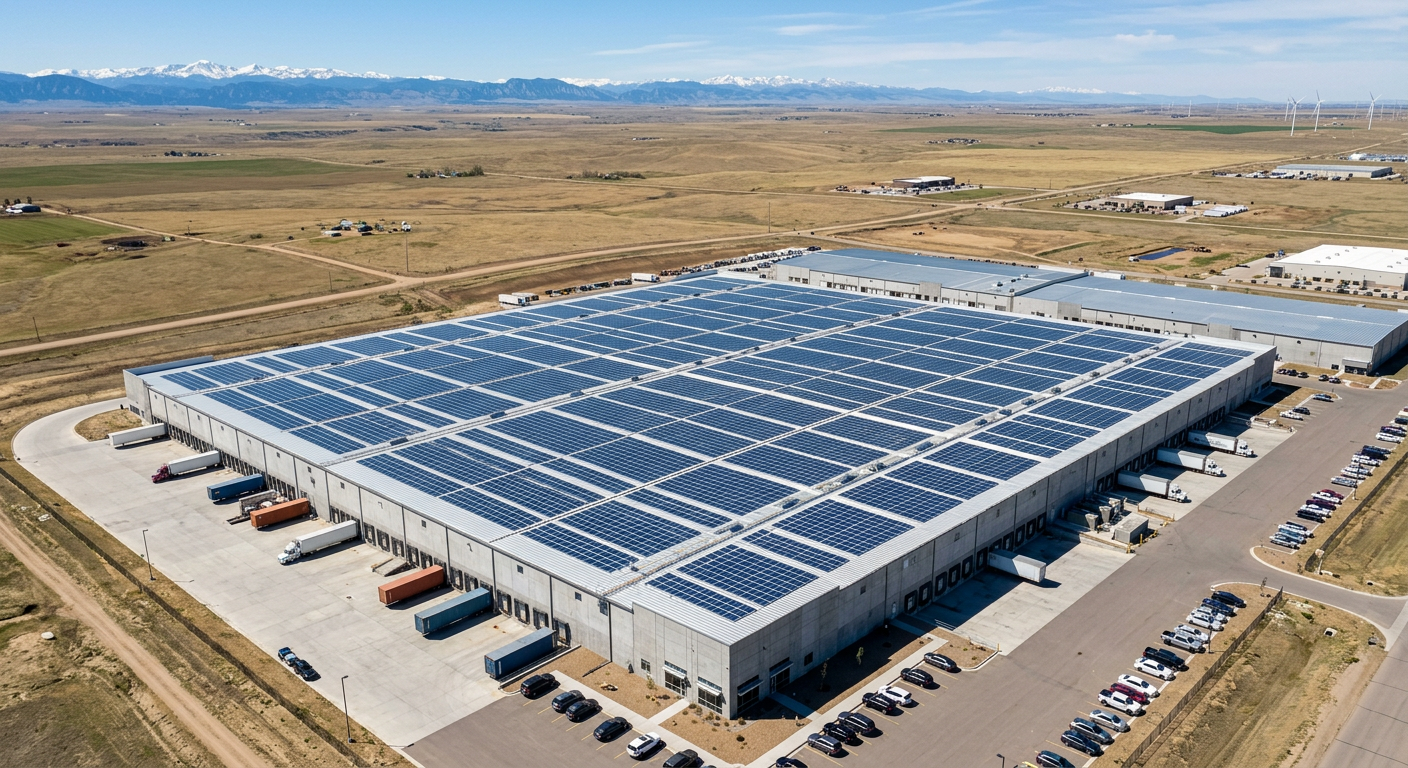
- Industrial and warehouse roofs can accommodate very large systems (100 kW to 1 MW+)
Challenges
- Roof condition must support 25+ years of solar. If the roof needs replacement within 10 years, it should be re-roofed before solar installation
- Roof penetrations — some building owners prefer ballasted (non-penetrating) mounting systems to preserve roof warranties
- Structural analysis — older buildings may need structural reinforcement to support panel weight (3 to 5 pounds per square foot)
- Roof obstructions — HVAC units, skylights, and other rooftop equipment reduce usable space
At ProGreen Solar, our engineering team conducts thorough structural and roof condition assessments before every commercial installation to ensure the system and roof perform optimally together. For large flat-roof systems, see our specialized guide on solar for warehouses and industrial buildings.
Financing Options for Commercial Solar
Colorado businesses have several pathways to finance commercial solar:
Cash Purchase
- Highest total ROI (no interest costs)
- Captures full ITC and MACRS benefits
- Best for businesses with available capital and sufficient tax liability
Commercial Solar Loan
- Preserve capital while still capturing ITC and MACRS
- Loan payments often less than current electricity costs (cash-flow positive)
- Terms typically 7 to 15 years at 5 to 8 percent interest
Power Purchase Agreement (PPA)
- Third party owns the system and sells electricity to you at a fixed rate
- No upfront cost and no maintenance responsibility
- Typically 15 to 25 percent savings versus utility rates
- Third party captures the tax benefits
- Best for nonprofits and businesses with low tax liability
Operating Lease
- Off-balance-sheet financing
- Fixed monthly payments, typically below current electricity costs
- Lessor captures tax benefits
For most profitable businesses with adequate tax liability, a cash purchase or loan delivers the best financial outcome because the ITC and MACRS benefits are so valuable. Learn more about solar financing structures.
The Marketing Value of Solar
Beyond direct financial returns, commercial solar provides marketing and brand benefits:
- Customer appeal: 77 percent of consumers say sustainability influences purchasing decisions (NielsenIQ 2024)
- Employee recruitment: Green initiatives help attract and retain talent, particularly younger workers
- Regulatory preparedness: ESG reporting, carbon disclosure, and sustainability requirements are expanding
- Visible commitment: Rooftop solar is a daily, visible demonstration of environmental responsibility
- Energy independence story: Reduced vulnerability to utility rate increases resonates with stakeholders
Getting Started
The commercial solar process at ProGreen Solar follows these steps:
- Initial consultation — We review your electricity bills, business goals, and roof/site conditions
- Site assessment — Engineering team evaluates structural capacity, shading, electrical infrastructure
- System design — Custom design optimized for your roof, usage pattern, and financial objectives
- Financial modeling — Detailed cash flow projections including ITC, MACRS, energy savings, and demand charge reduction
- Permitting and utility approval — We handle all paperwork and interconnection agreements
- Installation — Professional installation with minimal business disruption
- Commissioning and monitoring — System activation, testing, and ongoing performance monitoring
Take the Next Step
Commercial solar is a rare investment that reduces costs, provides tax benefits, hedges against energy price increases, and strengthens your brand — all while reducing your environmental footprint. The financial window is particularly attractive right now with the 30 percent ITC and bonus depreciation.
Call ProGreen Solar at (303) 484-1410 for a free commercial solar consultation, or use our solar calculator to get a preliminary estimate. We will analyze your electricity costs, model the tax benefits for your specific tax situation, and design a system that maximizes your return on investment.