Battery storage is the fastest-growing segment of the residential solar market. About one in four new residential solar installations in the United States now includes a battery, up from fewer than one in ten just three years ago. Falling battery costs, improving technology, and growing concerns about grid reliability are driving adoption.
But just because batteries are popular does not mean every solar homeowner needs one. At $8,000 to $15,000+ (before tax credits), a battery is a significant investment. This guide provides an honest analysis of when batteries make financial and practical sense — and when your money is better spent elsewhere.
What a Solar Battery Does
Before evaluating whether you need a battery, let's clarify what it actually does in a residential solar system:
Energy Storage
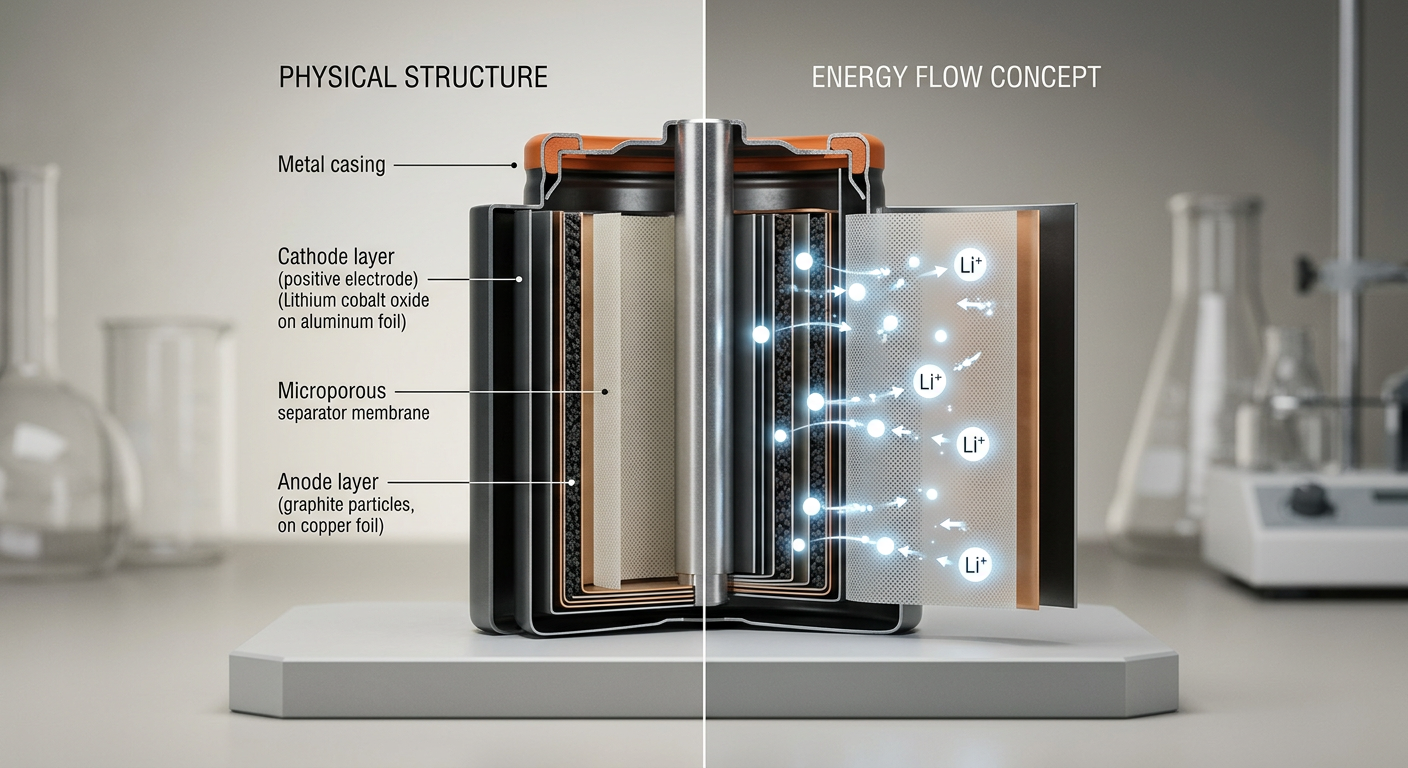
A battery stores electricity generated by your solar panels for later use. Without a battery, excess solar production during the day is exported to the grid through net metering. With a battery, you can store that excess energy and use it in the evening, at night, or whenever you need it.
Backup Power
During a grid outage, a battery keeps your lights on (and potentially your refrigerator, furnace, and other critical loads). Without a battery, even a solar-equipped home loses power during outages because grid-tied inverters are required to shut down for safety. The exception is the Enphase IQ8 microinverter with its Sunlight Backup feature, which provides limited daytime-only backup without a battery.
Time-of-Use Rate Arbitrage
If your utility uses time-of-use (TOU) rates with different prices at different times of day, a battery lets you store cheap solar energy produced during midday and use it during expensive peak-rate evening hours. This maximizes the value of your solar production.
For a broader understanding of battery technology and options, see our home battery storage guide.
The Financial Case for Batteries
Cost Overview
Current battery costs for popular residential systems:
| Battery | Capacity | Installed Cost | After 30% ITC |
|---|---|---|---|
| Tesla Powerwall 3 | 13.5 kWh | $12,000-$15,000 | $8,400-$10,500 |
| Enphase IQ 5P (x1) | 5 kWh | $5,000-$6,500 | $3,500-$4,550 |
| Enphase IQ 5P (x2) | 10 kWh | $9,500-$12,000 | $6,650-$8,400 |
| Generac PWRcell | 9-18 kWh | $10,000-$20,000 | $7,000-$14,000 |
The 30 percent federal tax credit applies to battery storage systems, whether installed with new solar or added later. This significantly improves battery economics.
Scenario 1: Time-of-Use Rate Arbitrage
If you are on a TOU rate plan (like Xcel Energy's RE-TOU), the math looks like this:
Assumptions:
- Peak rate: $0.22/kWh (3 PM to 7 PM weekdays)
- Off-peak rate: $0.09/kWh
- Rate differential: $0.13/kWh
- Battery capacity: 13.5 kWh (Powerwall)
- Daily cycling: Charge during off-peak solar hours, discharge during peak
- Cycling days per year: 300 (some days are cloudy or you are away)
Annual arbitrage savings: 13.5 kWh x $0.13/kWh x 300 days = $526.50/year
Payback period (after tax credit): $9,100 / $526.50 = 17.3 years
This is longer than the battery's 10-year warranty. From a pure TOU arbitrage standpoint, the math is challenging. However, if electricity rates increase by 3 to 4 percent per year (a reasonable assumption), the annual savings grow over time, potentially bringing the payback closer to 12 to 14 years.
Scenario 2: Avoiding Net Metering Export Penalties
In some utility territories, excess solar exports are credited at less than the full retail rate. If your utility pays you only $0.04/kWh for exports but charges you $0.15/kWh for imports, every kWh you store and self-consume instead of exporting saves you $0.11.
For a 13.5 kWh battery with 300 daily cycles per year:
Annual self-consumption savings: 13.5 kWh x $0.11 x 300 = $445.50/year
Currently, Xcel Energy credits exports at the full retail rate, making this scenario less relevant for most Colorado homeowners. But net metering policies are subject to change, and a battery provides insurance against future policy shifts.
Scenario 3: Demand Charge Reduction
Some utilities (including Colorado Springs Utilities) include demand charges — fees based on your peak electricity demand in a billing period. A battery can reduce your peak demand by discharging during your highest-usage periods.
If a battery reduces your monthly demand charge by $15 to $30:
Annual demand charge savings: $180-$360/year
This adds to other savings (TOU arbitrage, self-consumption) for a combined financial benefit.
The Honest Assessment
From a pure financial return standpoint, batteries are a marginal investment for most grid-connected Colorado homeowners under current rate structures. The payback period typically exceeds 12 to 15 years, which is longer than most battery warranties.
However, the financial case improves significantly when:
- Electricity rates increase faster than inflation (likely)
- Net metering credits decrease (possible in the future)
- TOU rate differentials widen (probable as grid stress increases)
- You combine financial savings with backup power value (see below)
The Backup Power Case
The financial analysis above ignores what many homeowners consider the battery's most important function: keeping the lights on during power outages.
Quantifying Outage Costs
Power outages cost money and cause stress:
- Spoiled food: A multi-day outage can cost $300 to $800+ in spoiled refrigerator and freezer contents
- Hotel stays: If your home becomes uninhabitable (no heat in winter, no cooling in extreme summer heat), temporary lodging costs $100 to $200+ per night
- Lost work: If you work from home and cannot during an outage, the income impact can be substantial
- Sump pump failure: In areas with high water tables, a power outage disabling your sump pump can cause thousands in water damage
- Medical equipment: CPAP machines, oxygen concentrators, and refrigerated medications require power
Colorado-Specific Outage Risks
Colorado homeowners face several outage scenarios:
Severe thunderstorms: Summer storms can knock out power for hours to days. The most severe storms affect wide areas, overwhelming utility restoration crews.
Winter storms: Heavy snow and ice can bring down power lines. The December 2024 winter storm left thousands without power for over 48 hours along the Front Range.
Wildfire-related shutoffs: Colorado utilities have begun implementing Public Safety Power Shutoffs (PSPS) during extreme fire weather. These planned outages can last 12 to 48+ hours.
Aging grid infrastructure: As electricity demand grows (from EVs, heat pumps, and general population growth), grid stress increases, potentially leading to more frequent outages.
Backup Power Value
If you assign a monetary value to backup power, the battery calculation shifts dramatically. Even a modest value of $500 to $1,000 per year for backup peace of mind, combined with $400 to $600 in energy savings, brings total annual battery value to $900 to $1,600.
At $1,200 per year in combined value:
Payback period (after tax credit): $9,100 / $1,200 = 7.6 years
That is within the battery's warranty period and represents a reasonable investment.
When Batteries Make Sense
Strong Candidates for Battery Storage
Homeowners who experience frequent outages. If you lose power several times per year or have experienced extended outages, the backup value alone may justify a battery.
Homeowners with medical needs. If anyone in your household depends on powered medical equipment, battery backup is not a luxury — it is a necessity.
Homeowners on TOU rates with high evening usage. Large homes with electric vehicles, heat pumps, and high evening consumption benefit most from TOU arbitrage.
Homeowners in wildfire-risk areas. If your area is subject to PSPS events, battery storage provides critical power during planned shutoffs.
Homeowners who want energy independence. If reducing your dependence on the grid is a personal priority (regardless of pure financial return), batteries deliver meaningful independence.
Homeowners planning for future rate changes. If you expect net metering policy changes or aggressive rate increases, a battery provides a hedge against future utility cost uncertainty.
Weak Candidates for Battery Storage
Budget-constrained homeowners. If your primary goal is the fastest solar payback and lowest monthly payment, putting the battery budget into additional solar panels or a better panel/inverter combination may deliver more financial value.
Homeowners with reliable grid service. If you live in an area with very few outages and do not anticipate reliability issues, the backup value is minimal.
Homeowners on favorable flat-rate net metering. If your utility credits solar exports at the full retail rate with no TOU differential, the financial incentive for a battery is limited.
Homeowners who are not frequently home. If your home is unoccupied during outages (vacation home, frequent traveler), the backup value is reduced.
Grid-Tied Battery vs. Off-Grid
Grid-Tied Battery
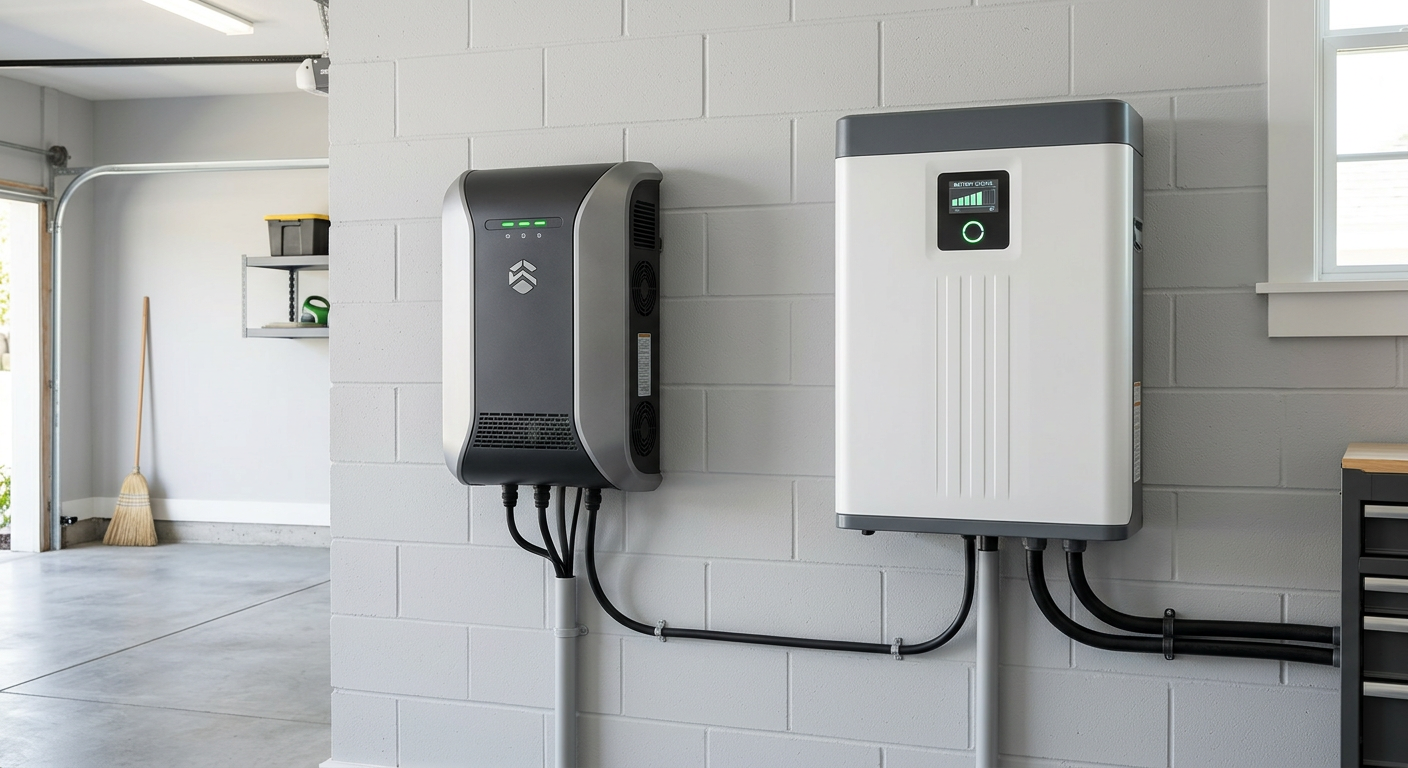
Most residential batteries are grid-tied — they connect to both your solar panels and the utility grid. In normal operation, the battery charges from solar and discharges to reduce your grid consumption. During outages, the battery isolates from the grid and powers your home.
Grid-tied batteries are smaller and less expensive than off-grid systems because the grid serves as an unlimited backup. You do not need enough battery to cover several consecutive cloudy days — you just need enough for overnight use and outage protection.
Off-Grid Battery
Off-grid systems have no grid connection at all. The battery must store enough energy to power the home through the night and through periods of low solar production (cloudy days, winter). This typically requires 30 to 60+ kWh of battery capacity (versus 10 to 15 kWh for grid-tied), along with a backup generator.
Off-grid systems cost $40,000 to $100,000+ for the battery and generator components alone. They are practical only for remote properties where grid connection is unavailable or prohibitively expensive.
For a comparison of grid-tied and off-grid architectures, see our grid-tied vs. off-grid guide.
Sizing Your Battery
Essential Loads Only (Partial Backup)
Most homeowners start with essential loads — the circuits you absolutely need during an outage:
- Refrigerator and freezer
- Lights (selected circuits)
- Internet router and phone charging
- Garage door opener
- Gas furnace blower (if applicable)
Total continuous draw: 500-1,500 watts. A single 10 to 14 kWh battery provides 7 to 28 hours of backup for essential loads.
Whole-Home Backup
Running your entire home — including air conditioning, electric range, electric dryer, and EV charger — requires significantly more battery capacity and power output. The Tesla Powerwall 3 with its 11.5 kW continuous output can handle whole-home backup for most homes, but multiple batteries may be needed for larger homes or extended outage duration.
For detailed sizing guidance, see our whole-home vs. partial backup guide.
Our Recommendation
We believe battery storage is a smart addition for many Colorado solar homeowners — but not all. Here is our guidance:
If budget allows, we recommend including battery storage in new solar installations. The incremental cost when installed alongside solar is lower than adding a battery later, and the 30 percent tax credit applies. The combination of financial savings (even if modest), backup power value, and future rate uncertainty makes batteries a reasonable investment for most homeowners who can afford the additional cost.
If budget is tight, prioritize the solar system itself. A well-designed solar system without a battery will save you more money over 25 years than a smaller solar system with a battery. You can always add battery storage later as costs continue to fall.
Get a Battery Assessment
Ready to evaluate whether a battery makes sense for your home? Use our solar calculator to explore solar-plus-storage options, or call ProGreen Solar at (303) 484-1410 for a free consultation. We will analyze your specific electricity usage, outage history, rate structure, and backup needs to make an honest recommendation — including whether a battery is or is not worth it for your situation.