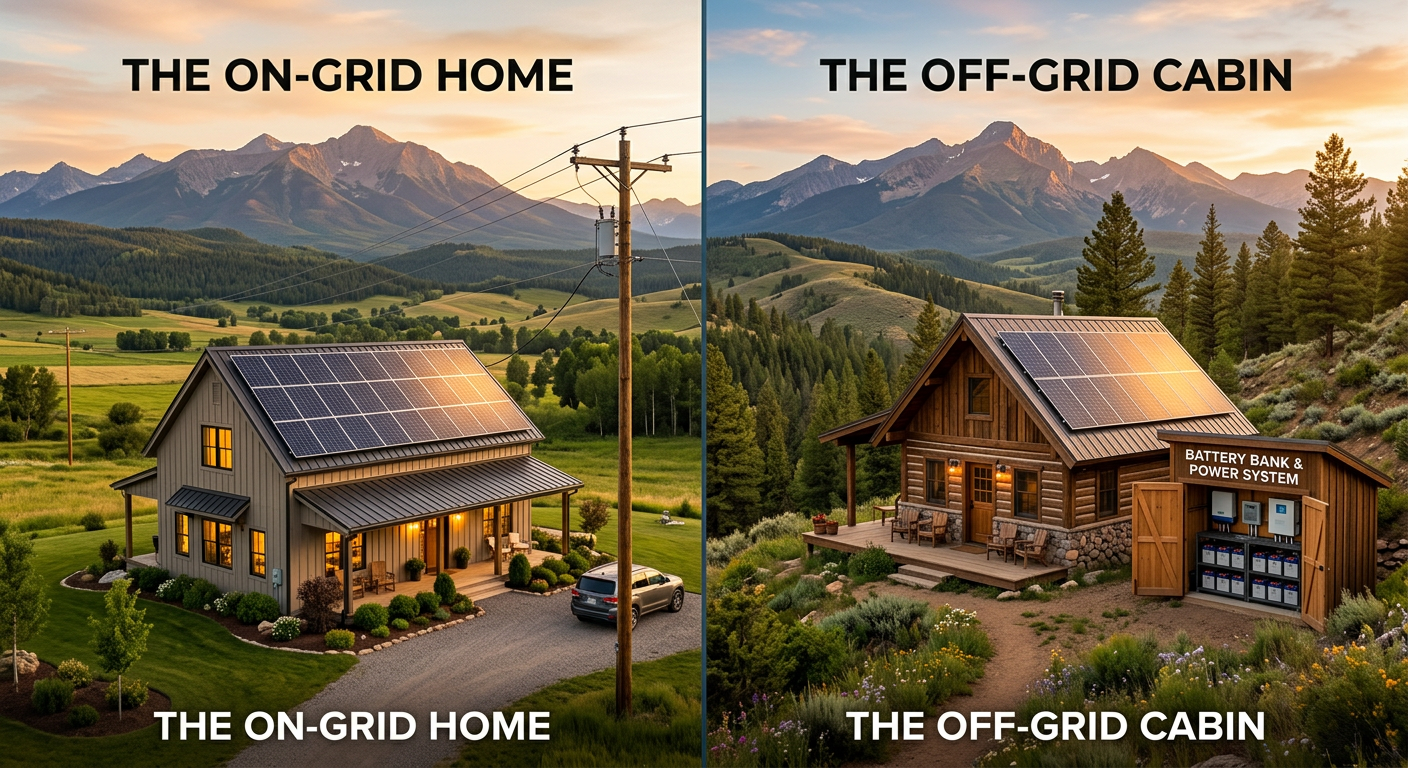
One of the first decisions you will make when going solar is how your system connects to the electrical grid. This single choice affects your system's cost, complexity, reliability, and the amount of energy independence you achieve. The three main options — grid-tied, grid-tied with battery backup, and fully off-grid — each serve different needs and budgets.
At ProGreen Solar, we install all three configurations across Colorado. In this guide, we will explain exactly how each works, what it costs, and who it is best for, so you can choose with confidence.
Understanding the Three System Types
Grid-Tied Solar (No Battery)
A grid-tied system is the most common and most affordable type of residential solar installation. It accounts for over 90 percent of all home solar systems in the United States.
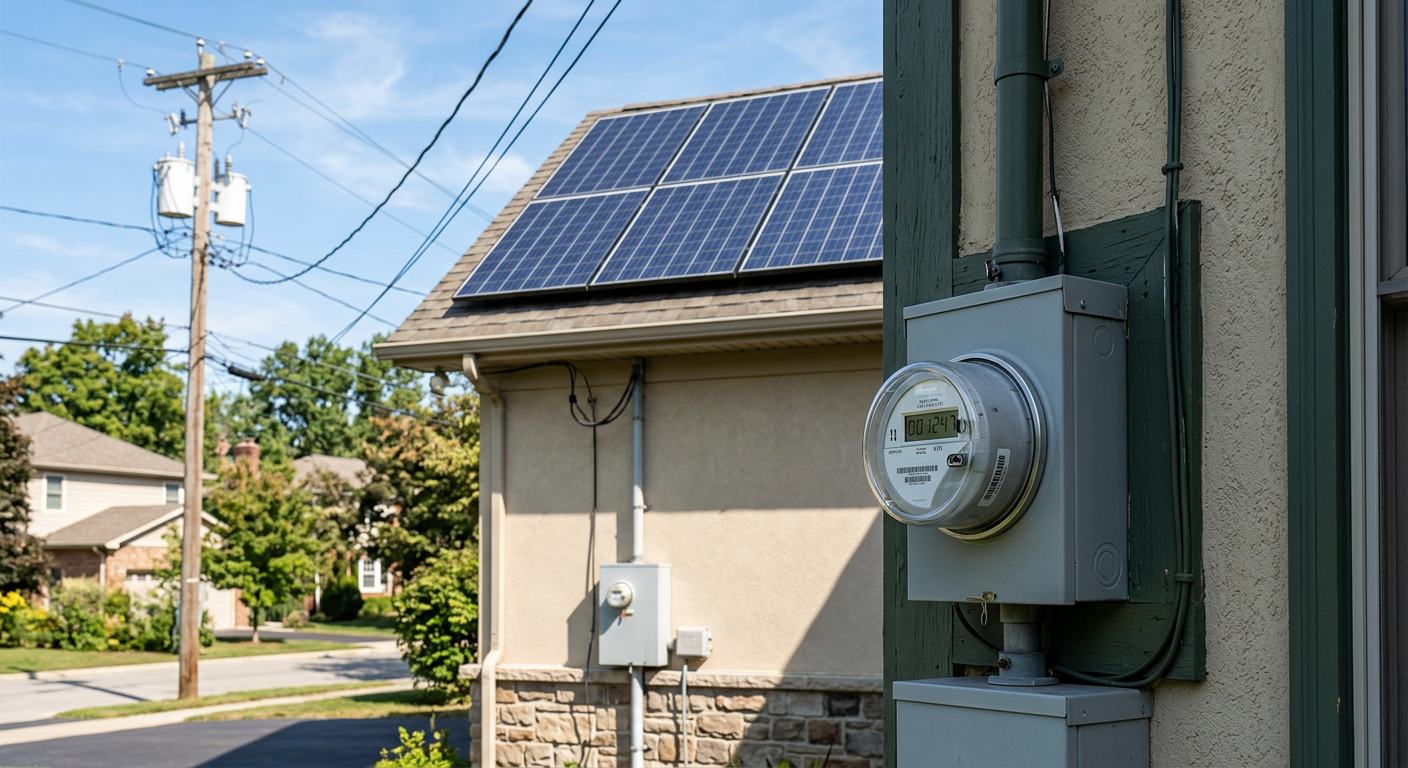
How it works: Your solar panels generate electricity during the day. When your panels produce more than your home uses, the excess is exported to the utility grid. When your panels produce less than you need (at night, during heavy cloud cover, or during peak usage), you draw electricity from the grid as usual.
The magic happens through net metering. Your utility tracks the electricity you export and gives you credits that offset the electricity you import. At the end of each billing period, you only pay for the net difference — which for many homeowners is close to zero.
Key characteristics:
- Lowest upfront cost
- Simplest system design
- Shortest payback period (typically 6-8 years in Colorado)
- Full access to net metering credits
- No backup power during grid outages (panels shut off for safety)
- No battery maintenance or replacement costs
The outage limitation: When the grid goes down, a standard grid-tied system automatically shuts off. This is a safety requirement called "anti-islanding" — it prevents your panels from sending electricity into power lines that utility workers may be repairing. This is the primary disadvantage of a basic grid-tied system.
Grid-Tied with Battery Backup (Hybrid)
A hybrid system combines grid connection with on-site battery storage. This is the fastest-growing segment of the residential solar market, and for good reason — it offers the best of both worlds.
How it works: During the day, your solar panels power your home and charge your battery. Excess production still goes to the grid for net metering credits. When the grid goes down, your system automatically disconnects from the grid and powers your home from the battery and panels. You maintain electricity for critical loads while your neighbors are in the dark.
Key characteristics:
- Moderate upfront cost (adds $8,000-$15,000 for battery)
- Backup power during outages
- Can be optimized for time-of-use rate savings
- Eligible for the 30% federal tax credit (batteries too)
- Battery typically lasts 10-15 years before replacement
- Most popular configuration for new installations in 2026
Battery options we install:
- Tesla Powerwall 3 — 13.5 kWh capacity, sleek design, excellent app ecosystem
- Enphase IQ Battery — Modular design (3.36 kWh per unit), pairs perfectly with Enphase microinverters
- SolarEdge Home Battery — Integrates seamlessly with SolarEdge inverter systems
Off-Grid Solar
A fully off-grid system has zero connection to the utility grid. Your home is entirely powered by solar panels and batteries, sometimes supplemented by a backup generator.
How it works: Your solar array charges a large battery bank during the day. The batteries power your home around the clock. You need enough panel capacity and battery storage to meet 100 percent of your energy needs, including consecutive cloudy days. A propane or diesel generator typically serves as emergency backup.
Key characteristics:
- Highest upfront cost (often 2-3x the cost of grid-tied)
- Complete energy independence
- No utility bills ever
- Requires significant battery bank (40-100+ kWh)
- Requires careful energy management
- Best for remote properties without grid access
- No net metering benefits (no grid to export to)
Cost Comparison
Here is a realistic cost comparison for a Colorado home using 10,000 kWh per year:
| System Type | Gross Cost | After 30% ITC | Monthly Savings | Payback Period |
|---|---|---|---|---|
| Grid-Tied (7 kW) | $19,600 - $22,400 | $13,720 - $15,680 | $120 - $180 | 6-8 years |
| Hybrid with Battery (7 kW + 13.5 kWh) | $29,600 - $35,400 | $20,720 - $24,780 | $120 - $180 + backup | 9-12 years |
| Off-Grid (10 kW + 60 kWh battery + generator) | $55,000 - $80,000 | $38,500 - $56,000 | $180 (avoided bill) | 15-25 years |
Note: The payback period for off-grid systems is longer because you lose the financial benefit of net metering and need significantly more equipment. However, if you are in a location without grid access, the alternative is paying $15,000 to $50,000 or more for a utility line extension — which makes off-grid solar the economically superior choice.
Deciding Factors: Which System Is Right for You?
Choose Grid-Tied If:
- You want the fastest return on investment. Without battery costs, a grid-tied system pays for itself in 6 to 8 years and then generates free electricity for 20+ more years.
- You rarely experience power outages. If your area has reliable grid power, the backup function of a battery may not justify the extra cost.
- Your utility offers strong net metering. Colorado's major utilities (Xcel Energy, United Power, and others) offer net metering that effectively makes the grid your free battery.
- You want to minimize upfront investment. Grid-tied systems cost $10,000 to $15,000 less than hybrid systems for the same panel capacity.
Choose Hybrid (Grid-Tied + Battery) If:
- You want backup power during outages. Colorado experiences occasional outages from severe storms, wildfires, and grid stress during extreme temperatures.
- Your utility uses time-of-use rates. Batteries let you store cheap daytime solar energy and use it during expensive peak evening hours, maximizing savings.
- You want maximum self-consumption. Instead of exporting cheap solar power and buying expensive grid power later, a battery lets you use more of your own electricity.
- You are concerned about future net metering changes. As net metering policies evolve, having a battery provides insurance against less favorable export rates.
- You drive an electric vehicle. A battery can store solar energy during the day and charge your EV at night, maximizing solar self-consumption.
Choose Off-Grid If:
- You have no grid access. For rural properties, cabins, or remote homes, extending utility lines can cost tens of thousands of dollars — often more than a complete off-grid solar system.
- Energy independence is a priority. If complete self-sufficiency matters to you regardless of cost, off-grid is the only option that delivers 100 percent independence.
- You are building on undeveloped land. For new construction in remote areas, designing an off-grid solar system from the start is more cost-effective than running utility lines.
Grid-Tied with Battery: The Sweet Spot for Most Homeowners
For the vast majority of Colorado homeowners, we recommend a grid-tied system with battery backup. Here is why this hybrid approach has become our most-requested configuration:
Outage Protection Is Increasingly Valuable
Colorado's grid faces growing challenges. Wildfires, severe thunderstorms, and record-breaking heat waves have led to more frequent and longer outages. A battery-backed system keeps your lights on, your refrigerator running, and your family comfortable when the grid fails.
The Economics Have Improved Dramatically
Battery prices have fallen more than 50 percent in the last five years. The Tesla Powerwall 3, for example, provides 13.5 kWh of storage — enough to power essential loads through a typical overnight period. And since batteries qualify for the 30 percent federal tax credit, the net cost of adding backup capability has reached an inflection point where it makes financial sense for most homeowners.
Time-of-Use Optimization
Several Colorado utilities are moving toward time-of-use rate structures, where electricity costs more during peak evening hours. A battery allows you to store cheap midday solar and use it during those expensive peak periods, increasing your savings beyond what net metering alone provides.
Future-Proofing Your Investment
Net metering policies are subject to change. California's transition to net billing in 2023 reduced the value of exported solar electricity by 75 percent. Having a battery ensures that even if Colorado's net metering evolves, you can still maximize the value of every kilowatt-hour your panels produce by consuming it yourself.
Off-Grid Considerations for Colorado
Colorado has unique characteristics that make off-grid solar both appealing and challenging:
The Challenges
- Winter production drop: Colorado's December solar production is roughly 40 percent of July levels. An off-grid system must be sized for the worst month, meaning significant overcapacity during summer.
- Snow coverage: Heavy snowfall can temporarily eliminate solar production. Panels need to be angled steeply enough for snow to slide off, and a backup generator provides insurance during extended storms.
- Battery performance in cold: Lithium-ion batteries lose some capacity in extreme cold. Battery enclosures with thermal management are essential at Colorado's elevations.
The Advantages
- High solar resource: Even in winter, Colorado's sunny days and high altitude provide excellent solar production compared to northern states.
- Strong mountain community: Many Colorado mountain communities have extensive off-grid experience and local expertise.
- Well-water compatibility: Off-grid solar can power well pumps, eliminating dependence on both the electrical and municipal water grids.
Making Your Decision
Here is a quick decision framework:
Step 1: Determine if you have reliable grid access. If no, off-grid is your answer.
Step 2: If you have grid access, evaluate your outage history. More than two outages per year, or outages lasting more than four hours? A battery adds meaningful value.
Step 3: Consider your budget. If upfront cost is your primary concern, start with grid-tied. You can always add a battery later — modern systems are designed for battery retrofit.
Step 4: Think about future plans. An EV purchase, a growing family, a home office that cannot lose power — these factors tip the scale toward battery backup.
What ProGreen Solar Recommends
After installing hundreds of systems across Colorado, our recommendation for most homeowners is clear: start with a grid-tied system designed for future battery expansion. This approach minimizes your upfront investment while keeping the door open for a battery when the timing is right for you.
If outage protection or time-of-use optimization is important today, we recommend going hybrid from the start. The incremental cost of adding a battery during initial installation is lower than retrofitting one later.
For our mountain and rural clients without grid access, we design comprehensive off-grid systems with generous battery banks and backup generation to handle Colorado's variable weather.
Every home is different. The best way to determine which system type is right for you is to speak with a solar professional who understands your specific situation.
Get your free personalized solar consultation or call ProGreen Solar at (303) 484-1410. We will analyze your energy usage, assess your property, and recommend the optimal system configuration for your home, budget, and goals.