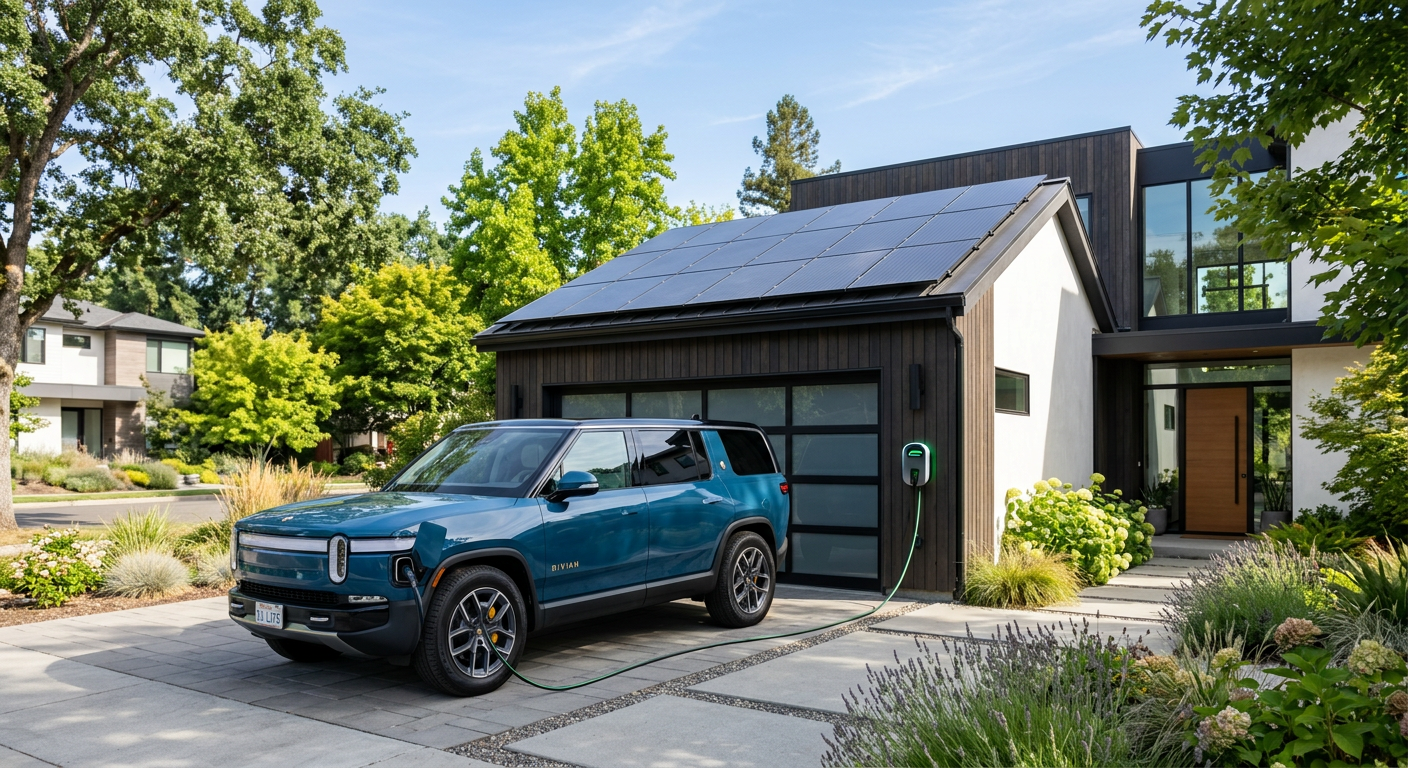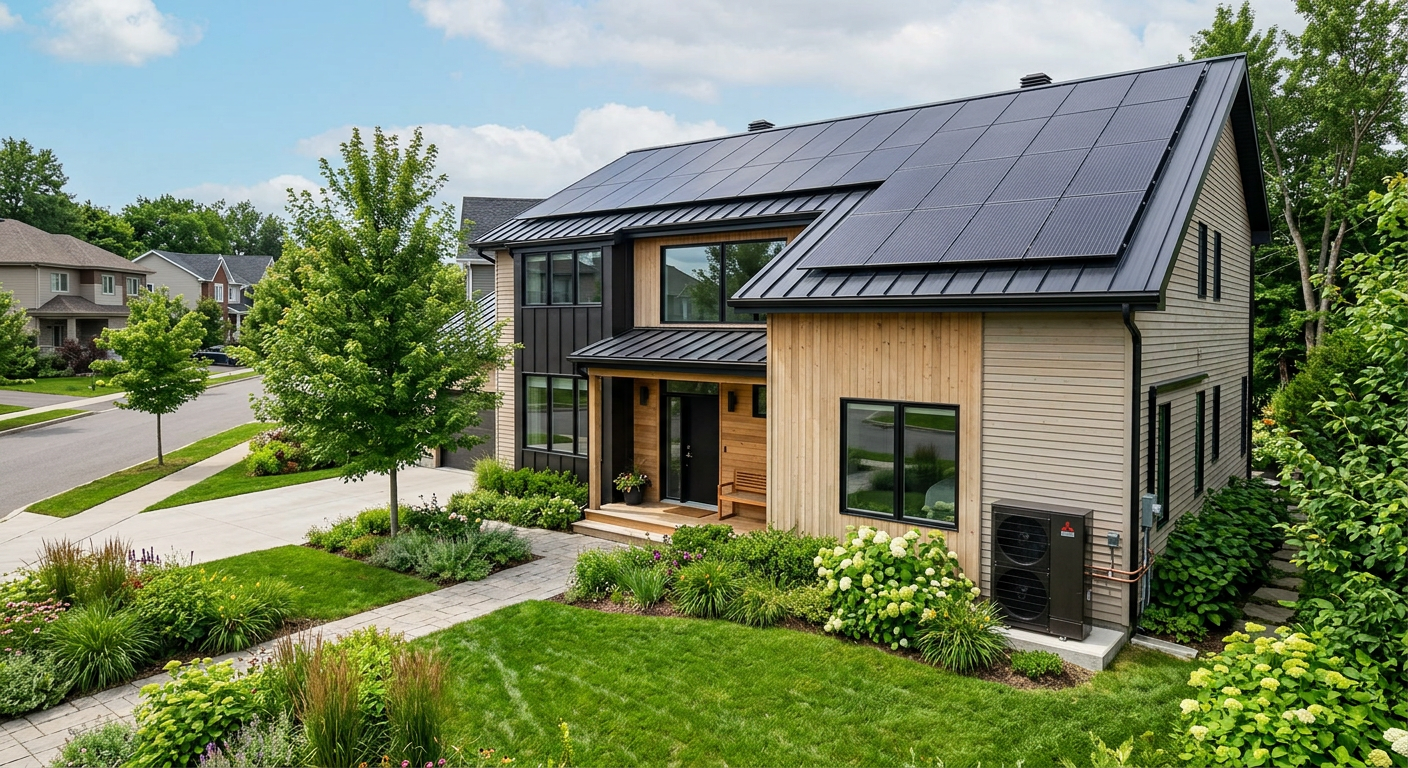
The all-electric home powered by solar panels is no longer a futuristic concept — it is happening right now across Colorado, and it represents the most cost-effective, comfortable, and environmentally sound way to heat, cool, and power a home. At the heart of this transformation is the heat pump: a technology that moves heat rather than creating it, delivering three to five times more heating energy than the electricity it consumes.
When you pair a heat pump with rooftop solar, you create a home that heats, cools, and powers itself from sunshine. No gas bills. No propane deliveries. No combustion in your living space. And in Colorado's climate — despite what skeptics claim — modern cold-climate heat pumps perform exceptionally well.
At ProGreen Solar, we are helping hundreds of Colorado homeowners make the transition to all-electric, solar-powered homes. This guide covers everything you need to know about the heat pump and solar combination.
How Heat Pumps Work
A heat pump is essentially an air conditioner that can run in reverse. In cooling mode, it moves heat from inside your home to outside. In heating mode, it moves heat from outside air into your home. Even when it is cold outside, there is still thermal energy in the air that a heat pump can capture and concentrate.
The key metric is the Coefficient of Performance (COP), which measures how many units of heating energy the heat pump delivers per unit of electricity consumed:
- Electric resistance heater: COP of 1.0 (one unit of heat per unit of electricity)
- Gas furnace: 0.80 to 0.97 efficiency (less than one unit of heat per unit of fuel)
- Standard heat pump at 47 degrees F: COP of 3.0 to 4.0 (three to four units of heat per unit of electricity)
- Cold-climate heat pump at 5 degrees F: COP of 1.5 to 2.5 (still significantly better than resistance heat)
This efficiency advantage is what makes heat pumps revolutionary. Even using grid electricity, a heat pump costs less to operate than a gas furnace in most scenarios. When powered by solar panels, the operating cost approaches zero.
Cold Climate Performance: Debunking the Myths
The most common objection we hear is: "Heat pumps don't work in Colorado winters." This was partially true 15 years ago but is completely wrong today.
Modern Cold-Climate Heat Pumps
Today's cold-climate heat pumps (also called hyper-heat or extreme-cold models) are specifically engineered for temperatures well below zero. Here is what the data shows:
| Outdoor Temperature | Heat Pump COP | Performance vs. Gas Furnace |
|---|---|---|
| 47°F (mild) | 3.5 - 4.5 | 350-450% more efficient |
| 32°F (freezing) | 2.5 - 3.5 | 250-350% more efficient |
| 17°F (cold) | 2.0 - 2.8 | 200-280% more efficient |
| 5°F (very cold) | 1.5 - 2.2 | 150-220% more efficient |
| -13°F (extreme) | 1.0 - 1.5 | Comparable to resistance heat |
The Mitsubishi Hyper-HEAT, Fujitsu XLTH, and Daikin Aurora models all maintain rated heating capacity down to -13 degrees Fahrenheit and continue operating at -22 degrees F. Denver's average January low is 16 degrees F. Even Colorado's coldest mountain communities rarely sustain temperatures below -10 degrees F for extended periods.
Real Colorado Performance Data
We have monitored dozens of cold-climate heat pump installations across Colorado's Front Range and mountain communities:
- Denver metro (5,280 ft elevation): Average seasonal COP of 2.8 to 3.2. Heat pumps maintain comfort through all but 10 to 15 hours per year below -5 degrees F.
- Boulder (5,430 ft): Average seasonal COP of 2.7 to 3.0. Excellent performance with occasional supplemental heat on the coldest nights.
- Colorado Springs (6,035 ft): Average seasonal COP of 2.5 to 2.9. Slightly lower performance due to altitude and temperature but still dramatically more efficient than gas.
- Summit County (9,000+ ft): Average seasonal COP of 2.0 to 2.5. Cold-climate models perform well; dual-fuel backup recommended for extreme cold snaps.
Even at the lowest performance levels, heat pumps deliver two units of heat for every unit of electricity — still far more efficient than any combustion-based heating system.
Types of Heat Pumps for Colorado Homes
Air-Source Heat Pumps (Most Common)
Air-source heat pumps extract heat from outdoor air and transfer it inside. They are the most affordable and practical option for most homes.
Ducted air-source systems replace your existing furnace and central air conditioner with a single unit that does both. They use your existing ductwork, making installation straightforward for homes with forced-air systems.
- Cost: $8,000 to $18,000 installed
- Best for: Homes with existing ductwork in good condition
Ductless mini-split systems consist of an outdoor compressor connected to one or more indoor air handlers. They do not require ductwork, making them ideal for homes without ducts, additions, and supplemental heating and cooling.
- Cost: $3,500 to $8,000 per zone (single zone); $12,000 to $25,000 for multi-zone whole-home systems
- Best for: Homes without ducts, room-by-room control, additions, garages
Ground-Source (Geothermal) Heat Pumps
Ground-source heat pumps use the constant temperature of the earth (50 to 55 degrees F in Colorado) rather than outdoor air as their heat source. This provides higher efficiency and consistent performance regardless of outdoor temperature.
- COP of 3.5 to 5.0 year-round, even during extreme cold
- Cost: $20,000 to $40,000 installed (including ground loop)
- Best for: New construction, large properties with land for ground loops, homeowners planning to stay long-term
Ground-source systems are more expensive upfront but deliver the best long-term economics, especially in Colorado's climate where they avoid the COP drop that air-source systems experience in extreme cold.
Heat Pump Water Heaters
Do not forget your water heater. A heat pump water heater uses the same technology to heat your domestic hot water at 60 to 70 percent less electricity than a standard electric tank.
- Cost: $1,500 to $3,000 installed
- Annual savings: $200 to $400 compared to electric resistance, $100 to $250 compared to gas
- Added benefit: dehumidifies and cools the space where it is installed (garage, basement, utility room)
Sizing Solar for an All-Electric Home
Transitioning from gas heating to electric heat pumps increases your electricity consumption but eliminates your gas bill. The net effect on your total energy cost is almost always positive, but your solar system needs to be sized for the higher electrical load.
Typical Energy Changes When Going All-Electric
| Energy Use | Gas Home | All-Electric Home | Change in Electricity |
|---|---|---|---|
| Space heating | 600 therms gas | 4,500 kWh electricity | +4,500 kWh |
| Water heating | 200 therms gas | 1,200 kWh electricity | +1,200 kWh |
| Cooking | 50 therms gas | 500 kWh electricity | +500 kWh |
| Clothes drying | 50 therms gas | 600 kWh electricity | +600 kWh |
| Total | 900 therms | 6,800 kWh | +6,800 kWh |
Gas cost eliminated: 900 therms x $1.20/therm = $1,080/year Additional electricity cost (grid): 6,800 kWh x $0.14/kWh = $952/year Net savings even without solar: $128/year
With solar, the additional 6,800 kWh requires approximately 4.3 kW of additional solar capacity (about 10 to 12 panels). At Colorado's average installed cost, that is roughly $12,900 before the ITC, or $9,030 net. This additional solar investment generates $952 per year in electricity value, yielding a payback of 9.5 years — and the panels last 25 to 30 years.
Total System Sizing Example
Here is a complete all-electric solar home sizing for a 2,000 square-foot Colorado home:
| Load | Annual kWh |
|---|---|
| Base household (lighting, appliances, etc.) | 5,500 |
| Heat pump space heating | 4,500 |
| Heat pump cooling | 1,500 |
| Heat pump water heater | 1,200 |
| Electric cooking and drying | 1,100 |
| EV charging (if applicable) | 3,500 |
| Total | 17,300 |
System size needed: 17,300 / 1,600 kWh per kW = 10.8 kW (approximately 27 panels)
This is a larger system than a typical gas-heated home would need, but it covers all energy needs including heating, transportation, and everything else — completely eliminating gas and gasoline bills.
Financial Analysis: Gas vs. All-Electric Solar
Let us run a complete 25-year financial comparison for a Colorado home:
Scenario A: Gas Heating, No Solar
- Annual gas bill: $1,080 (increasing 4% per year)
- Annual electricity bill: $1,680 (increasing 3.5% per year)
- 25-year total energy cost: $103,000+
Scenario B: Gas Heating with Solar (Covering Electricity Only)
- Solar system: 7 kW, net cost $14,700
- Annual gas bill: $1,080 (increasing 4% per year)
- Annual electricity bill: Near zero
- 25-year total energy cost: $56,000 (solar cost + gas)
Scenario C: All-Electric with Solar
- Solar system: 10.8 kW, net cost $22,680
- Heat pump system: $14,000
- No gas bill ever
- No electricity bill (solar covers everything)
- Federal tax credits: 30% on solar, heat pump credit under IRA
- 25-year total energy cost: $31,000 (equipment only, minus tax credits)
Scenario C — the all-electric solar home — has the lowest 25-year cost of ownership despite the higher upfront investment. The savings compound over time as gas and electricity rates increase while your solar and heat pump operating costs remain at zero.
Incentives for Heat Pumps
The financial case for heat pumps got dramatically better with the Inflation Reduction Act:
Federal tax credits:
- 30% Investment Tax Credit on the solar portion
- Up to $2,000 tax credit for qualifying heat pump systems (through 2032)
- $1,750 to $8,000 in point-of-sale rebates through the High-Efficiency Electric Home Rebate Act (HEEHRA), income-dependent
Colorado incentives:
- Xcel Energy heat pump rebates: $400 to $1,200 depending on system type and efficiency
- Colorado Heat Pump Tax Credit: additional state credit for qualifying installations
- Various municipal rebate programs
Combined incentives can cover 30 to 50 percent of total heat pump costs.
Learn more about federal incentives in our Inflation Reduction Act guide and Colorado-specific programs in our Colorado solar incentives guide.
Planning the All-Electric Transition
You do not have to convert everything at once. Here is a practical phased approach:
Phase 1: Solar + Electrical Readiness
Install a solar system sized for your eventual all-electric load. Ensure your electrical panel can handle the additional circuits. This is the foundation everything else builds on.
Phase 2: Heat Pump Water Heater
When your existing water heater needs replacement (or sooner if it is inefficient), install a heat pump water heater. This is the easiest switch with the fastest payback.
Phase 3: Heat Pump HVAC
When your furnace or air conditioner reaches end of life, replace both with a heat pump system. If your furnace still has years of life, consider a dual-fuel approach: heat pump for primary heating with the gas furnace as backup for the coldest days.
Phase 4: Electric Cooking and Drying
Induction cooktops and heat pump dryers are the final steps. These can be swapped whenever your current appliances need replacement.
Phase 5: Gas Line Disconnection
Once everything is electric, you can disconnect your gas service and eliminate the monthly gas connection charge ($15 to $25 per month) that you pay even when you use zero gas.
Colorado-Specific Considerations
Altitude and dry air: Colorado's thin, dry air is actually advantageous for air-source heat pumps in most conditions. Lower humidity means less defrost cycling (a significant efficiency drain in humid climates). However, higher altitude means slightly less air density, which can modestly reduce heat pump capacity. Proper sizing accounts for this.
Sunny winters: Colorado's abundant winter sunshine is a major advantage for solar-plus-heat-pump systems. Even in January, a well-designed solar system produces meaningful energy on clear days. Many Colorado homes see solar cover 50 to 70 percent of their winter heating electricity needs, with the grid covering the rest.
Wildfire smoke: Dense smoke events can temporarily reduce solar production by 10 to 30 percent. All-electric homes with battery backup maintain heating and cooling during smoke events and power outages. See our guide on solar battery economics for backup power planning.
Variable climate: Colorado's famous temperature swings — warm days followed by bitter cold — are handled beautifully by heat pumps, which can switch from heating to cooling and back within the same day without any manual intervention.
Get Your All-Electric Home Plan
The transition to an all-electric, solar-powered home is the single most impactful financial and environmental decision most homeowners can make. At ProGreen Solar, we design complete all-electric systems that account for heat pump loads, EV charging, and future electrification plans.
Use our solar calculator to model an all-electric home system, or call us at (303) 484-1410 for a comprehensive energy consultation. We will analyze your current gas and electric usage, design a solar system sized for full electrification, and provide a phased plan that fits your budget and timeline. The future of home energy is electric, solar-powered, and available today.