Home battery storage has evolved from a niche product for off-grid enthusiasts into a mainstream energy solution. Battery installations in the United States grew over 30 percent year-over-year in 2025, driven by falling costs, improved technology, and growing concerns about grid reliability. Today, roughly one in four new residential solar installations includes a battery.
But with multiple battery brands, varying capacities, different chemistries, and a wide price range, choosing the right battery system can be confusing. This guide covers everything you need to know about home battery storage — from how the technology works to which product fits your needs.
How Home Batteries Work
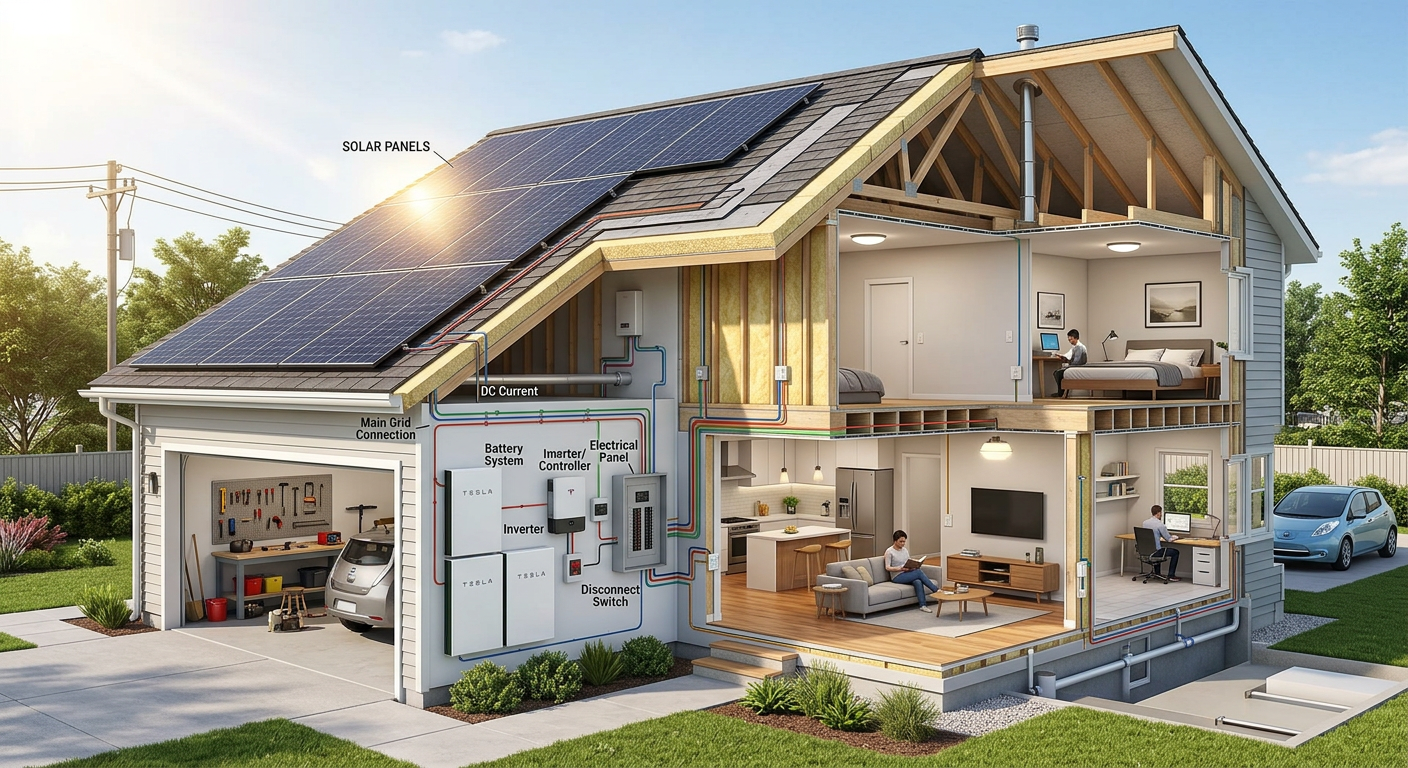
A home battery stores electricity for later use. In a solar-plus-storage system, the battery charges from your solar panels during the day and discharges to power your home in the evening, during outages, or when electricity rates are highest.
Key Battery Concepts
Usable capacity (kWh): The amount of energy the battery can store and deliver. A 13.5 kWh battery can theoretically power a typical home for about 10 to 14 hours under moderate load.
Continuous power (kW): The sustained power the battery can deliver at any moment. A 5 kW battery can run appliances drawing up to 5,000 watts simultaneously. Higher power ratings mean more appliances running at once.
Peak power (kW): The maximum power for brief surges, like starting an air conditioner compressor or a well pump. Peak power is typically 1.5 to 2 times the continuous rating.
Round-trip efficiency: The percentage of energy that goes in that comes back out. A 90 percent efficient battery loses 10 percent of stored energy as heat during the charge-discharge cycle.
Depth of discharge (DoD): How much of the battery's total capacity is usable. Most modern batteries have 95 to 100 percent DoD, meaning nearly all stored energy is accessible.
Cycle life: How many charge-discharge cycles the battery can perform before significant degradation. Most home batteries are warrantied for 4,000 to 10,000 cycles.
For a deeper dive into the science, see our article on how solar batteries work.
Battery Comparison: The Major Players
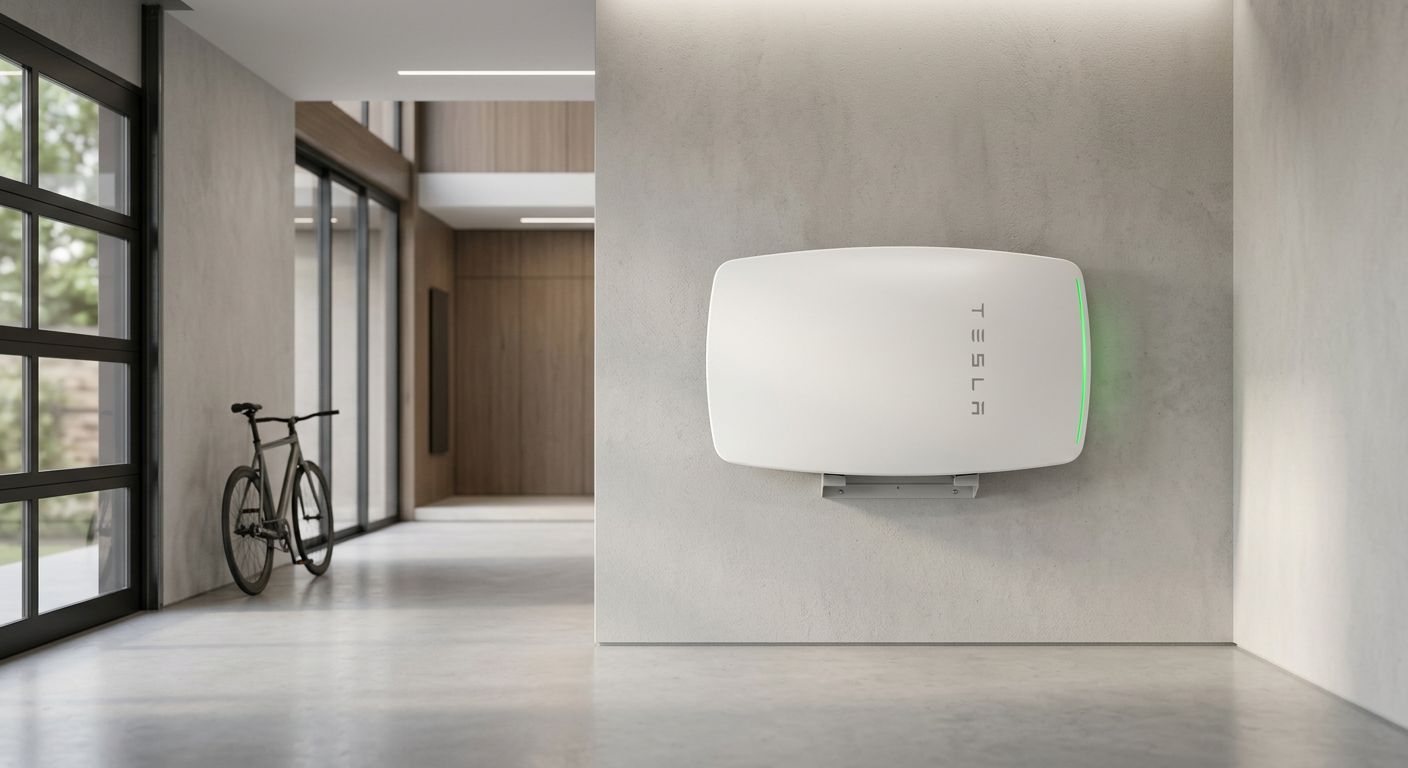
Tesla Powerwall 3
The most well-known home battery and the market share leader.
- Usable capacity: 13.5 kWh
- Continuous power: 11.5 kW
- Peak power: 185A at 240V
- Round-trip efficiency: 97.5%
- Warranty: 10 years, unlimited cycles
- Chemistry: Lithium-ion (NMC)
- Integrated inverter: Yes (11.5 kW)
- Installed cost: $12,000-$15,000
Strengths: Highest continuous power output of any single residential battery. Integrated inverter simplifies new solar installations. Excellent app and monitoring. Unlimited cycle warranty.
Weaknesses: Proprietary ecosystem — the integrated inverter means committing to Tesla's inverter technology. Limited availability at times. No generator integration.
For our detailed review, see Tesla Powerwall Review.
Enphase IQ Battery 5P
The modular alternative from the microinverter leader.
- Usable capacity: 5 kWh per unit (stack up to 60+ kWh)
- Continuous power: 3.84 kW per unit
- Peak power: 7.68 kVA per unit
- Round-trip efficiency: 96%
- Warranty: 15 years or 4,000 cycles
- Chemistry: Lithium iron phosphate (LFP)
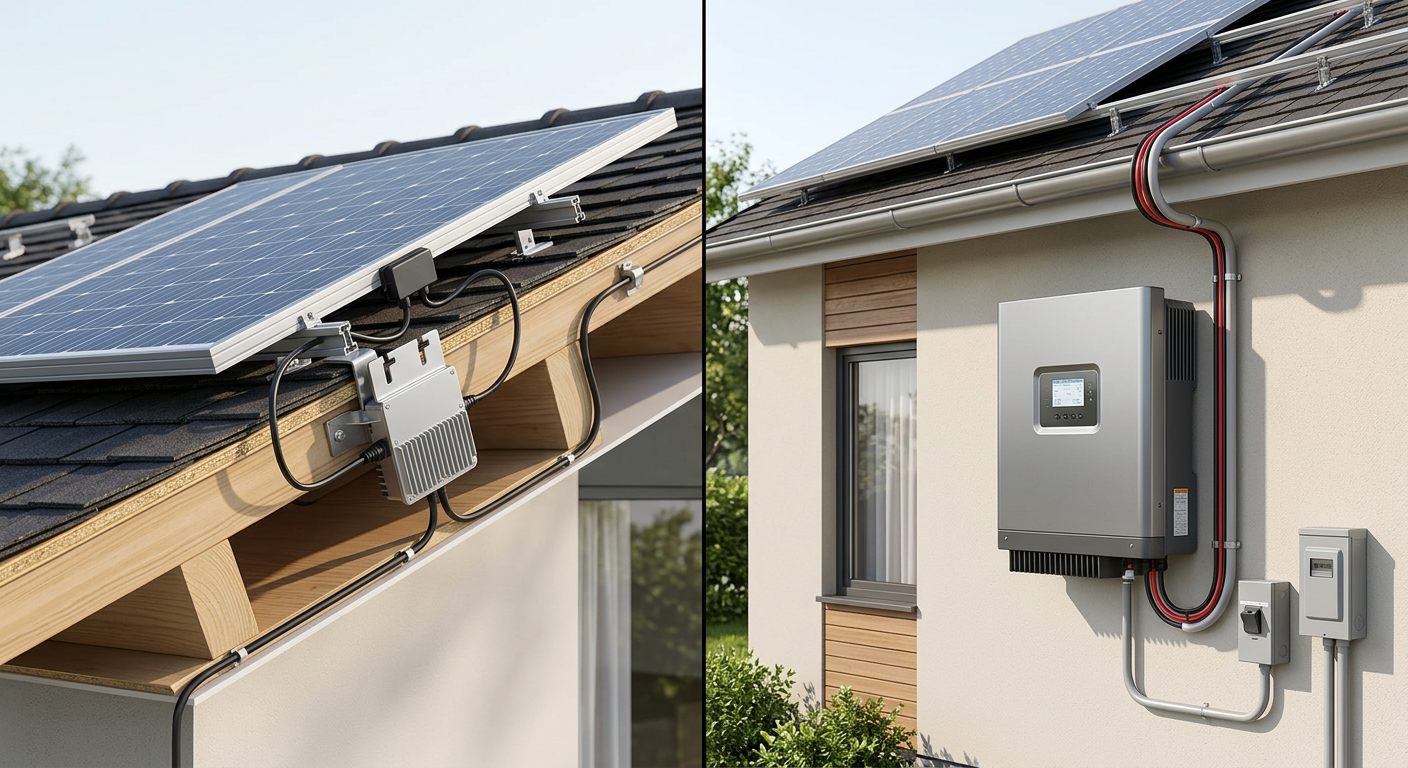
- Integrated inverter: No (AC-coupled)
- Installed cost: $5,000-$6,500 per unit
Strengths: Modular design — start with one unit and add more over time. 15-year warranty is the longest in the industry. LFP chemistry offers superior safety and longevity. Seamless integration with Enphase microinverters and monitoring. Works with any inverter brand (AC-coupled).
Weaknesses: Lower power output per unit — heavy loads like air conditioners may require multiple units. Higher cost per kWh for small installations. Requires separate solar inverter.
Generac PWRcell
From the generator company, a flexible battery system.
- Usable capacity: 9-18 kWh (configurable with 3 kWh modules)
- Continuous power: 9 kW
- Peak power: 11 kW
- Round-trip efficiency: 96.5%
- Warranty: 10 years
- Chemistry: Lithium-ion (NMC)
- Integrated inverter: Yes
- Installed cost: $10,000-$20,000
Strengths: High power output. Configurable capacity with battery module add-ons. Generac's established service network. Generator integration capability.
Weaknesses: Larger physical footprint. Monitoring platform not as polished as Tesla or Enphase. Less proven long-term track record in home storage.
SolarEdge Home Battery
From the string inverter leader, designed for SolarEdge systems.
- Usable capacity: 9.7 kWh per unit (stackable)
- Continuous power: 5 kW per unit
- Peak power: 7.5 kW per unit
- Round-trip efficiency: 94.5%
- Warranty: 10 years
- Chemistry: Lithium-ion (NMC)
- Integrated inverter: No (DC-coupled with SolarEdge inverter)
- Installed cost: $10,000-$14,000
Strengths: DC-coupled for higher efficiency when paired with SolarEdge inverters. Compact design. Stackable to 29.1 kWh.
Weaknesses: Only works with SolarEdge inverters. Lower round-trip efficiency than competitors. Smaller service network.
Franklin Home Power (FHP2)
A newer entrant gaining market share.
- Usable capacity: 13.6 kWh
- Continuous power: 10 kW
- Peak power: 15 kW
- Round-trip efficiency: 89%
- Warranty: 12 years
- Chemistry: Lithium iron phosphate (LFP)
- Integrated inverter: Yes
- Installed cost: $12,000-$16,000
Strengths: High power output. LFP chemistry for safety. Generator compatible. Inverter-agnostic.
Weaknesses: Newer brand with less track record. Lower round-trip efficiency.
Comparison Table
| Feature | Powerwall 3 | Enphase 5P | Generac PWRcell | SolarEdge | Franklin |
|---|---|---|---|---|---|
| Capacity | 13.5 kWh | 5 kWh/unit | 9-18 kWh | 9.7 kWh | 13.6 kWh |
| Continuous power | 11.5 kW | 3.84 kW/unit | 9 kW | 5 kW | 10 kW |
| Efficiency | 97.5% | 96% | 96.5% | 94.5% | 89% |
| Warranty | 10 yr | 15 yr | 10 yr | 10 yr | 12 yr |
| Chemistry | NMC | LFP | NMC | NMC | LFP |
| Price (installed) | $12-15K | $5-6.5K/unit | $10-20K | $10-14K | $12-16K |
| Scalable | Up to 4 | Up to 12+ | Modular | Up to 3 | Up to 15 |
Sizing Your Battery System
How much battery capacity you need depends on what you want the battery to do.
Backup Power Sizing
For power outage protection, calculate your essential loads — the circuits you absolutely need during an outage:
- Refrigerator: 150-400W continuous, 1200W starting
- Lights (LED): 50-200W total
- Wi-Fi router: 10-20W
- Phone charging: 10-20W
- Gas furnace fan: 300-500W
- Sump pump: 500-1000W (if applicable)
- Garage door opener: 500W (intermittent)
A typical essential loads setup draws 500 to 1,500W continuously. A single 13.5 kWh battery provides 9 to 27 hours of backup for essential loads, depending on usage.
For whole-home backup including air conditioning, electric cooking, and EV charging, you may need two or more battery units. See our whole-home vs. partial backup guide for detailed load calculations.
Energy Arbitrage Sizing
If your primary goal is saving money through time-of-use rate optimization, one battery unit is typically sufficient. You charge during cheap solar hours and discharge during expensive evening peak hours. A 10 to 14 kWh battery covers most homes' peak-period consumption.
Self-Consumption Sizing
For maximizing the use of your own solar production (minimizing grid exports), size the battery to match your evening consumption. Most homes consume 8 to 15 kWh between sunset and sunrise, making a single 10-14 kWh battery a good starting point.
Cost Analysis: Are Batteries Worth It?
Home batteries cost between $8,000 and $15,000+ installed. The federal tax credit at 30 percent reduces this to $5,600 to $10,500 effective cost.
Financial Return
From a pure financial standpoint, batteries offer modest returns in most grid-tied scenarios. Here is the math for a typical Colorado installation:
- Battery cost after tax credit: $9,100 (based on $13,000 installed)
- Annual savings from time-of-use arbitrage: $300-$600 (depending on rate structure)
- Simple payback period: 15-30 years
This payback period exceeds the 10-year warranty of most batteries, making the pure financial case challenging. However, the calculation changes significantly if:
- Your utility has aggressive time-of-use rates with large peak-to-off-peak differentials
- Net metering compensation declines (as is happening in some states)
- Electricity rates increase faster than inflation (a reasonable expectation)
- You experience frequent outages and place monetary value on backup power
The Value of Backup Power
The financial analysis above ignores the value of backup power. If your area experiences frequent or prolonged outages, a battery provides:
- Food preservation — a multi-day outage can cost $500+ in spoiled food
- Home habitability — heating in winter, cooling in summer
- Medical equipment — CPAP, oxygen concentrators, refrigerated medications
- Work continuity — home office power during outages
- Peace of mind — not worrying about the next storm
For Colorado homeowners, wildfire-related power safety shutoffs and severe thunderstorm outages make backup power increasingly practical. Read our full analysis in Do I Need a Solar Battery?
Battery Chemistry: NMC vs. LFP
Two lithium-ion chemistries dominate home storage:
NMC (Nickel Manganese Cobalt)
Used by Tesla Powerwall, Generac, and SolarEdge.
- Higher energy density — more storage in less space
- Lighter weight per kWh
- Higher round-trip efficiency (95-97.5%)
- Lower cycle life (typically 3,000-5,000 cycles)
- Slightly higher thermal risk (though still very safe in properly designed systems)
LFP (Lithium Iron Phosphate)
Used by Enphase and Franklin.
- Superior safety — more thermally stable, no cobalt
- Longer cycle life (typically 5,000-10,000 cycles)
- More environmentally sustainable — no cobalt mining
- Lower energy density — larger and heavier per kWh
- Lower round-trip efficiency (89-96%)
For residential use, both chemistries are safe and well-proven. LFP's longer cycle life makes it particularly attractive for daily cycling applications like time-of-use arbitrage. NMC's higher energy density matters when installation space is limited.
Installation Considerations
Location
Batteries can be installed indoors (garage, utility room, basement) or outdoors (wall-mounted or pad-mounted). In Colorado, indoor installation is preferred when possible because extreme cold can temporarily reduce battery capacity and power output. All major batteries have thermal management systems, but indoor temperatures reduce the energy needed to maintain optimal battery temperature.
Electrical Panel Upgrades
Some battery installations require upgrading your main electrical panel, especially in older homes with 100-amp service. A panel upgrade adds $1,500 to $4,000 to the project cost. Your installer should evaluate this during the site assessment.
Permitting and Interconnection
Battery installations require electrical permits and utility interconnection approval, similar to solar panels. In Colorado, Xcel Energy has specific interconnection requirements for battery systems. The process typically adds three to six weeks to the installation timeline.
Best Battery for Each Use Case
Best for Whole-Home Backup: Tesla Powerwall 3
The Powerwall 3's 11.5 kW continuous output means a single unit can power most homes, including air conditioning. No other single battery comes close to this power level.
Best for Modular Scaling: Enphase IQ Battery 5P
Start with one 5 kWh unit and add more as your needs grow or budget allows. The 15-year warranty and LFP chemistry provide excellent long-term value.
Best for Budget-Conscious Backup: Enphase IQ Battery 5P (single unit)
At $5,000 to $6,500 installed (before tax credit), a single Enphase unit provides basic backup for essential loads at the lowest entry cost.
Best Ecosystem Integration: Enphase (with IQ8 microinverters)
If you use Enphase microinverters, the IQ Battery integrates seamlessly through the Enlighten platform. Everything monitors and optimizes through one system.
Best for Generator Pairing: Generac PWRcell or Franklin
If you want both battery backup and a generator for extended outages, Generac's experience with generators and Franklin's generator compatibility give them an edge.
Colorado-Specific Battery Considerations
Utility Rate Structures
Xcel Energy, Colorado's largest utility, has been moving toward time-of-use rate structures. Batteries become more valuable as the spread between peak and off-peak rates widens. Currently, Xcel's TOU rates have a modest differential, but this is expected to increase over time.
Wildfire Power Shutoffs
Colorado utilities have begun implementing Public Safety Power Shutoffs (PSPS) during high fire-risk conditions. These planned outages can last hours to days. A battery provides essential power during these events.
Winter Storm Outages
Colorado's severe winter storms can knock out power for extended periods. A battery sized for essential loads, combined with solar panels to recharge during the day, can sustain a home through a multi-day winter outage — a scenario that is increasingly common along the Front Range.
Altitude and Temperature
Colorado's cold winters and altitude do not significantly affect battery performance with modern thermal management systems. However, avoid outdoor installation in unprotected locations where the battery faces prolonged exposure to temperatures below -10 degrees F.
Making Your Decision
Choosing a home battery comes down to three questions:
- What is your primary goal? Backup power, energy savings, or both?
- What is your budget? Battery costs range from $5,000 to $15,000+ before tax credits.
- What equipment do you already have or plan to install? Your solar inverter type affects which batteries integrate best.
At ProGreen Solar, we install both Tesla Powerwall and Enphase battery systems and will recommend the best option for your specific needs. We do not push one brand over another — our goal is the right solution for your home.
Get a Battery Storage Quote
Ready to add battery storage to your home? Use our solar calculator to explore solar-plus-storage options, or call (303) 484-1410 to schedule a consultation. We will analyze your energy usage, evaluate your backup needs, and recommend the right battery system — sized and priced for your home.