If you have ever looked up at a rooftop covered in sleek, dark panels and wondered what is actually happening up there, you are not alone. Solar energy is now the fastest-growing source of new electricity generation in the United States, yet the science behind it remains a mystery to many homeowners. Understanding how solar panels work is the first step toward making an informed decision about whether solar is right for your home.
In this comprehensive guide, the team at ProGreen Solar breaks down the entire process — from the moment sunlight hits a panel to the instant you flip a light switch in your kitchen. No physics degree required.
The Photovoltaic Effect: Where It All Begins
At the heart of every solar panel is a phenomenon called the photovoltaic effect, first discovered by French physicist Edmond Becquerel in 1839. The term comes from "photo" (light) and "voltaic" (electricity). In simple terms, certain materials generate an electrical current when exposed to light.
Here is how it works at the atomic level:
-
Sunlight arrives as photons. Sunlight is made up of tiny packets of energy called photons. These photons travel approximately 93 million miles from the sun to your rooftop in about 8 minutes and 20 seconds.
-
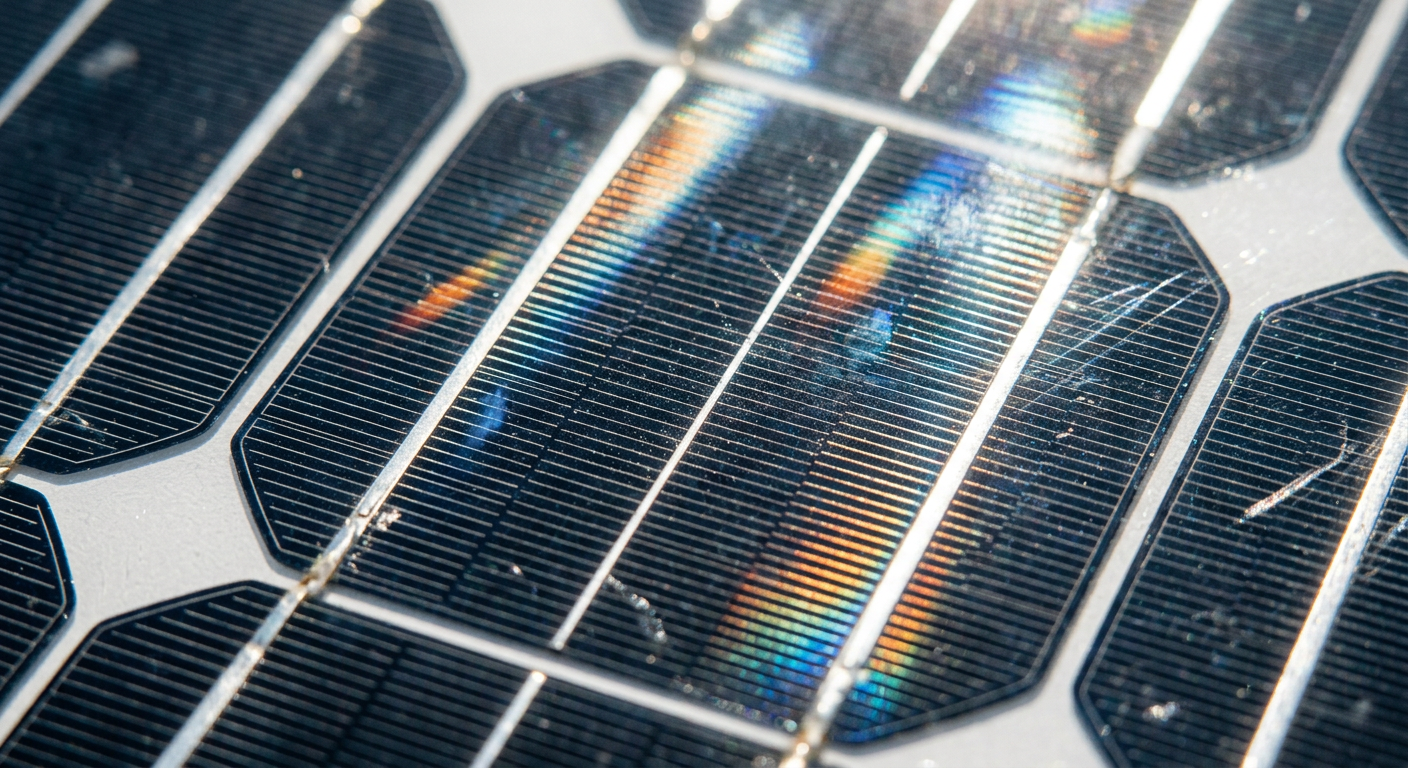
Photons strike silicon cells. The most common solar cells are made from crystalline silicon, the same element found in beach sand. Each solar panel typically contains 60 or 72 individual cells wired together.
-
Electrons get knocked loose. When a photon hits a silicon atom with enough energy, it knocks an electron free from its bond. This creates a moving charge — the beginning of electricity.
-
An electric field directs the flow. Solar cells are manufactured with two layers of silicon: one with extra electrons (n-type) and one with missing electrons called "holes" (p-type). The boundary between these layers creates a permanent electric field that pushes freed electrons in one direction, creating a current.
The result is direct current (DC) electricity flowing out of each solar cell. A standard residential solar panel produces about 350 to 450 watts of power under ideal conditions.
The Components of a Home Solar System
A solar panel on its own cannot power your home. It takes a coordinated system of components working together. Let us walk through each one.
Solar Panels (Modules)
The panels themselves are the most visible component. Modern residential panels come in two primary types:
-
Monocrystalline panels are made from a single crystal of silicon. They are more efficient (typically 20 to 22.5 percent) and perform better in low-light conditions. They have a distinctive black appearance.
-
Polycrystalline panels are made from multiple silicon crystals melted together. They are slightly less efficient (around 16 to 18 percent) but cost less per panel. They have a blue, speckled look.
At ProGreen Solar, we primarily install premium monocrystalline panels from manufacturers like REC, Meyer Burger, and QCell because they deliver superior performance and longer warranties — critical factors for Colorado's variable climate.
Inverters
Solar panels produce DC electricity, but your home runs on alternating current (AC). An inverter is the critical bridge between the two. There are three main types:
-
String inverters connect all panels in a series (a "string") to a single central inverter. They are cost-effective but have a limitation: if one panel is shaded, the entire string's output drops.
-
Microinverters are small inverters attached to each individual panel. They convert DC to AC right at the panel, so shading on one panel does not affect the others. Enphase is the industry leader in microinverter technology.
-
Power optimizers are a hybrid approach. Individual optimizers are attached to each panel to maximize output, but the DC power still flows to a central inverter for conversion. SolarEdge pioneered this technology.
For most Colorado homes, we recommend either Enphase microinverters or SolarEdge optimizers. You can read our detailed comparison in Enphase vs. SolarEdge: Which Inverter Is Right for Your Home?.
Racking and Mounting
Panels need to be securely attached to your roof at the optimal angle. The racking system handles this. In Colorado, south-facing panels tilted at approximately 35 to 40 degrees capture the most annual sunlight. Modern racking systems are engineered to withstand wind loads of 90 mph or more and snow loads common in our state.
Electrical Panel and Meter
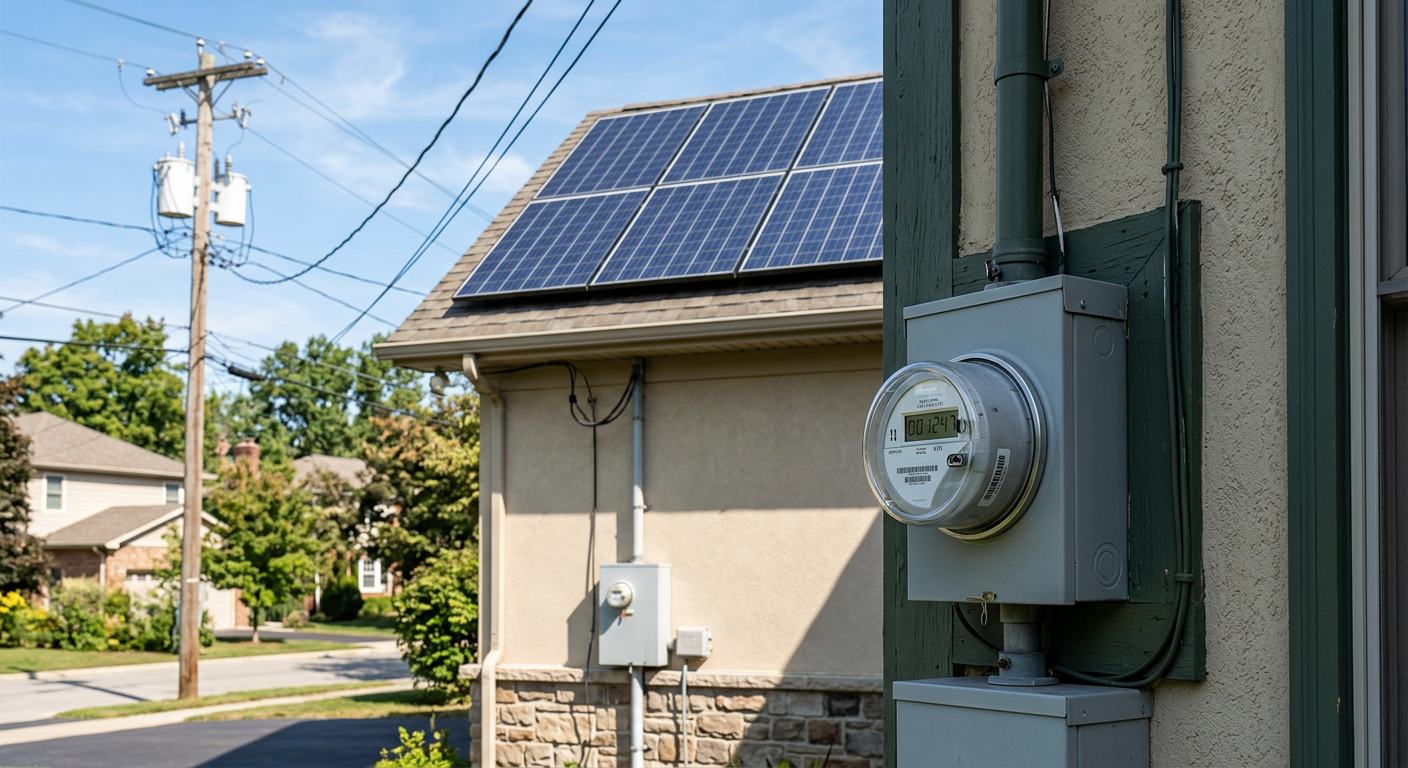
Your home's main electrical panel (breaker box) is where solar-generated electricity enters your home's wiring. A bidirectional net meter, installed by your utility company, tracks both the electricity you consume from the grid and the excess you send back.
Monitoring System
Modern solar systems include real-time monitoring via a smartphone app. You can see exactly how much electricity your panels are generating, how much you are consuming, and how much you are exporting to the grid — down to the minute.
How Electricity Flows Through Your Home
Now that you understand the components, let us trace the journey of solar electricity from panel to appliance.
Step 1: Panels Generate DC Power
When sunlight hits your panels, the photovoltaic cells generate DC electricity. The amount generated depends on several factors: the intensity of sunlight, the panel's efficiency rating, temperature, and any shading.
Step 2: Inverter Converts DC to AC
The DC electricity flows down from your roof through wiring to the inverter (or is converted at each panel if you have microinverters). The inverter transforms the electricity into 240-volt AC power that matches your home's electrical system.
Step 3: Electricity Powers Your Home
The AC electricity flows into your electrical panel and is distributed to your home's circuits. Your appliances, lights, and electronics use this solar electricity first — it is indistinguishable from grid electricity.
Step 4: Excess Goes to the Grid
If your panels are producing more electricity than your home needs at that moment (common on sunny afternoons), the surplus flows backward through your meter and onto the utility grid. Your meter literally spins backward, and you earn credits through a process called net metering.
Step 5: Grid Supplies Power When Needed
At night or during heavy cloud cover, when your panels are not producing enough, your home automatically draws electricity from the grid as usual. The credits you earned from exporting surplus power offset what you consume from the grid, often resulting in drastically lower or even zero electric bills.
How Much Electricity Do Solar Panels Actually Produce?
The amount of electricity a solar system generates depends on several key variables:
System size: A typical Colorado home installs a 6 to 10 kilowatt (kW) system. A 7 kW system with premium panels will produce approximately 10,500 to 11,500 kilowatt-hours (kWh) per year in Colorado, thanks to our state's roughly 300 days of sunshine.
Panel efficiency: Higher-efficiency panels produce more electricity per square foot. A 22 percent efficient panel generates about 10 percent more power than a 20 percent panel of the same size.
Roof orientation and tilt: South-facing roofs in Colorado are ideal. East and west-facing roofs still work well, typically producing 80 to 85 percent of what a south-facing system would generate.
Shading: Even partial shading can significantly reduce output. This is where microinverters and power optimizers provide a major advantage — they minimize the impact of shading at the individual panel level.
Temperature: Solar panels actually perform slightly better in cooler conditions. Colorado's high altitude and cool temperatures give us a performance advantage over hotter states like Arizona or Texas. Panels lose about 0.3 to 0.4 percent efficiency for every degree Celsius above 25 degrees C (77 degrees F).
For a detailed analysis of production expectations, read our guide on How Much Electricity Do Solar Panels Produce?.
What Happens on Cloudy Days and at Night?
One of the most common questions we hear from Colorado homeowners: "Do solar panels work when it is cloudy?" The answer is yes, though at reduced capacity.
On overcast days, panels still generate electricity from diffused sunlight — typically 10 to 25 percent of their rated capacity. Colorado's high altitude means our clouds tend to be thinner and less dense than those at sea level, so our panels perform better on cloudy days than panels in many other states.
At night, panels do not produce electricity. This is where net metering becomes essential. The credits you build up during sunny days cover your nighttime consumption. Alternatively, a battery storage system like the Tesla Powerwall or Enphase IQ Battery can store daytime solar energy for use after dark.
Learn more in our detailed articles about solar panels on cloudy days and what happens at night.
The Different Types of Solar Systems
Not all solar installations are the same. The three main system configurations are:
Grid-Tied Systems
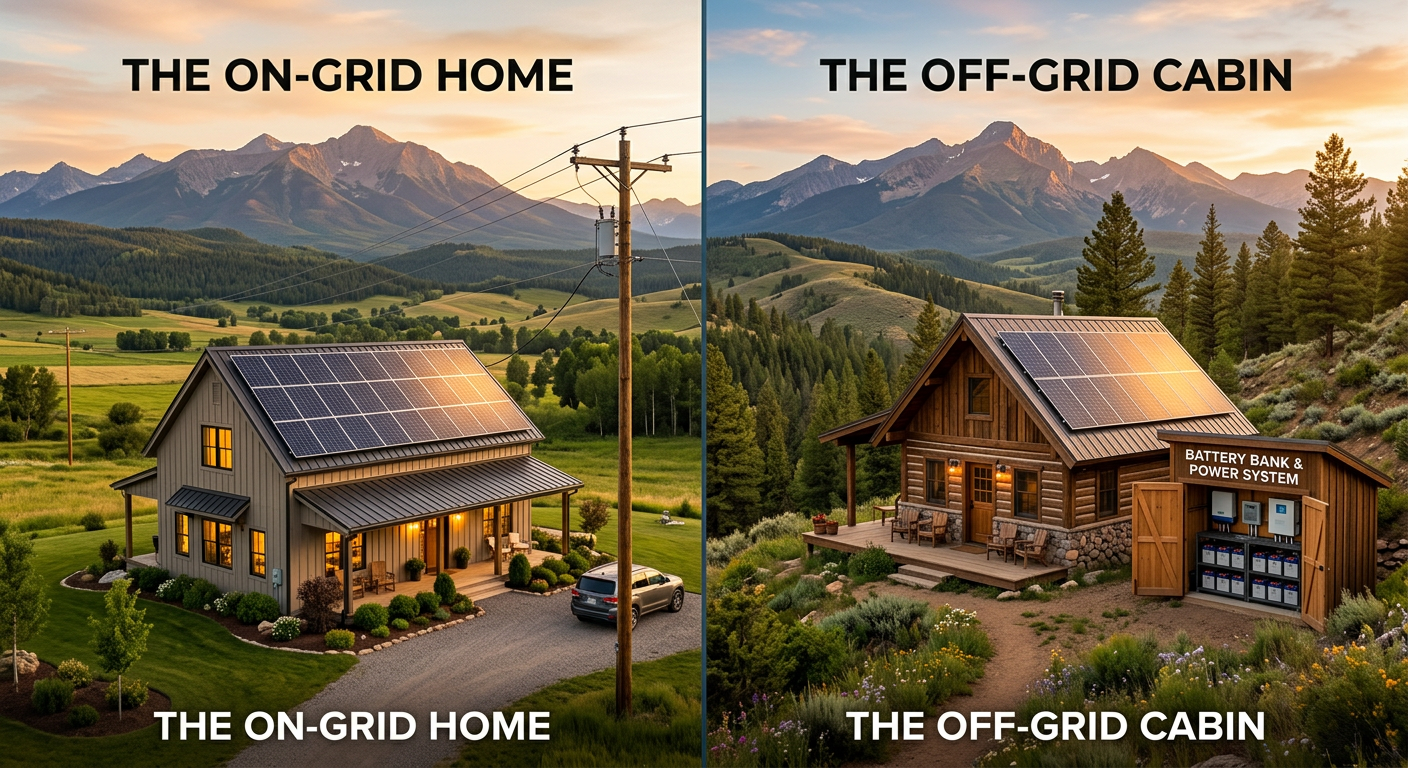
This is the most common type, accounting for over 95 percent of residential installations. Your system connects to the utility grid, sends excess power to the grid for credits, and draws from the grid when needed. It is the most cost-effective option and has the shortest payback period.
Grid-Tied with Battery Backup
This configuration adds a battery storage system to a grid-tied setup. You get all the benefits of net metering plus backup power during outages. As battery prices continue to drop, this option is becoming increasingly popular in Colorado, especially in areas prone to power outages.
Off-Grid Systems
A fully off-grid system is completely independent of the utility grid. It requires a large battery bank and typically a backup generator. This option is primarily chosen by homeowners in remote areas without grid access.
For a comprehensive comparison, read our guide on Grid-Tied vs. Off-Grid Solar.
How Long Do Solar Panels Last?
Modern solar panels are remarkably durable. Most manufacturers warrant their panels for 25 to 30 years, but panels can continue producing electricity well beyond that — studies have shown panels from the 1980s still generating at over 80 percent of their original capacity after 40 years.
The key metric is the degradation rate, which measures how much output a panel loses each year. Premium panels like those we install at ProGreen Solar have degradation rates of just 0.25 to 0.4 percent per year. This means after 25 years, your panels will still be producing 90 percent or more of their original output.
Inverters have shorter lifespans. String inverters typically last 10 to 15 years and may need replacement once during the life of your system. Microinverters (like Enphase) are warrantied for 25 years, matching the panels themselves.
For more details, read How Long Do Solar Panels Last?.
The Solar Installation Process
Going solar involves several key steps, and the entire process typically takes four to eight weeks from signing a contract to flipping the switch:
- Free consultation and site assessment — Our team evaluates your roof, energy usage, and goals.
- Custom system design — Engineers design a system optimized for your specific home.
- Permitting — We handle all permits and paperwork with your local jurisdiction.
- Installation — Professional crews install panels, inverters, and wiring in one to three days.
- Inspection and interconnection — Local inspectors approve the system, and your utility connects you.
- System activation — You start generating clean, free electricity.
Get the full walkthrough in our guide to The Complete Solar Installation Process.
How Solar Saves You Money
The financial case for solar has never been stronger. Here is how the savings stack up for a typical Colorado homeowner:
- Reduced electric bills: A properly sized solar system can offset 80 to 100 percent of your electricity consumption.
- Federal tax credit: The federal Investment Tax Credit (ITC) provides a 30 percent credit on the total cost of your system through 2032.
- Net metering credits: Excess electricity exported to the grid earns credits that offset your consumption during low-production periods.
- Increased home value: Studies show solar panels increase home value by 3 to 4 percent on average. Read more in Does Solar Increase Your Home Value?.
- Protection from rate increases: Colorado utility rates have risen an average of 3 to 4 percent annually. Once your system is installed, your solar electricity costs are locked in.
Curious about the specific costs and savings for your home? Use our free solar calculator to get a personalized estimate, or read our detailed guide on How Much Do Solar Panels Cost in Colorado?.
Why Colorado Is Ideal for Solar
Many people assume solar only makes sense in the sunbelt states. The truth is, Colorado is one of the best states in the country for solar energy:
- 300 days of sunshine per year — Colorado averages more sunny days than Florida or Hawaii.
- High altitude advantage — At 5,280 feet (Denver), our thinner atmosphere means solar panels receive more intense sunlight than at sea level.
- Cool temperatures — Panels are more efficient in cooler weather. Colorado's climate is actually more favorable for panel performance than Arizona.
- Strong incentives — Between the federal tax credit and Colorado-specific incentives, the cost of going solar is significantly reduced.
- Favorable net metering — Colorado utilities offer generous net metering programs that maximize your savings.
Take the Next Step
Understanding how solar panels work is the foundation for making a smart energy decision. The technology is proven, the savings are real, and the environmental benefits are significant. With over 300 days of sunshine per year, Colorado homeowners are uniquely positioned to benefit from solar energy.
Ready to see how much you can save? Get your free solar estimate or give the ProGreen Solar team a call at (303) 484-1410. We will design a custom system for your home and walk you through every detail — no pressure, no gimmicks, just honest solar expertise.