QCell (Hanwha Q CELLS) and REC Group are two of the most respected names in residential solar panels. Both brands manufacture high-quality products, offer strong warranties, and have excellent track records. But they take different technological approaches and have distinct strengths that make one or the other a better fit depending on your priorities.
As an installer of both QCell and REC panels, ProGreen Solar has real-world experience with how each brand performs on Colorado rooftops. This comparison is based on current specifications, our installation data, and the factors that actually matter to homeowners.
Company Backgrounds
QCell (Hanwha Q CELLS)
QCell is a South Korean-German manufacturer owned by the Hanwha Group, one of South Korea's largest conglomerates. The company traces its roots to Q-Cells, a German solar pioneer founded in 1999 that was once the world's largest solar cell manufacturer. After financial difficulties, the company was acquired by Hanwha in 2012 and rebranded as Hanwha Q CELLS.
QCell operates manufacturing facilities in South Korea, Malaysia, China, and — notably — Dalton, Georgia, where they have invested over $2.5 billion in a massive U.S. production facility. Panels manufactured in the United States are eligible for additional domestic content tax credit bonuses under the Inflation Reduction Act.
REC Group
REC Group is a Norwegian-founded company now headquartered in Singapore. Founded in 1996, REC has been a consistent innovator in solar technology. They were among the first manufacturers to mass-produce heterojunction (HJT) panels for the residential market with their Alpha Series.
REC operates manufacturing in Singapore and has licensing agreements for production in other facilities. The company is owned by Reliance Industries, one of India's largest corporations, which has invested significantly in expanding REC's production capacity.
Technology Comparison
QCell: Q.ANTUM Technology
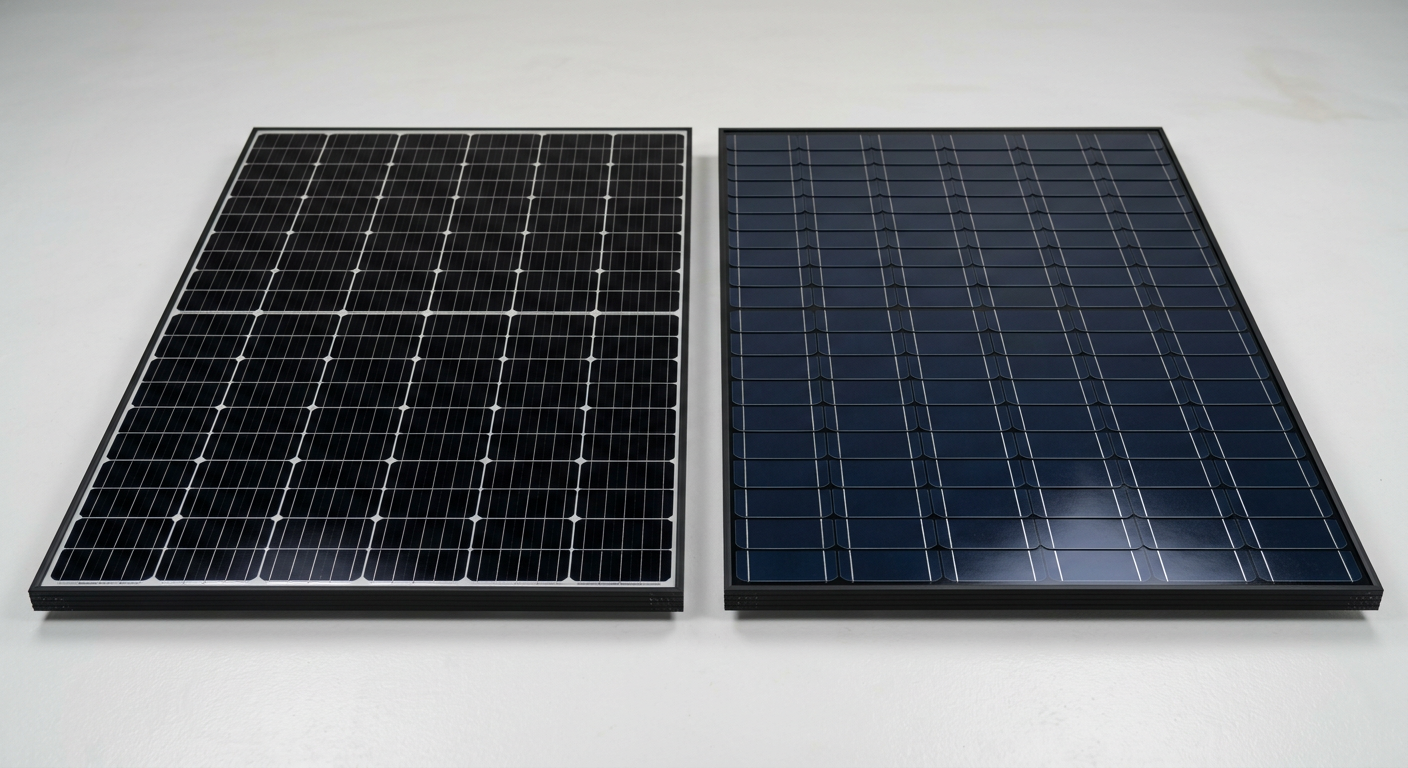
QCell's flagship residential panels use their proprietary Q.ANTUM technology, which is based on PERC (Passivated Emitter and Rear Contact) cell architecture with QCell's own enhancements. Their latest Q.ANTUM DUO Z panels use zero-gap cell technology, where half-cut cells are arranged without spacing between them, maximizing active area within the module.
Key features of Q.ANTUM technology:
- Half-cut cells that reduce resistive losses and improve shade tolerance
- Hot-spot protection through cell-level bypass diodes
- Anti-LID technology that prevents the light-induced degradation common in p-type cells
- Anti-PID treatment for protection against potential-induced degradation
QCell's newer panels also incorporate TOPCon (Tunnel Oxide Passivated Contact) cell technology in their premium lines, pushing efficiency higher while maintaining the PERC production cost advantage.
REC: Heterojunction (HJT) Technology
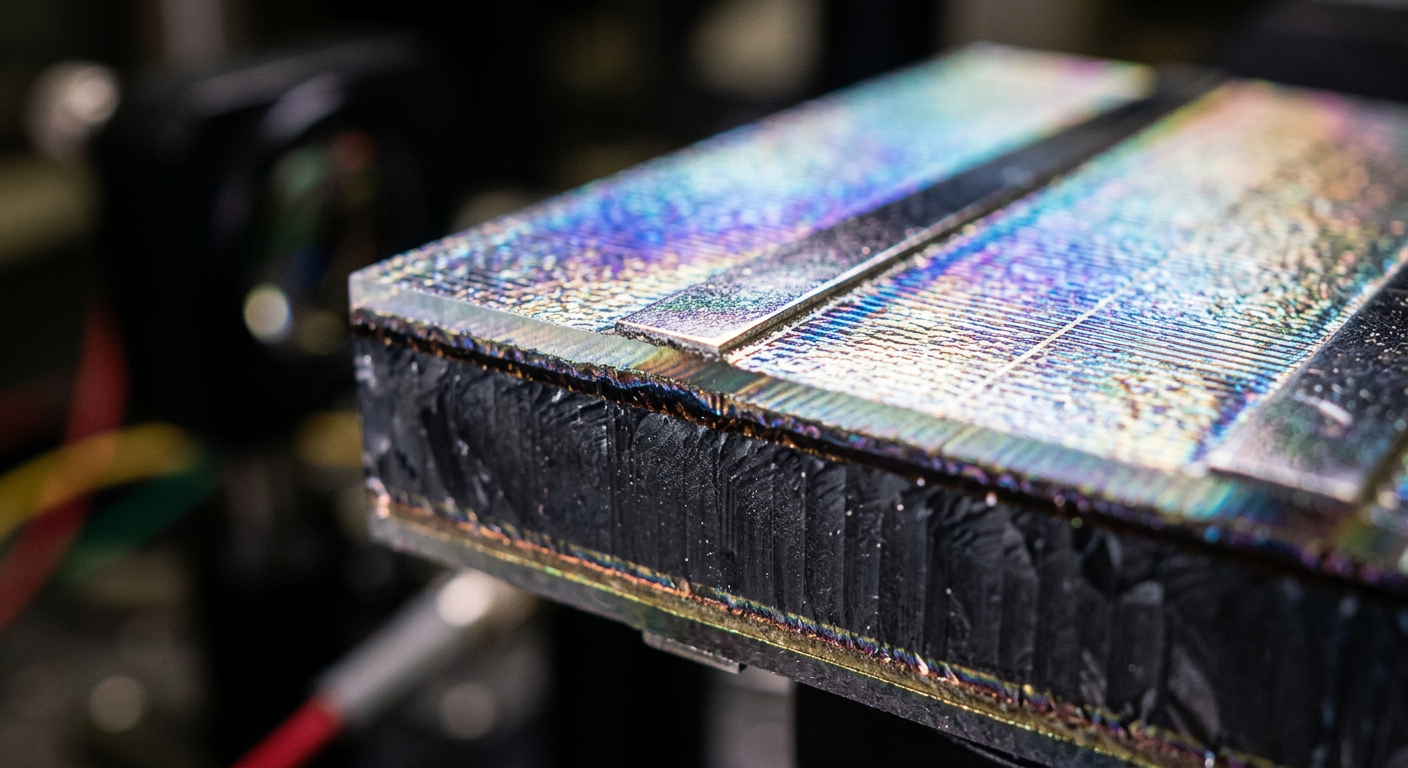
REC's premium Alpha Series uses heterojunction (HJT) cell technology, which combines crystalline and amorphous silicon layers for superior surface passivation. For a deep dive into how this technology works, see our HJT solar cells guide.
Key features of REC's HJT approach:
- Split-junction cell design with half-cut HJT cells
- Gapless cell layout maximizing panel area utilization
- N-type silicon immune to LID and LeTID degradation
- Superior temperature coefficient from the HJT architecture
- Natural bifaciality generating power from both sides
REC also offers the TwinPeak series using more conventional PERC technology at a lower price point, but the Alpha Series is their standout product and the focus of this comparison.
Specifications Head-to-Head
Here is how the flagship products from each brand compare:
| Specification | QCell Q.PEAK DUO ML-G11+ | REC Alpha Pure-R |
|---|---|---|
| Panel wattage | 420-430W | 430-440W |
| Efficiency | 21.0-21.5% | 22.0-22.6% |
| Cell technology | Q.ANTUM DUO (PERC/TOPCon) | HJT |
| Temperature coefficient | -0.34%/°C | -0.24%/°C |
| Annual degradation | 0.40%/year | 0.25%/year |
| Product warranty | 25 years | 25 years |
| Performance warranty | 86% at 25 years | 92% at 25 years |
| Dimensions | ~1134 x 1722mm | ~1134 x 1722mm |
| Weight | ~21.5 kg | ~21.2 kg |
| Frame | Silver or black anodized aluminum | Black anodized aluminum |
Efficiency
Winner: REC
REC's Alpha Pure-R panels achieve up to 22.6 percent module efficiency, compared to QCell's 21.5 percent for their top residential panel. This 1+ percentage point difference means REC panels produce about 5 percent more electricity per square foot of panel area.
On a space-constrained roof, this translates to meaningful additional production. If your roof can fit 20 panels, the REC system would produce roughly 400 to 500 more watts of capacity than a QCell system of the same panel count. Over 25 years, that adds up to several thousand additional kilowatt-hours. For more on why efficiency matters, see our solar panel efficiency guide.
Temperature Performance
Winner: REC (significantly)
This is where REC's HJT technology shows its biggest advantage. With a temperature coefficient of -0.24 percent per degree C versus QCell's -0.34 percent per degree C, REC panels retain more of their rated output in hot conditions.
In Colorado, where panel surface temperatures routinely reach 65-75 degrees C during summer, the difference is substantial:
- At 70 degrees C (45 degrees above standard test conditions):
- QCell output loss: 15.3%
- REC output loss: 10.8%
- REC advantage: 4.5 percentage points
This means a 430W REC panel producing about 384W in peak summer heat, versus a 430W QCell panel producing about 364W. Over a full year in Colorado, the temperature advantage alone contributes 3 to 5 percent more total energy production from REC panels.
For details on how Colorado's climate affects solar production, see our guide on solar performance in Colorado's climate.
Degradation and Lifetime Production
Winner: REC
Degradation rate is one of the most important long-term performance metrics. Every solar panel produces less electricity each year as its cells gradually degrade. The rate of degradation directly determines how much total energy your system generates over its lifetime.
- QCell: 0.40% annual degradation, warranted at 86% output at year 25
- REC: 0.25% annual degradation, warranted at 92% output at year 25
After 25 years, a QCell panel retains approximately 90 percent of its original output (actual performance often exceeds the warranty minimum), while a REC panel retains approximately 94 percent. The cumulative production difference over 25 years is approximately 4 to 6 percent in REC's favor.
REC's lower degradation stems from their HJT cell technology using n-type silicon, which is immune to the light-induced degradation (LID) and light-and-elevated-temperature-induced degradation (LeTID) that can affect p-type PERC cells. Learn more about solar panel lifespan and degradation.
Warranty
Winner: REC (marginally)
Both brands offer excellent warranties, but the details differ:
QCell Warranty
- Product warranty: 25 years covering manufacturing defects
- Performance warranty: Linear, reaching 86% minimum output at year 25
- Labor coverage: 25 years (includes labor costs for warranty replacements)
REC Warranty
- Product warranty: 25 years covering manufacturing defects
- Performance warranty: Linear, reaching 92% minimum output at year 25
- Labor coverage: 25 years through REC Certified Solar Professional program
The key difference is the performance guarantee: 92 percent versus 86 percent at year 25. This gives REC a meaningful edge in guaranteed long-term output. Both brands back their warranties with strong corporate parents (Hanwha Group and Reliance Industries), providing confidence in long-term warranty fulfillment.
Price
Winner: QCell
QCell panels typically cost $0.05 to $0.15 per watt less than REC Alpha panels at the wholesale level. For a 10 kW system, this translates to a savings of $500 to $1,500.
- QCell (typical installed cost): $0.65-$0.85 per watt for the panels
- REC Alpha (typical installed cost): $0.80-$1.00 per watt for the panels
Note that panel cost is only one component of total system cost, which also includes inverters, racking, electrical components, labor, and permitting. The panel cost difference may represent only 3 to 7 percent of total system price. When you apply the federal tax credit, the after-credit difference shrinks further.
Cost Per Kilowatt-Hour Over 25 Years
When you calculate the levelized cost of energy — total panel cost divided by total lifetime energy production — the picture shifts. REC's higher efficiency and lower degradation mean each REC panel produces more total energy over 25 years, partially offsetting the higher upfront cost.
For many installations, the levelized cost difference between QCell and REC is smaller than the sticker price difference suggests — sometimes within $0.005 per kWh.
Aesthetic Comparison
Winner: Tie
Both manufacturers offer all-black panel options with black frames and black backsheets that provide a clean, uniform appearance on your roof. QCell's all-black Q.PEAK panels and REC's Alpha Pure-R in full black are nearly indistinguishable from ground level.
Both brands produce panels in standard residential sizes (approximately 67 x 45 inches), so layout and visual coverage are similar.
Shade Performance
Winner: Tie (both good, but depends on inverter choice)
Both QCell and REC use half-cut cell designs that improve shade tolerance. When a shadow falls on one part of the panel, only the affected cells reduce output — the other half continues at full production.
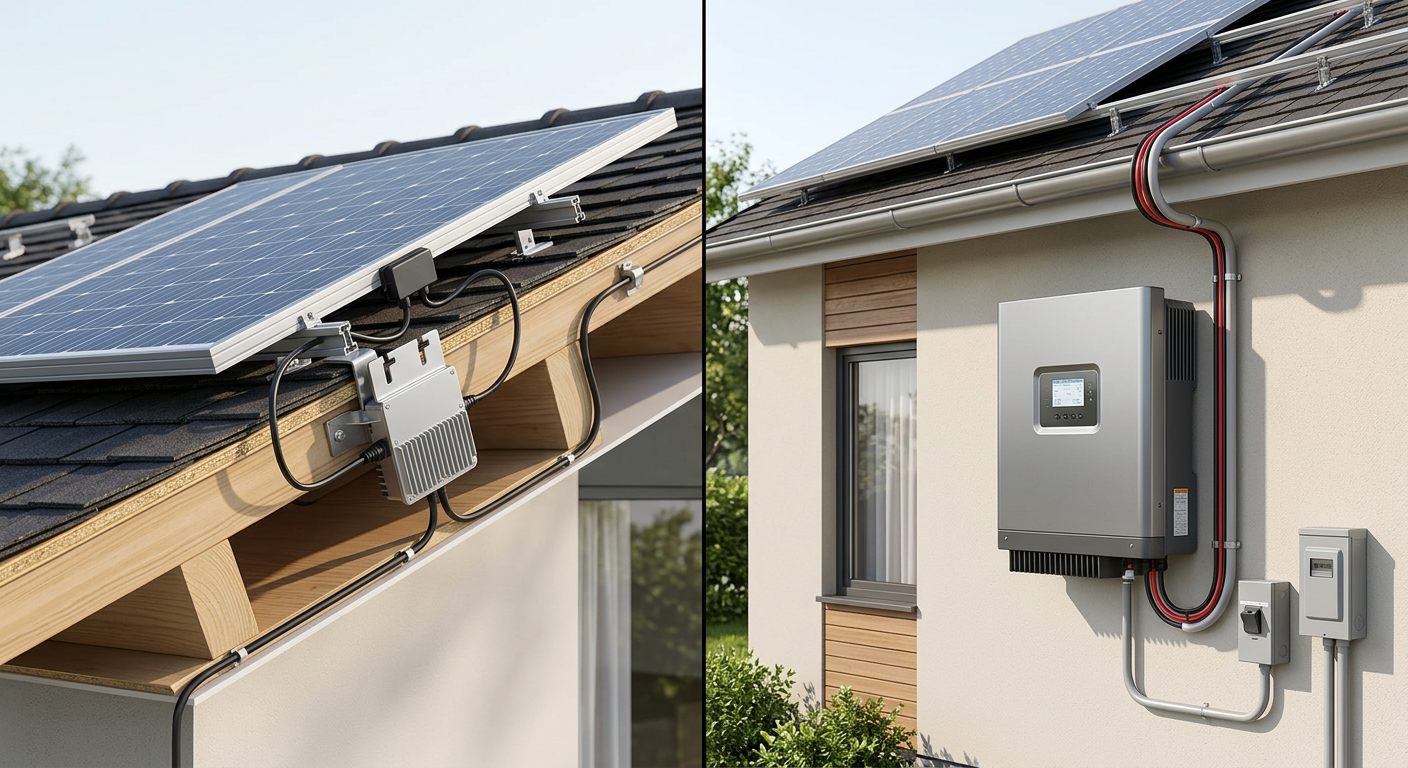
However, shade performance depends more on the inverter system than the panel itself. Panels paired with Enphase microinverters or SolarEdge optimizers achieve excellent shade handling regardless of panel brand. If shade is a concern for your installation, inverter selection matters more than panel brand.
Hail Resistance
Winner: Tie
Both QCell and REC panels meet IEC 61215 standards for impact resistance, tested with 25mm (1-inch) ice balls at 23 meters per second (about 52 mph). Both use tempered glass front sheets that provide strong protection.
For Colorado homeowners concerned about hail damage, both brands offer sufficient protection for typical hailstorms. Neither brand has shown systematic hail vulnerability in our Colorado installations.
Manufacturing and Domestic Content
Winner: QCell
QCell operates a large manufacturing facility in Dalton, Georgia, producing panels with significant domestic content. Under the Inflation Reduction Act, systems using domestically manufactured panels may qualify for additional tax credit bonuses.
REC manufactures primarily in Singapore. While their panels are high quality, they do not currently qualify for domestic content bonuses.
If maximizing tax credit value is important, QCell's U.S. manufacturing is an advantage worth considering. See our federal solar tax credit guide for details on domestic content requirements.
Which Should You Choose?
Choose QCell If:
- Budget is a primary concern — lower upfront cost per watt
- Domestic manufacturing matters — potential additional IRA tax benefits
- Your roof has ample space — the efficiency difference is less critical with abundant area
- You want proven, reliable technology — QCell's PERC/TOPCon cells have years of track record
Choose REC If:
- You want maximum production — higher efficiency and lower degradation deliver more lifetime energy
- Your roof is space-constrained — every percentage point of efficiency matters
- Colorado's heat is a concern — the temperature coefficient advantage is real and significant
- Long-term value matters more than upfront cost — REC panels produce more energy per dollar over 25 years
- You want the strongest performance warranty — 92% guaranteed at year 25 is industry-leading
Our Recommendation
Both QCell and REC are excellent choices, and we install both brands regularly. For most Colorado installations where roof space allows, either brand will serve you well for decades.
If we had to choose, we give a slight edge to REC's Alpha Series for Colorado specifically, because the temperature coefficient advantage in our high-altitude, sunny climate delivers measurable production benefits. The higher upfront cost is largely offset by greater lifetime production.
For homeowners who prioritize domestic manufacturing or have tighter budgets, QCell's Q.PEAK DUO series is an outstanding alternative that we confidently recommend.
For our complete ranking of the best panels available today, see our best solar panels in 2026 guide.
Get Expert Panel Recommendations
The best panel for your home depends on your roof, your budget, and your priorities. Use our solar calculator to estimate your system size and savings, or call (303) 484-1410 for a personalized recommendation. ProGreen Solar installs both QCell and REC panels and will design the optimal system for your specific situation.