Here is a counterintuitive piece of advice from a solar company: before you install solar panels, spend some time and money reducing your electricity consumption first.
This is not a sales trick. It is genuinely the smartest financial move you can make. Every kilowatt-hour you eliminate through efficiency improvements is a kilowatt-hour you do not need to generate with solar panels. That means fewer panels, lower installation costs, faster payback, and a better return on your solar investment.
At ProGreen Solar, we walk every customer through an energy optimization process before finalizing their system design. The customers who take this advice seriously often save $3,000 to $8,000 on their solar installation while achieving the same goal: eliminating their electricity bill.
Why Efficiency Before Solar
Think of your electricity bill as a bucket with holes in it. Solar panels fill the bucket with clean energy. But if the bucket has large holes — inefficient appliances, poor insulation, phantom loads — you need a much bigger hose (more panels) to keep it full.
Plugging the holes first means you need a smaller, less expensive solar system to achieve the same result: a zero or near-zero electricity bill.
The Math in Action
Consider two identical Colorado homes consuming 12,000 kWh per year:
Home A — Goes solar without efficiency improvements:
- Needs an 8.5 kW system to offset 12,000 kWh
- System cost: approximately $25,500 before incentives
- Net cost after 30% ITC: $17,850
Home B — Reduces consumption to 9,000 kWh first, then goes solar:
- Spends $2,000 on efficiency improvements
- Needs a 6.4 kW system to offset 9,000 kWh
- System cost: approximately $19,200 before incentives
- Net cost after 30% ITC: $13,440
- Total investment (efficiency + solar): $15,440
Home B saves $2,410 in total investment while achieving the same zero-bill result. Plus, the efficiency improvements continue saving energy for decades, providing a buffer as the home's needs change.
Step 1: Get an Energy Audit
Before making any changes, understand where your energy actually goes. A professional energy audit identifies the biggest opportunities and prevents you from spending money on improvements that will not move the needle.
What a Professional Audit Includes
A Level 2 energy audit typically costs $200 to $400 in Colorado and includes:
- Blower door test — measures air leakage by depressurizing the house and quantifying how much air infiltrates through gaps and cracks
- Thermal imaging — infrared camera scan reveals insulation gaps, thermal bridging, and air leakage paths invisible to the naked eye
- Duct leakage test — measures how much conditioned air your duct system loses before reaching living spaces (the average home loses 20 to 30 percent)
- Appliance inventory — catalogs every energy-consuming device and estimates its annual consumption
- Prioritized recommendations — ranked list of improvements by cost-effectiveness
Colorado offers several programs that subsidize or fully cover audit costs. Xcel Energy's Home Energy Audit program provides reduced-cost audits, and some local governments offer free audits through energy efficiency programs.
DIY Audit Basics
If a professional audit is not in your budget, you can conduct a basic assessment yourself:
- Review 12 months of electricity bills to identify seasonal patterns
- Walk through every room and list all energy-consuming devices
- Check insulation levels in the attic (aim for R-49 in Colorado's climate zone)
- Feel for drafts around windows, doors, outlets, and penetrations
- Note the age and condition of your HVAC system, water heater, and major appliances
- Check your electricity bill breakdown for TOU patterns
Step 2: Seal Air Leaks
Air sealing is consistently the single most cost-effective energy improvement for Colorado homes. The average home has enough gaps and cracks to equal a 2-square-foot hole in the wall — imagine leaving a window open year-round.
Priority Air Sealing Locations
Focus on these areas in order of typical impact:
Attic penetrations — Where wiring, plumbing, chimneys, and duct work penetrate the attic floor. These gaps allow warm air to escape in winter and hot attic air to infiltrate in summer. Use fire-rated caulk and expanding foam to seal them.
Recessed light cans — Old-style recessed lights are massive air leaks. Replace non-IC-rated cans with LED retrofit kits that include air-tight trim. This alone can reduce air leakage by 5 to 10 percent.
Duct sealing — If your ducts run through unconditioned spaces (attic, crawlspace, garage), sealing leaks and adding insulation can recover 15 to 25 percent of lost conditioned air. Use mastic sealant, not duct tape (which fails within a few years despite its name).
Windows and doors — Weatherstripping and caulking around windows and exterior doors is inexpensive and effective. A $50 investment in weatherstripping can save $100 or more per year.
Rim joists and sill plates — The junction where your foundation meets the framing is often poorly sealed. Spray foam insulation here is highly effective.
Expected Savings
Comprehensive air sealing typically reduces heating and cooling energy by 10 to 20 percent. For a Colorado home spending $2,400 per year on electricity, that is $240 to $480 in annual savings — and it reduces the solar system size you need.
Typical cost: $500 to $2,000 for professional air sealing. DIY materials: $50 to $300.
Step 3: Upgrade Insulation
Colorado homes, especially those built before 2000, frequently have inadequate insulation. Bringing insulation up to current code levels is one of the highest-impact improvements you can make.
Attic Insulation
The attic is the highest priority because heat rises. Colorado's climate zone (zones 5 and 6) calls for R-49 to R-60 attic insulation. Many older homes have R-19 or less.
- Blown-in cellulose or fiberglass is the most cost-effective option for attics: $1.50 to $3.00 per square foot installed
- A 1,500 square foot attic upgrade from R-19 to R-49 costs approximately $2,200 to $4,500
- Expected energy savings: 15 to 25 percent of heating and cooling costs
Wall Insulation
If your walls are uninsulated (common in pre-1980 homes), blown-in insulation can be added through small holes drilled from the exterior. This costs $2 to $5 per square foot but delivers significant comfort and energy savings.
Basement and Crawlspace
Insulating basement walls (R-15 to R-19) and sealing crawlspaces prevents cold floor syndrome and reduces overall energy consumption. In Colorado's cold winters, this improvement is especially impactful.
Step 4: Swap to LED Lighting
If you have not already converted your entire home to LED bulbs, this is the easiest and most cost-effective upgrade available.
- A 60-watt equivalent LED uses only 8 to 10 watts
- LED bulbs last 15,000 to 50,000 hours versus 1,000 hours for incandescent
- A home with 40 light fixtures saves approximately 1,200 kWh per year by switching to LED
- At $0.14 per kWh, that is $168 in annual savings
Cost: approximately $80 to $150 to convert an entire home. Payback: under one year.
This is the single fastest payback of any efficiency improvement. If you have not done this yet, stop reading and order LEDs now.
Step 5: Install a Smart Thermostat
Heating and cooling account for 40 to 50 percent of a typical Colorado home's electricity consumption. A smart thermostat optimizes this massive energy load automatically.
Smart thermostats like the Ecobee, Nest, or Honeywell Home T9 learn your schedule, detect occupancy, and adjust temperatures to minimize energy waste while maintaining comfort. They typically save 10 to 15 percent on heating and cooling costs.
For a home spending $100 per month on HVAC-related electricity, a smart thermostat saves $120 to $180 per year. At a purchase price of $150 to $250, payback occurs in about 12 to 18 months.
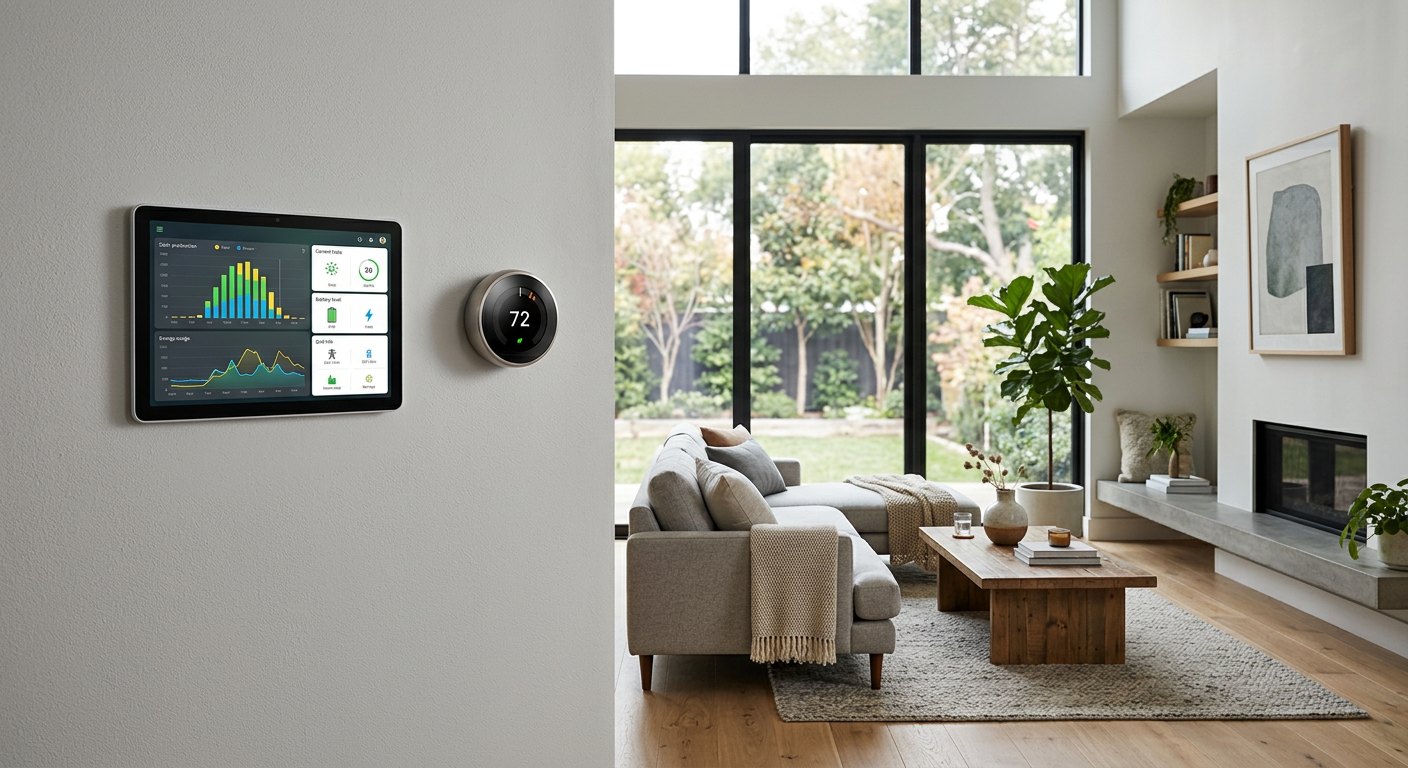
Smart thermostats also integrate with solar and battery systems for advanced energy management, making them doubly valuable once you go solar.
Colorado-Specific Thermostat Tips
Colorado's dramatic temperature swings — 70 degrees one day, 30 degrees the next — make thermostat management especially important:
- Set wider temperature ranges during mild shoulder seasons (spring and fall)
- Use "away" settings aggressively during Colorado's many outdoor-activity days
- Take advantage of Xcel Energy's thermostat rebate programs ($50 to $100 for qualifying models)
- If on a TOU rate plan, pre-cool or pre-heat during off-peak hours
Step 6: Eliminate Phantom Loads
Phantom loads — also called vampire power or standby power — are devices that consume electricity even when turned "off." The average American home wastes 5 to 10 percent of its total electricity on phantom loads, which translates to 600 to 1,200 kWh per year.
Worst Offenders
| Device | Phantom Load | Annual Cost |
|---|---|---|
| Cable/satellite box | 15-45 watts | $18-$55 |
| Game console | 10-25 watts | $12-$31 |
| Desktop computer (sleep) | 5-15 watts | $6-$18 |
| Microwave (clock display) | 3-5 watts | $4-$6 |
| Phone charger (no phone) | 0.5-2 watts | $1-$2 |
| Smart speaker | 2-4 watts | $2-$5 |
Solutions
- Smart power strips ($25 to $40) automatically cut power to devices when the primary device is turned off. One smart strip for your entertainment center eliminates 50 to 100 watts of phantom load.
- Smart plugs ($10 to $15 each) let you schedule and remotely control individual outlets
- Unplug rarely used devices like guest room TVs, seasonal equipment, and spare computers
Eliminating phantom loads saves 500 to 1,000 kWh per year — enough to reduce your solar system by 0.3 to 0.7 kW and save $900 to $2,100 on installation costs.
Step 7: Upgrade Inefficient Appliances
Major appliances account for approximately 30 percent of home electricity use. If any of your appliances are more than 10 to 15 years old, replacing them before going solar can significantly reduce your system size requirements.
Highest-Impact Upgrades
Electric water heater to heat pump water heater: This single swap can save 2,000 to 3,000 kWh per year. A heat pump water heater uses 60 to 70 percent less electricity than a standard electric tank. Cost: $1,500 to $2,500 installed, with federal tax credits and utility rebates often covering $500 to $1,000. Learn more about the all-electric home approach.
Old refrigerator to ENERGY STAR model: A refrigerator from 2005 uses roughly 500 kWh per year; a new ENERGY STAR model uses 300 to 350 kWh. If you have a second fridge in the garage (common in Colorado), unplugging it saves 400 to 800 kWh annually.
Window air conditioners to a mini-split heat pump: If you use window units for supplemental cooling, a ductless mini-split is three to four times more efficient and provides both heating and cooling.
Step 8: Address Your Pool or Hot Tub
If you have a pool or hot tub, it may be consuming 2,000 to 5,000 kWh per year — a massive portion of your total electricity. Before sizing a solar system, optimize these loads:
- Variable-speed pool pump: Saves 50 to 75 percent versus single-speed pumps. Cost: $1,000 to $2,000. Payback: 1 to 2 years.
- Hot tub cover and insulation: A well-insulated cover reduces hot tub energy consumption by 50 percent or more
- Timer optimization: Run pool pumps during solar production hours to maximize self-consumption
Putting It All Together: The Efficiency-First Solar Plan
Here is a prioritized action plan based on cost-effectiveness:
| Priority | Improvement | Typical Cost | Annual Savings | Payback |
|---|---|---|---|---|
| 1 | LED lighting | $80-$150 | $150-$200 | Under 1 year |
| 2 | Air sealing | $200-$1,000 | $200-$400 | 1-3 years |
| 3 | Smart thermostat | $150-$250 | $120-$180 | 1-2 years |
| 4 | Phantom load elimination | $50-$150 | $70-$140 | Under 1 year |
| 5 | Attic insulation | $1,500-$4,500 | $250-$500 | 4-9 years |
| 6 | Heat pump water heater | $1,500-$2,500 | $250-$400 | 4-7 years |
| 7 | Appliance upgrades | Varies | Varies | Varies |
Implementing priorities 1 through 4 (total cost: $500 to $1,500) typically reduces consumption by 15 to 25 percent and pays for itself within one to two years. Adding priorities 5 and 6 pushes total reduction to 25 to 40 percent.
How This Changes Your Solar System
For a Colorado home consuming 12,000 kWh per year, here is how efficiency improvements change the solar equation:
| Scenario | Annual Usage | System Size | Gross Cost | Net Cost (After ITC) |
|---|---|---|---|---|
| No efficiency work | 12,000 kWh | 8.5 kW | $25,500 | $17,850 |
| Basic efficiency (15% reduction) | 10,200 kWh | 7.2 kW | $21,600 | $15,120 |
| Moderate efficiency (25% reduction) | 9,000 kWh | 6.4 kW | $19,200 | $13,440 |
| Aggressive efficiency (35% reduction) | 7,800 kWh | 5.5 kW | $16,500 | $11,550 |
The savings from the moderate efficiency scenario — $4,410 less in net solar cost — far exceeds the $2,000 to $3,000 spent on efficiency improvements. Plus, you get a more comfortable home with lower ongoing energy costs.
Do Not Over-Reduce
One important caveat: do not reduce your electricity consumption so aggressively that your solar system becomes too small for future needs. Consider upcoming changes:
- Planning to buy an electric vehicle? That adds 3,000 to 4,500 kWh per year
- Switching from gas to electric heating? Budget for the additional load
- Adding a home office, shop, or ADU? Factor in new square footage
- Kids growing up and increasing energy use? Plan ahead
We recommend reducing your current consumption through efficiency while sizing your solar system for projected future usage. This gives you the best of both worlds: lower costs today and capacity for tomorrow.
Get Your Personalized Efficiency + Solar Plan
At ProGreen Solar, we help you optimize both sides of the equation. Our design process includes an energy usage analysis that identifies efficiency opportunities before we size your system. The result is a right-sized solar installation that costs less and delivers better returns.
Start with our solar calculator to see how your current usage translates to system size and savings. Then call us at (303) 484-1410 for a consultation that addresses both efficiency and solar. We will help you build the most cost-effective path to energy independence.