A solar system on your roof generates clean electricity. A battery stores it. But without intelligent management, you are leaving significant savings on the table. Smart home energy management ties everything together — solar production, battery storage, household loads, utility rates, and weather forecasts — into an automated system that makes thousands of small decisions daily to minimize your energy costs.
At ProGreen Solar, we have seen smart energy management increase the financial returns on solar-plus-battery systems by 15 to 30 percent compared to set-it-and-forget-it installations. The technology has matured significantly, and most of the tools are either included with your solar equipment or available for a modest investment.
This guide walks you through the ecosystem of smart energy management — what it is, how the pieces fit together, and how to implement it in your home.
The Smart Energy Stack
A fully integrated smart energy home consists of several layers that communicate and coordinate:
Layer 1: Solar Inverter Intelligence
Your solar inverter is the brain of your energy system. Modern smart inverters from Enphase and SolarEdge do far more than convert DC to AC power. They monitor production at the panel level, communicate with batteries, and provide the data foundation for all other smart energy decisions.
Enphase IQ System Controller — Enphase's system controller acts as the central hub, managing power flow between solar panels, IQ Batteries, the grid, and your home loads. It makes automatic decisions about when to charge the battery, when to export to the grid, and when to use stored energy — all based on your TOU rate schedule and usage patterns.
SolarEdge Home Hub — SolarEdge's integrated inverter and energy hub manages solar, battery, EV charging, and smart electrical panel functions from a single device. Its AI-based optimization learns your usage patterns and adjusts power routing to maximize savings.
Tesla Ecosystem — The Tesla Powerwall and Solar system uses the Tesla app as the central controller. Storm Watch mode, Time-Based Control, and Self-Powered mode each optimize for different priorities.
Layer 2: Energy Monitoring
You cannot manage what you do not measure. Whole-home energy monitors provide real-time visibility into where every watt goes.
Built-in monitoring — Both Enphase Enlighten and SolarEdge monitoring platforms show solar production, consumption, battery state, and grid interaction. These are included with your solar system at no additional cost.
Circuit-level monitoring — Products like Sense, Emporia Vue, and Span panels monitor individual circuits, showing you exactly which appliances consume the most energy and when. This granular data reveals optimization opportunities invisible in whole-home data.
- Sense energy monitor: $300, uses machine learning to identify individual appliances
- Emporia Vue: $100 to $200, monitors up to 16 individual circuits
- Span smart panel: $4,000 to $6,000 installed, replaces your electrical panel with a fully monitored, controllable smart panel
Layer 3: Smart Thermostats
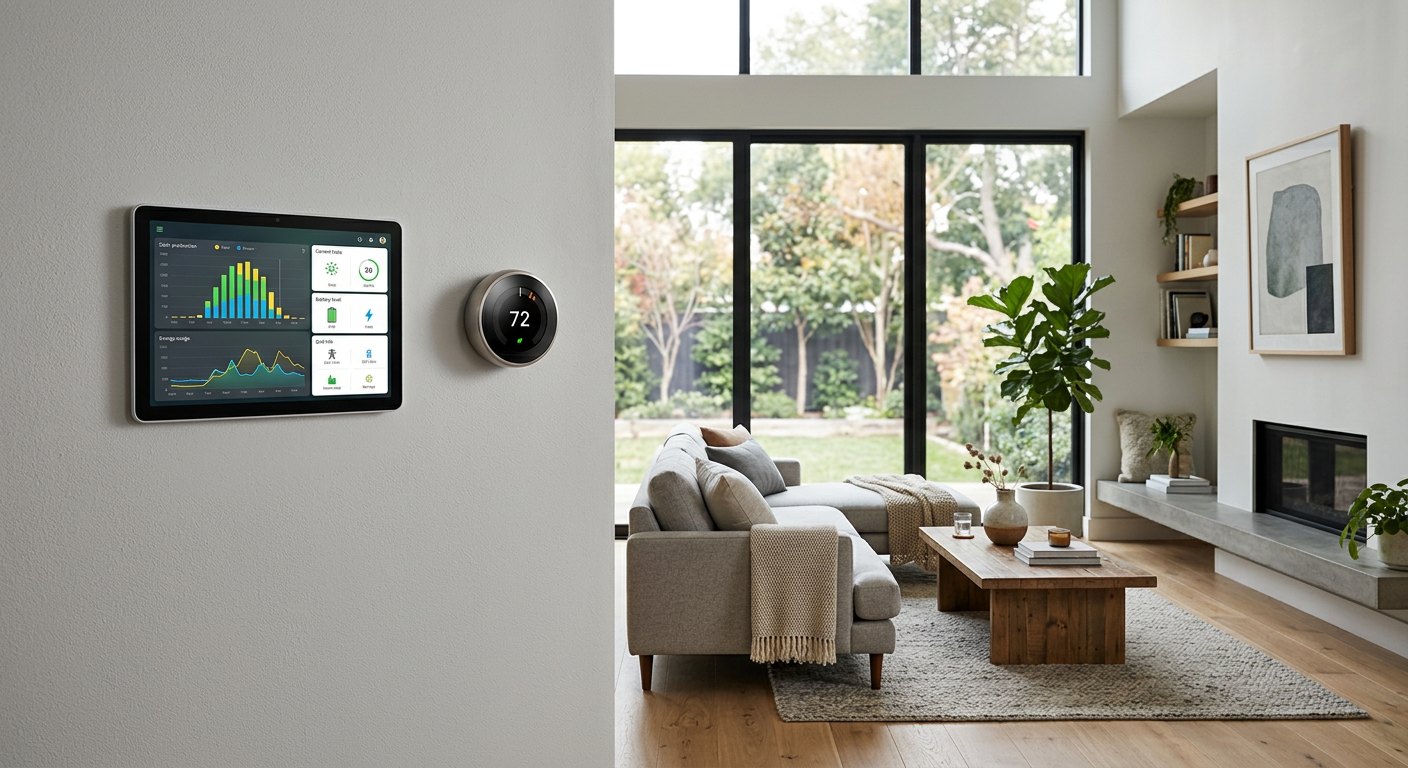
Heating and cooling represent 40 to 50 percent of home energy consumption. A smart thermostat is the single most impactful automated device in your energy management stack.
How smart thermostats integrate with solar:
- Pre-conditioning — Heat or cool your home during peak solar production (midday) when energy is free, then coast through the expensive evening peak hours
- TOU awareness — Smart thermostats with TOU integration adjust setpoints based on current electricity rates, running more aggressively during cheap hours and conserving during expensive ones
- Occupancy detection — Avoid wasting solar energy heating or cooling an empty house, redirecting that energy to battery storage or grid export
- Weather anticipation — Advanced models use weather forecasts to pre-condition your home before temperature extremes arrive
Top picks for solar homes:
- Ecobee Premium — Room sensors for zone management, TOU-aware scheduling, integrates with Alexa, HomeKit, and Google
- Google Nest Learning Thermostat — Learns your patterns automatically, Nest Renew program prioritizes clean energy when available
- Honeywell Home T9 — Room sensors, geofencing, flexible scheduling
Layer 4: Smart Appliance Scheduling
Large appliances — dishwashers, washing machines, dryers, pool pumps — can be scheduled to run during peak solar production, maximizing self-consumption.
Manual scheduling works for predictable loads. Set your dishwasher to run at 11 AM, your washer at noon, and your dryer at 1 PM when solar production peaks.
Smart plugs and switches ($10 to $25 each) can automate on/off schedules for dumb appliances. Schedule your pool pump, dehumidifier, or space heater to run during solar hours.
Smart appliances with WiFi connectivity can respond to signals from your energy management system. Some washing machines, dryers, and water heaters support demand response protocols that allow your solar system to trigger them when surplus energy is available.
Layer 5: Automated Load Shifting
The most advanced energy management systems automate the process of shifting loads to maximize solar self-consumption and minimize grid purchases. This is where the real intelligence lives.
How automated load shifting works:
- The system monitors real-time solar production and household consumption
- When solar production exceeds current consumption, the system identifies loads that can be activated
- Priority loads (battery charging, EV charging, water heating) receive surplus energy first
- Secondary loads (pool pumps, dehumidifiers, scheduled appliances) activate next
- Only after all shiftable loads are served does excess energy export to the grid
Modern systems from Enphase, SolarEdge, and Tesla handle this automatically based on rules you configure. Third-party platforms like Home Assistant and Savant provide even more granular control for tech-savvy homeowners.
TOU Optimization: The Biggest Savings Opportunity
Time-of-use rate optimization is where smart energy management delivers its biggest financial impact. Colorado's Xcel Energy offers TOU plans with significant price differences between peak and off-peak hours.
Understanding Colorado TOU Rates
Xcel Energy's residential TOU structure (simplified):
| Period | Hours | Summer Rate | Winter Rate |
|---|---|---|---|
| Off-peak | 9 PM - 1 PM (next day) | $0.08-$0.10/kWh | $0.07-$0.09/kWh |
| Mid-peak | 1 PM - 4 PM, 7 PM - 9 PM | $0.12-$0.14/kWh | $0.10-$0.12/kWh |
| On-peak | 4 PM - 7 PM weekdays | $0.20-$0.28/kWh | $0.15-$0.20/kWh |
The spread between off-peak and on-peak can exceed $0.18 per kWh — nearly a three-to-one ratio. Smart energy management exploits this spread relentlessly.
The Optimized Daily Energy Flow
Here is what an optimized day looks like in a smart solar-plus-battery home on a TOU plan:
6 AM - 10 AM (Off-peak, rising solar): Solar production begins and ramps up. Home runs on a mix of solar and cheap off-peak grid power. Battery may still be discharging from overnight use.
10 AM - 2 PM (Off-peak, peak solar): Solar production exceeds home consumption. Surplus charges the battery, heats water, charges the EV, and runs scheduled appliances. Thermostat pre-conditions the home for the coming peak period.
2 PM - 4 PM (Mid-peak): Solar production still strong. Continue charging battery and running loads. Export any remaining surplus to the grid.
4 PM - 7 PM (On-peak, highest rates): Solar production declining. Battery discharges to power the home, avoiding grid purchases at the highest rates. Thermostat coasts on the pre-conditioning from earlier. Non-essential loads are deferred.
7 PM - 9 PM (Mid-peak): Battery continues discharging. Smart loads remain deferred.
9 PM - 6 AM (Off-peak): Battery fully discharged. Grid power at cheap off-peak rates handles remaining needs. EV charges overnight. Battery may charge from cheap grid power if the solar forecast for tomorrow is poor.
This daily optimization cycle runs automatically, without any manual intervention, and saves $40 to $80 per month compared to operating the same equipment without smart management.
Real-World Savings Examples
Here are documented savings from ProGreen Solar customers using smart energy management:
Example 1: Family in Lakewood
- 8 kW solar system with 13.5 kWh Tesla Powerwall
- Ecobee thermostat with pre-conditioning
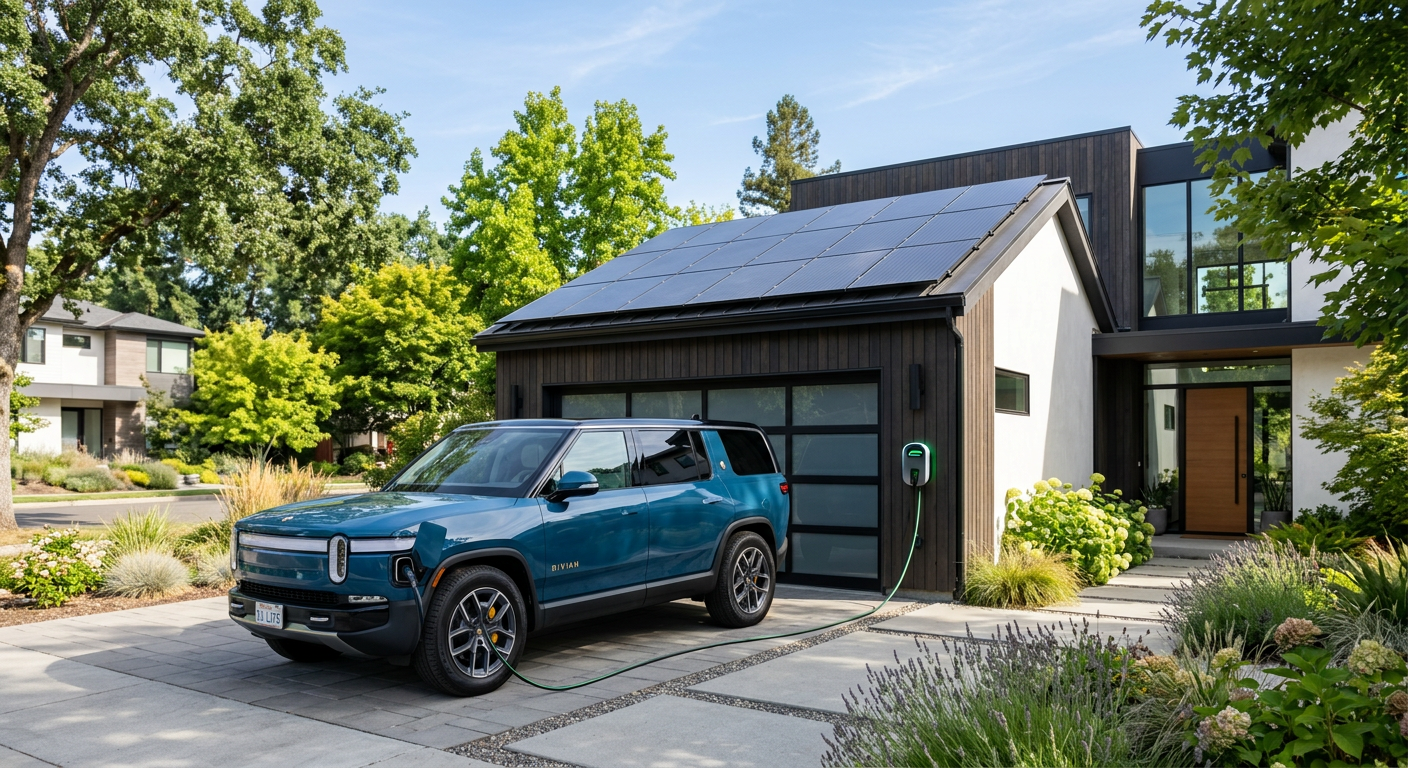
- Smart EV charging (Tesla Model Y)
- Before smart management: $45/month average grid purchases
- After smart management: $12/month average grid purchases
- Additional annual savings: $396
Example 2: Couple in Boulder
- 6.5 kW solar with 10 kWh Enphase battery
- Nest thermostat, smart pool pump scheduling
- TOU rate optimization via Enphase IQ controller
- Before smart management: $62/month average grid purchases
- After smart management: $18/month average grid purchases
- Additional annual savings: $528
Example 3: Retirees in Colorado Springs
- 7 kW solar with SolarEdge Home Battery
- Honeywell T9 thermostat, Emporia Vue monitoring
- Load shifting for water heater and HVAC
- Before smart management: $38/month average grid purchases
- After smart management: $8/month average grid purchases
- Additional annual savings: $360
Setting Up Your Smart Energy System
Step 1: Start with Your Solar and Battery Platform
Your solar inverter and battery system provide the foundation. Enphase, SolarEdge, and Tesla all offer capable built-in energy management. Configure your system for TOU optimization during installation — this is included in our standard setup at ProGreen Solar.
Step 2: Add a Smart Thermostat
If you do not already have one, install a smart thermostat and connect it to your energy management ecosystem. Configure it for TOU-aware operation and enable pre-conditioning schedules aligned with your solar production peak.
Step 3: Install Energy Monitoring
Your solar system includes production and consumption monitoring. For deeper insights, add circuit-level monitoring (Emporia Vue or Sense) to identify which loads consume the most and when.
Step 4: Schedule Major Loads
Program your dishwasher, washing machine, pool pump, and other flexible loads to run during peak solar production hours (10 AM to 2 PM). Use smart plugs for appliances that lack built-in scheduling.
Step 5: Optimize EV Charging
Configure your EV charger for solar-surplus or TOU-optimized charging. See our EV charging and solar guide for detailed instructions.
Step 6: Fine-Tune Over Time
Smart energy management is not a set-and-forget proposition. Review your monitoring data monthly for the first six months, adjusting schedules and settings as you learn your home's patterns. After the initial optimization period, quarterly reviews are sufficient.
Common Mistakes to Avoid
Over-automating. Start simple with TOU battery management and thermostat scheduling before adding complexity. Each automation layer should have a clear financial justification.
Ignoring seasonal changes. Your optimal settings change significantly between summer and winter. Solar production, TOU rate schedules, and heating and cooling loads all shift. Review and adjust your settings at each seasonal transition.
Chasing marginal savings. A smart plug for your phone charger saves $2 per year. Focus your effort on the big loads: HVAC, water heating, EV charging, and battery management.
Not checking net metering rules. Smart management strategies depend on how your utility compensates solar exports. Changes to net metering policies can shift the optimal strategy. Stay informed.
Forgetting occupant comfort. The goal is to save money without sacrificing quality of life. If your family overrides the thermostat settings daily, the automation is not serving them well. Find the comfort settings that everyone can live with.
The Future of Home Energy Management
The technology is moving toward fully autonomous operation. Within the next two to three years, expect:
- AI-driven forecasting that predicts your consumption patterns, weather, and grid prices days in advance
- Vehicle-to-home (V2H) capability that uses your EV battery as backup power and TOU arbitrage storage
- Dynamic rate integration where your home automatically responds to real-time wholesale electricity prices
- Peer-to-peer energy trading that lets neighbors buy and sell solar energy directly
- Grid services revenue from participating in automated demand response and frequency regulation markets
These advances will make smart energy management even more valuable and easier to implement.
Get Your Smart Energy System Designed
At ProGreen Solar, we design integrated smart energy systems that maximize the value of every kilowatt-hour your panels produce. Our system configurations include TOU optimization, battery management, and recommendations for complementary smart home devices tailored to your usage pattern.
Use our solar calculator to model your system, or call (303) 484-1410 to discuss a smart energy design for your home. We will show you exactly how much additional savings smart management delivers beyond basic solar — and set everything up so it runs automatically from day one.