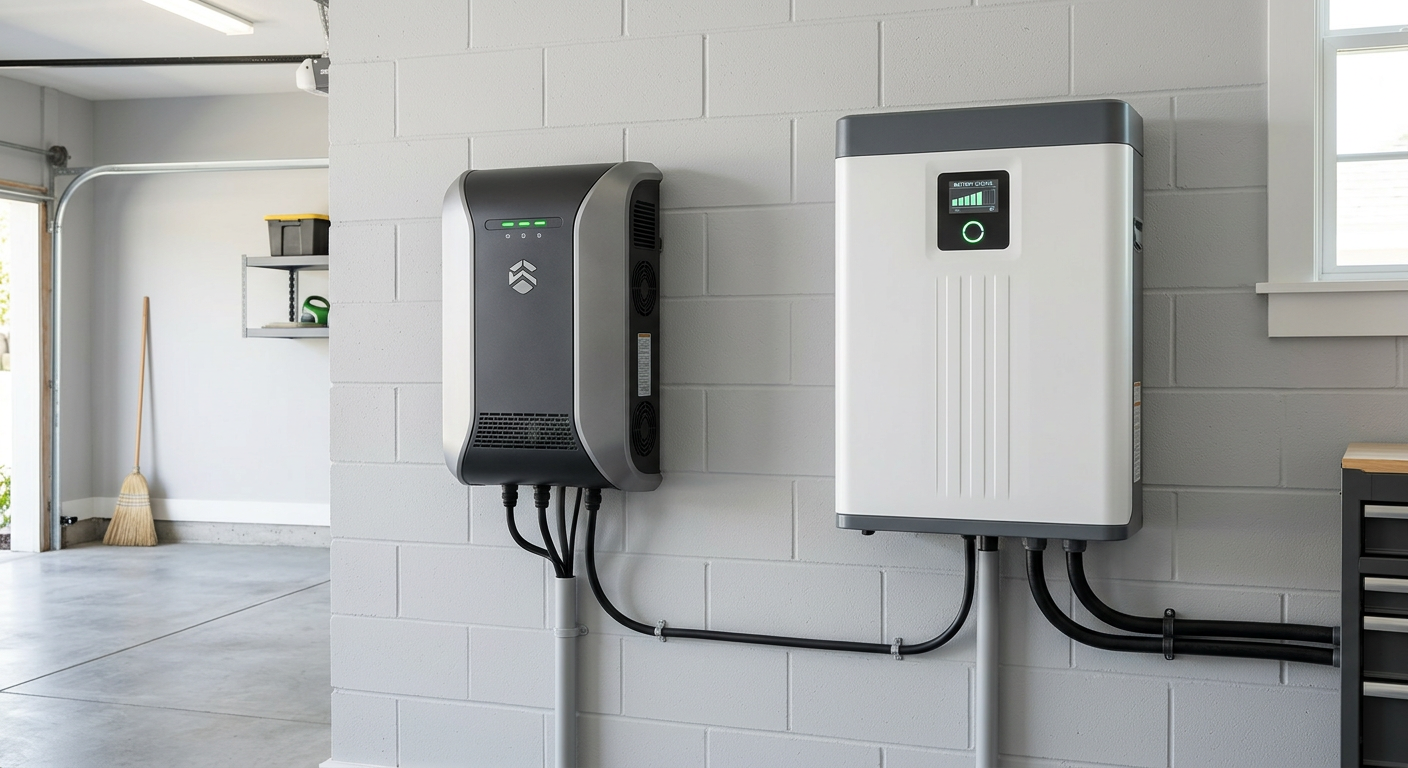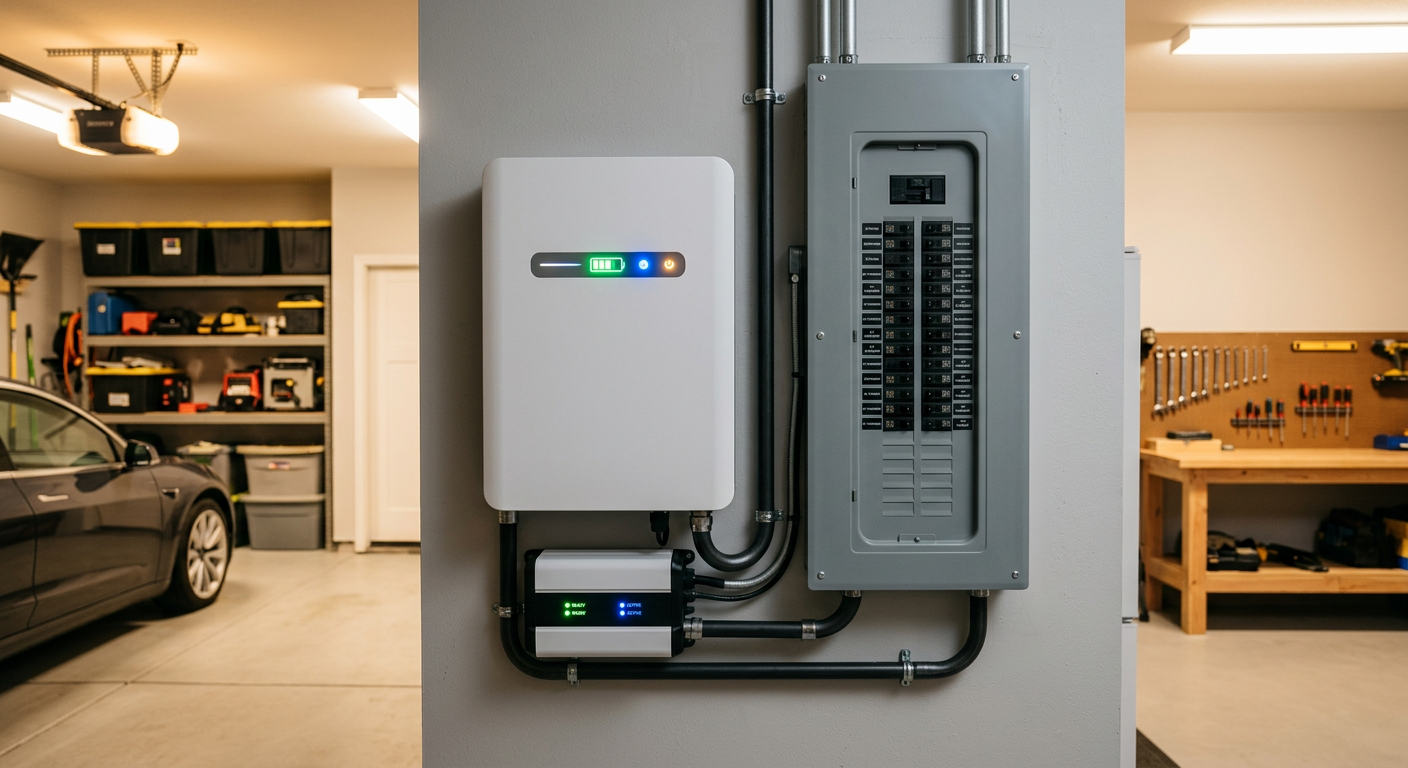
Adding battery storage to a solar system is no longer just about backup power during outages. In 2026, batteries have become a legitimate financial tool that can shorten your overall payback period, reduce demand charges, and unlock revenue streams that panels alone cannot access. But batteries also add significant upfront cost, so the economics need to make sense for your specific situation.
At ProGreen Solar, we have installed hundreds of battery systems across Colorado and tracked their real-world financial performance. This guide breaks down every revenue stream, cost factor, and scenario so you can determine whether a battery investment pencils out for your home.
The Cost of Battery Storage in 2026
Before analyzing returns, let us establish what batteries actually cost. Here are the current price ranges for the most popular residential battery systems:
| Battery System | Usable Capacity | Installed Cost (Before ITC) | Cost per kWh |
|---|---|---|---|
| Tesla Powerwall 3 | 13.5 kWh | $12,000 - $14,000 | $889 - $1,037 |
| Enphase IQ Battery 5P (2 units) | 10 kWh | $10,000 - $13,000 | $1,000 - $1,300 |
| SolarEdge Home Battery | 9.7 kWh | $9,500 - $12,000 | $979 - $1,237 |
| Franklin WH aPower | 13.6 kWh | $11,500 - $14,500 | $846 - $1,066 |
These prices include installation, electrical work, and permitting. The critical financial factor is that batteries paired with solar qualify for the federal 30 percent Investment Tax Credit, which reduces the net cost by nearly a third.
After the 30 percent ITC, a typical 13.5 kWh battery system costs $8,400 to $9,800 net.
That is the number you need to recover through savings and revenue to achieve payback.
Revenue Stream 1: Time-of-Use Arbitrage
Time-of-use (TOU) rate structures charge different prices for electricity depending on when you use it. Xcel Energy's residential TOU plan in Colorado features significant price differentials:
- Off-peak: $0.08 - $0.10 per kWh (overnight and midday)
- Mid-peak: $0.12 - $0.14 per kWh (morning and evening shoulders)
- On-peak: $0.18 - $0.24 per kWh (4 PM to 9 PM weekdays, summer peak can exceed $0.28)
Without a battery, your solar panels produce the most electricity during midday — when TOU rates are lowest. With a battery, you can store that cheap midday solar energy and discharge it during expensive peak hours.
Calculating TOU Arbitrage Value
The arbitrage value equals the price difference between when you charge and when you discharge, multiplied by daily throughput:
Daily arbitrage value = (Peak rate - Off-peak rate) x Daily discharge kWh x Roundtrip efficiency
For a 13.5 kWh battery with 90 percent roundtrip efficiency:
- Price spread: $0.20 (peak) - $0.09 (off-peak) = $0.11 per kWh
- Usable daily discharge: 13.5 kWh x 0.90 = 12.15 kWh
- Daily value: $0.11 x 12.15 = $1.34
Annual TOU arbitrage value: approximately $489
This assumes you can fully cycle the battery daily, which is realistic during summer months but less consistent in winter when peak windows shift and solar production drops. A more conservative real-world estimate accounts for about 300 full cycle days per year, bringing annual TOU value to approximately $400.
Revenue Stream 2: Demand Charge Reduction
Some Colorado utility rate structures, particularly for larger homes and commercial accounts, include demand charges based on your highest 15-minute power draw during the billing period. Even residential customers on certain Xcel Energy plans face demand-related charges.
A battery can "peak shave" by discharging during your highest usage moments, reducing the demand peak that the utility measures. For a home with a 10 kW peak demand, shaving that to 5 kW could save $15 to $30 per month on demand charges.
Annual demand charge reduction: $180 to $360 for residential, $1,000 to $5,000+ for commercial.
For most residential customers in Colorado, demand charge reduction is a secondary benefit. For commercial customers, it can be the primary economic driver. Learn more about commercial applications in our commercial solar guide.
Revenue Stream 3: Self-Consumption Optimization
Under Colorado's current net metering structure, the value you receive for exported solar electricity is lower than what you pay to import electricity from the grid. This gap has been widening as utilities push toward net billing or reduced export compensation.
With Xcel Energy, exported solar kWh are credited at the average hourly incremental cost, which varies but averages $0.05 to $0.08 per kWh — significantly less than the $0.14 to $0.16 retail rate you pay when you consume grid power.
A battery captures solar energy you would otherwise export at the low rate and lets you use it later at the full retail rate, closing this value gap.
Calculating Self-Consumption Value
Daily self-consumption value = Excess solar kWh stored x (Retail rate - Export rate) x Roundtrip efficiency
For a home producing 35 kWh of solar daily but consuming only 20 kWh during daylight hours:
- Excess solar available for storage: 13.5 kWh (battery capacity)
- Retail rate: $0.14/kWh
- Export rate: $0.07/kWh
- Value gap: $0.07/kWh
- Daily value: 13.5 x $0.07 x 0.90 = $0.85
Annual self-consumption optimization value: approximately $250 to $310
This value increases as the gap between retail rates and export compensation widens — a trend that is accelerating across the country. Within five years, as net metering policies continue to evolve, this revenue stream could double.
Revenue Stream 4: Backup Power Value
Quantifying the value of backup power is subjective, but it is real. A multiday power outage can result in:
- Spoiled food: $200 to $600 per event
- Hotel stays: $150 to $300 per night for a family
- Lost remote work income: potentially hundreds per day
- Frozen or burst pipes in winter: $5,000 to $50,000 in damage
- Sump pump failure and flooding: $5,000 to $25,000 in damage
Colorado experiences an average of 1.5 significant outage events per year, with increasing frequency due to severe weather and wildfire-related grid shutoffs. If you assign even a modest $300 annual value to outage protection, it contributes meaningfully to the payback calculation.
Estimated annual backup power value: $300 to $500
This value is highly personal. Homes with medical equipment, home offices, or in areas prone to outages will value backup power much more highly.
Revenue Stream 5: Virtual Power Plant Programs
Utilities and grid operators are increasingly offering payments to homeowners who allow their batteries to be dispatched during grid emergencies. Xcel Energy's demand response programs and emerging virtual power plant (VPP) programs can pay $50 to $200 per year for participation.
These programs are in their early stages in Colorado, but growing rapidly. In markets like California and Vermont, VPP payments already reach $300 to $500 annually. As Colorado's grid faces increasing stress from electrification and climate-driven demand peaks, expect these payments to grow.
Estimated annual VPP value: $75 to $200 (growing)
Total Annual Value: Stacking Revenue Streams
Here is the complete picture when you stack all revenue streams:
| Revenue Stream | Conservative Annual Value | Optimistic Annual Value |
|---|---|---|
| TOU Arbitrage | $350 | $500 |
| Demand Charge Reduction | $180 | $360 |
| Self-Consumption Optimization | $250 | $310 |
| Backup Power Value | $300 | $500 |
| VPP Participation | $75 | $200 |
| Total Annual Value | $1,155 | $1,870 |
Not every home will access every revenue stream. A home on a flat-rate plan without TOU pricing would not capture TOU arbitrage value. A home with minimal excess solar production gets less self-consumption benefit. The actual value depends on your specific utility rate, usage pattern, and system configuration.
Payback Period Calculations
Using our net battery cost and stacked revenue streams:
Scenario 1: Moderate Value Stack
- Net battery cost after ITC: $9,100
- Annual value: $1,155
- Simple payback: 7.9 years
- With 3.5% annual electricity rate increases: 6.8 years
Scenario 2: High Value Stack
- Net battery cost after ITC: $9,100
- Annual value: $1,870
- Simple payback: 4.9 years
- With 3.5% annual electricity rate increases: 4.3 years
Scenario 3: Minimal Value (Backup Only)
- Net battery cost after ITC: $9,100
- Annual value: $600 (backup + minimal TOU)
- Simple payback: 15.2 years
- With rate increases: 12.1 years
Given that modern lithium-ion batteries carry 10 to 15 year warranties and expected lifespans of 15 to 20 years, Scenarios 1 and 2 represent solid investments. Scenario 3 is financially marginal — but may still make sense if backup power has high personal value for you.
When Batteries Make the Most Financial Sense
Based on hundreds of installations and financial analyses, here are the situations where batteries deliver the strongest ROI:
Strong Battery Economics
- Homes on TOU rate plans with significant peak/off-peak price spreads
- Areas with frequent outages (mountain communities, wildfire zones, aging infrastructure)
- Homes with high electricity usage that can fully cycle the battery daily
- Net billing customers whose export compensation is well below retail rate
- Homes planning EV purchases that can charge from the battery during off-peak hours
Weaker Battery Economics
- Homes with generous net metering at full retail rate (though this is disappearing)
- Very small homes with low electricity consumption that cannot fully utilize battery capacity
- Homes with natural gas backup (generator costs are lower, though operating costs are higher)
- Budget-constrained installations where the battery cost would reduce overall solar system size
The Future Value Factor
Battery economics are improving rapidly due to three converging trends:
1. Falling battery costs. Lithium-ion battery prices have dropped 90 percent since 2010 and continue falling 10 to 15 percent annually. The battery you install today at $9,000 net may cost $6,000 in three years — but you will have captured three years of savings by then.
2. Rising electricity rates. Colorado electricity rates have increased 3 to 5 percent annually over the past decade, and the trend is accelerating as utilities invest in grid modernization and wildfire mitigation. Higher rates increase every battery revenue stream.
3. Declining net metering value. As utilities shift from net metering to net billing, the self-consumption value of batteries increases dramatically. In states that have already made this transition, battery economics are 40 to 60 percent stronger than in states with full retail net metering.
For these reasons, we tell customers that battery economics will be stronger five years from now than they are today — but the batteries you install today capture all that improving value from day one.
Financing a Battery Addition
The economics of batteries interact with financing in important ways. If you are financing your solar and battery system together, the battery adds $80 to $120 per month to your loan payment but delivers $95 to $155 per month in value — potentially cash-flow positive from day one.
If you are adding a battery to an existing solar system, the standalone battery qualifies for the 30 percent ITC as long as it is charged primarily (80 percent or more) from your solar panels. Many solar financing options can accommodate battery additions.
Our Recommendation
At ProGreen Solar, we recommend batteries for about 60 percent of our residential customers. The economic case is strong and getting stronger, but it is not universal. During your consultation, we model your specific utility rate, usage pattern, outage risk, and financial goals to determine whether a battery makes sense.
For customers on Xcel Energy TOU plans with average to above-average electricity consumption, a Tesla Powerwall or Enphase IQ Battery typically pays for itself in 5 to 8 years while providing backup power for 15 or more years. That is a strong investment by any measure.
For customers primarily interested in backup power without strong TOU savings, we recommend evaluating whether a partial-home backup configuration can meet your needs at a lower cost point.
Get Your Custom Battery Analysis
The only way to know exactly how batteries pencil out for your home is to run the numbers with your specific data. Use our solar calculator to model different system configurations, or call us at (303) 484-1410 for a detailed battery economic analysis.
We will model your actual utility rate, usage pattern, and TOU schedule to show you exactly when a battery pays for itself — and what it earns over its full lifetime. Whether the answer is "install batteries now" or "wait two years," we will give you the honest analysis.