Denver is one of the best cities in the United States for residential solar energy. With 300 days of sunshine per year, an elevation of 5,280 feet that intensifies solar radiation, and strong state and federal incentives, Denver homeowners are uniquely positioned to benefit from solar power. Add in Xcel Energy's net metering program and rising electricity rates, and the financial case for solar in Denver is compelling.
This guide covers everything Denver homeowners need to know — from neighborhood-specific considerations to permitting, costs, and practical tips for maximizing your solar investment.
Denver's Solar Resource
Sunshine Data
Denver averages approximately 300 sunny or partly sunny days per year, making it one of the sunniest cities in the country. Key metrics:
- Average peak sun hours: 5.87 per day
- Annual solar irradiance: 5.5 kWh/m²/day (Global Horizontal Irradiance)
- Ranking: Denver receives more annual sunshine than Miami, Houston, or Los Angeles
- Best production months: May through August
- Lowest production month: December (still about 45% of June production)
Denver's solar resource is enhanced by its 5,280-foot elevation, which reduces atmospheric filtering of sunlight by roughly 10 percent compared to sea level. This altitude advantage is a significant factor in Denver's excellent solar production. For more details, see our article on solar performance in Colorado's climate.
Average System Production
A typical Denver residential solar system produces:
- Per kW installed: 1,550-1,700 kWh per year
- 8 kW system: 12,400-13,600 kWh per year
- 10 kW system: 15,500-17,000 kWh per year
- 12 kW system: 18,600-20,400 kWh per year
These figures account for real-world conditions including temperature effects, snow, clouds, and equipment losses. Learn more about production estimates in our guide on how much electricity solar panels produce.
Denver Neighborhood Solar Considerations
Park Hill and Stapleton (Central Park)
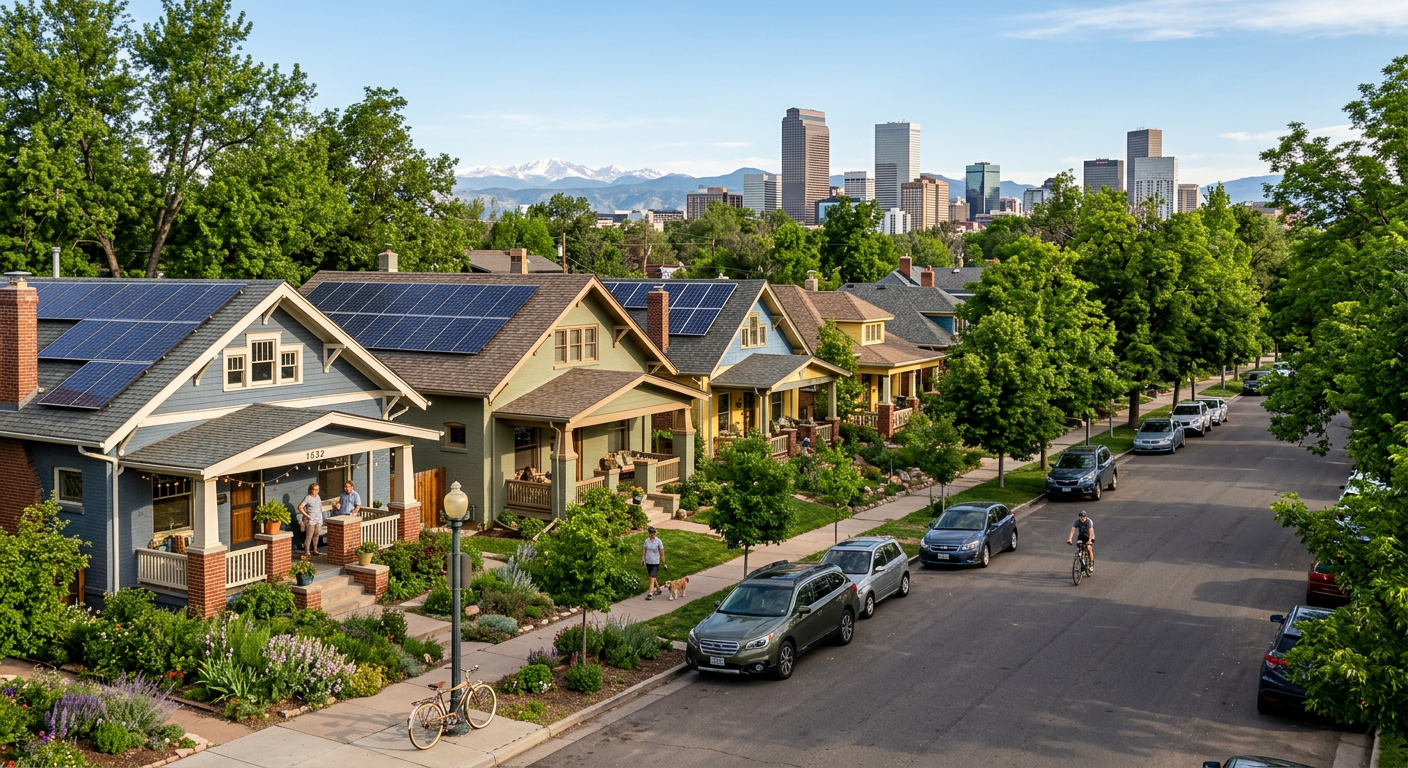
These popular northeast Denver neighborhoods feature a mix of older bungalows (Park Hill) and newer construction (Central Park/Stapleton). Solar considerations:
- Park Hill: Older homes often have smaller roofs and mature trees that create shading. Microinverters are recommended for shade mitigation. Panel efficiency matters here — choose high-efficiency panels to maximize production on limited roof space.
- Central Park: Newer construction with larger roof areas and fewer trees. Excellent solar candidates with room for larger systems. Many homes have south-facing or west-facing roof planes well-suited for panels.
Washington Park and Congress Park
These desirable central Denver neighborhoods feature:
- Mature tree canopy: Large cottonwoods and elms can shade rooftops, particularly in summer when leaves are full. Shade analysis is critical for system design.
- Historic architecture: Some homes have complex rooflines with dormers, turrets, or steep pitches that require creative panel placement.
- HOA considerations: While Colorado law (C.R.S. 38-30-168) prohibits HOAs from unreasonably restricting solar, some neighborhoods have aesthetic guidelines. All-black panels with black frames blend well with most roof types.
Highlands and LoHi
These trending northwest Denver neighborhoods mix renovated Victorians with modern infill:
- Mixed roof orientations: Many homes have multiple roof planes. Microinverters handle this efficiently.
- Smaller lots: Close neighbors can create shading from adjacent structures. Shade analysis is essential.
- New construction: Modern builds often include solar-ready features like conduit runs and electrical panel capacity.
Green Valley Ranch and Montbello
These northeast Denver neighborhoods offer some of the best solar conditions in the city:
- Newer construction: Many homes built in the 2000s-2020s with larger roof areas
- Minimal tree shading: Younger landscaping means less shading today (though trees will grow over time)
- Standard roof pitches: Typically 4:12 to 6:12, close to optimal for solar
- Excellent sun exposure: Open lots with minimal obstruction
Lakewood, Arvada, and Westminster
These western suburbs (technically separate cities but part of the Denver metro) are among our most active installation areas:
- Suburban lot sizes with ample roof area for larger systems
- Many south-facing roof planes in typical suburban home designs
- Moderate tree cover — more than newer developments but manageable with microinverters
- All served by Xcel Energy with the same net metering policies
Castle Rock, Parker, and Highlands Ranch
Southern suburbs with excellent solar conditions:
- Newer construction with larger homes and roof areas
- Higher elevation (6,000+ feet for Castle Rock) means even more intense solar radiation
- Xcel Energy or IREA service territory — check your specific utility for net metering details
- HOA presence: Most neighborhoods have HOAs, but Colorado law protects your right to install solar
Xcel Energy in Denver
The vast majority of Denver homeowners are Xcel Energy electricity customers. Key points for Denver solar homeowners:
Current Rates
Xcel Energy's Denver-area residential rates as of 2026:
- Standard residential (R): Approximately $0.14-$0.17 per kWh (tiered)
- Time-of-use (RE-TOU): Off-peak ~$0.08-$0.10, mid-peak ~$0.12-$0.15, on-peak ~$0.18-$0.25
- Monthly service charge: ~$10-$12 (fixed, regardless of consumption)
For complete Xcel net metering details, see our Xcel Energy net metering guide.
Rate Trends
Xcel Energy has raised residential rates by an average of 3 percent per year over the past decade. With billions in planned clean energy infrastructure investment to meet Colorado's 100% clean energy targets, rates are expected to continue increasing. This makes solar increasingly valuable over time — your fixed solar cost looks better and better as grid rates climb.
Net Metering
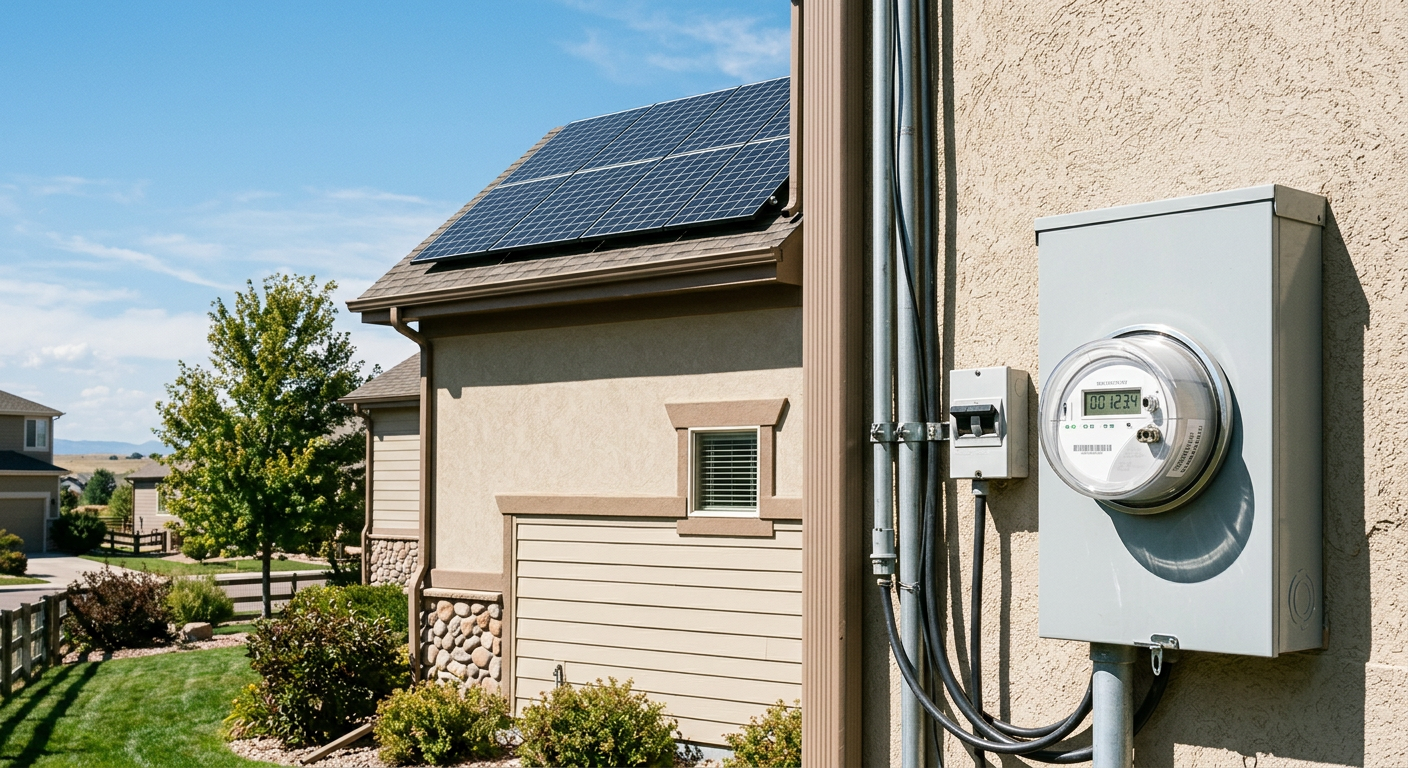
Xcel's net metering program credits your excess solar at the full retail rate, with monthly rollover and an annual true-up in April. The program is well-established and straightforward. Your installer handles the interconnection application process.
Denver Permitting Process
Building Permit
Denver requires a building permit for solar installations. The process:
- Application submission: Your installer submits plans, structural calculations, and electrical diagrams to Denver's Development Services department
- Plan review: Typically 5 to 15 business days for residential solar
- Permit issuance: Once approved, your installer can schedule installation
- Inspection: After installation, a city inspector verifies the work meets code
- Final approval: The inspection sign-off allows your installer to proceed with Xcel interconnection
Denver-Specific Code Requirements
Denver follows the International Residential Code (IRC) and National Electrical Code (NEC) with local amendments. Key requirements include:
- Fire setback requirements: Panels must maintain specific clearances from roof edges, ridges, and valleys to provide firefighter access pathways
- Structural adequacy: The roof must support the additional weight of panels and racking (typically 3-4 pounds per square foot)
- Rapid shutdown: NEC 2017+ requires module-level rapid shutdown capability — met by both microinverters and power optimizers
ProGreen Solar handles all Denver permitting on your behalf, including plan preparation, submission, and inspection coordination.
Denver Solar Costs
Average System Costs
Denver solar installation costs in 2026:
| System Size | Gross Cost | After 30% Tax Credit |
|---|---|---|
| 6 kW | $15,600-$19,500 | $10,920-$13,650 |
| 8 kW | $20,800-$26,000 | $14,560-$18,200 |
| 10 kW | $26,000-$32,500 | $18,200-$22,750 |
| 12 kW | $31,200-$39,000 | $21,840-$27,300 |
These costs include panels, inverters, racking, electrical components, labor, permitting, and Xcel interconnection. Premium equipment (REC Alpha panels, Enphase microinverters, battery storage) falls toward the higher end.
For a detailed cost breakdown, see our Colorado solar cost guide.
Incentives for Denver Homeowners
- Federal ITC: 30 percent of total system cost (details here)
- Colorado sales tax exemption: Solar equipment exempt from state sales tax (2.9%)
- Denver sales tax exemption: Denver also exempts solar from local sales tax
- Property tax exemption: Added home value from solar is exempt from property tax
- Xcel rebates: Check current availability — Xcel has offered solar rebates intermittently
Full incentive details: Colorado solar incentives guide
Return on Investment
A typical Denver solar installation shows:
- Payback period: 7 to 10 years (depending on system size, electricity usage, and financing)
- 25-year savings: $35,000 to $60,000 (depending on rate increases)
- Home value increase: $15,000 to $25,000 (more details)
- ROI: 10 to 15 percent annual return on investment
For a comprehensive financial analysis, see Is Solar Worth It?
Denver Weather and Solar
Hail
Denver lies in Colorado's "hail alley." Major hailstorms strike the metro area multiple times per year during late spring and summer. Solar panels are tested to withstand 1-inch hail at 52 mph, and most premium panels exceed this standard. In our Denver installations, hail damage to panels has been rare despite numerous severe storms. For complete hail information, see our hail and solar panels guide.
Snow
Denver averages about 57 inches of snow per year. Most snow clears from solar panels within one to three days thanks to the panels' dark surfaces, tilt angle, and Denver's abundant sunshine between storms. Annual production loss from snow is typically just 2 to 5 percent. See our Colorado climate guide for details.
Wind
Denver occasionally experiences strong chinook winds from the west. Properly engineered solar mounting systems handle these winds without issue. All systems we install meet or exceed Denver's wind load requirements.
Tips for Denver Solar Homeowners
1. Get Multiple Quotes
We recommend getting at least three quotes from different installers. This helps you compare pricing, equipment, and the quality of the consultation experience. See our guide on choosing a solar installer in Colorado.
2. Consider Future Electricity Needs
If you are planning to buy an electric vehicle, install a heat pump, or add a home addition, size your solar system to accommodate future electricity usage, not just current consumption.
3. Ask About Battery Storage
With Xcel's evolving rate structures and Colorado's occasional power outages, battery storage is worth discussing. Even if you do not install a battery now, consider a "storage-ready" system design that makes future battery addition easy.
4. Review Your Xcel Bills
Understanding your electricity consumption patterns — monthly usage, peak demand, seasonal variation — helps your installer design the right system. Bring 12 months of Xcel bills to your consultation.
5. Check Your Roof Condition
Solar panels last 25 to 30 years. If your roof needs replacement within the next five to ten years, consider re-roofing before or alongside your solar installation. Installing solar on a roof that will need replacement in a few years means paying to remove and reinstall the panels later.
Get Started with Denver Solar
Denver's combination of exceptional sunshine, strong incentives, and supportive energy policies makes it one of the best cities in America for residential solar. Whether you live in a Park Hill bungalow or a Green Valley Ranch new build, solar can significantly reduce your electricity costs and increase your home value.
Use our solar calculator to get a personalized estimate based on your Denver address, or call ProGreen Solar at (303) 484-1410 for a free consultation. We have installed solar on hundreds of Denver homes and understand the unique considerations for every neighborhood in the metro area.