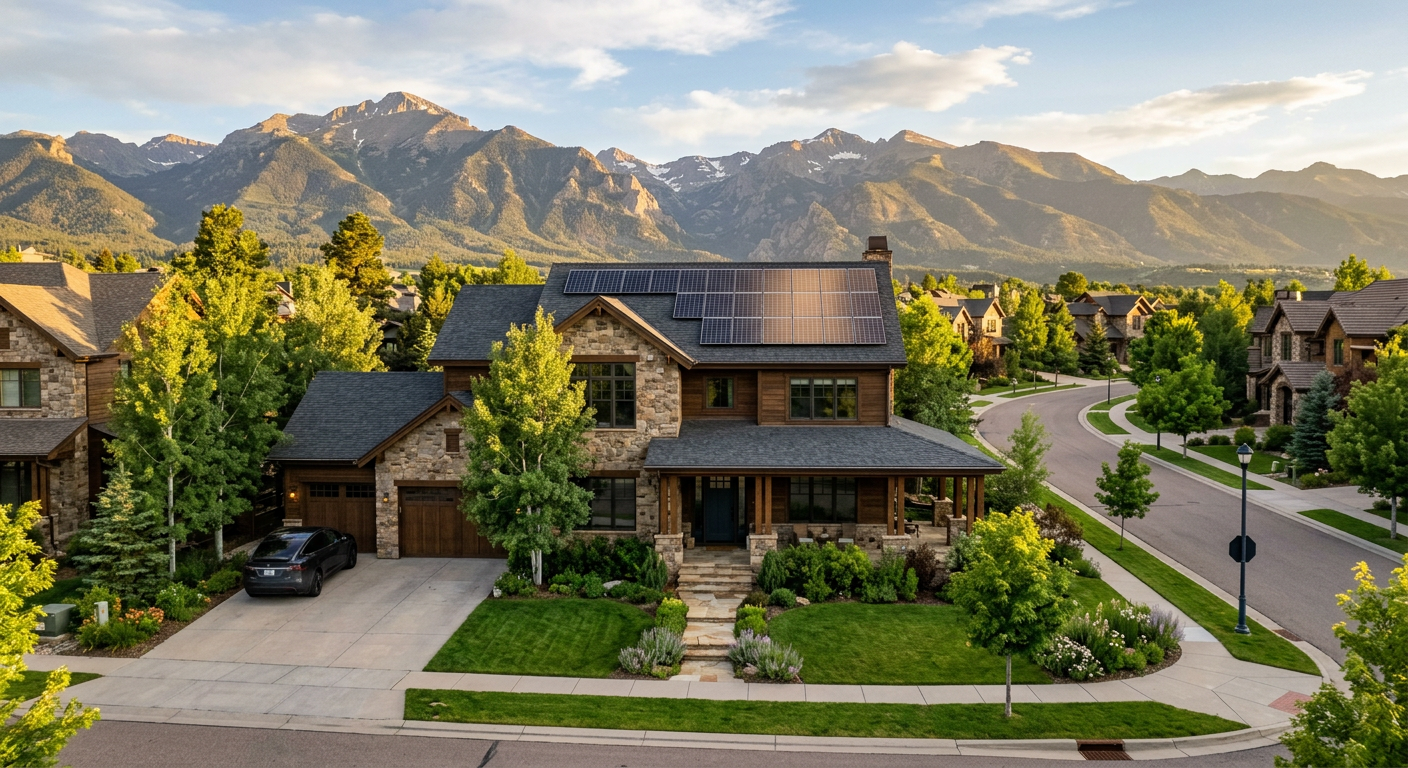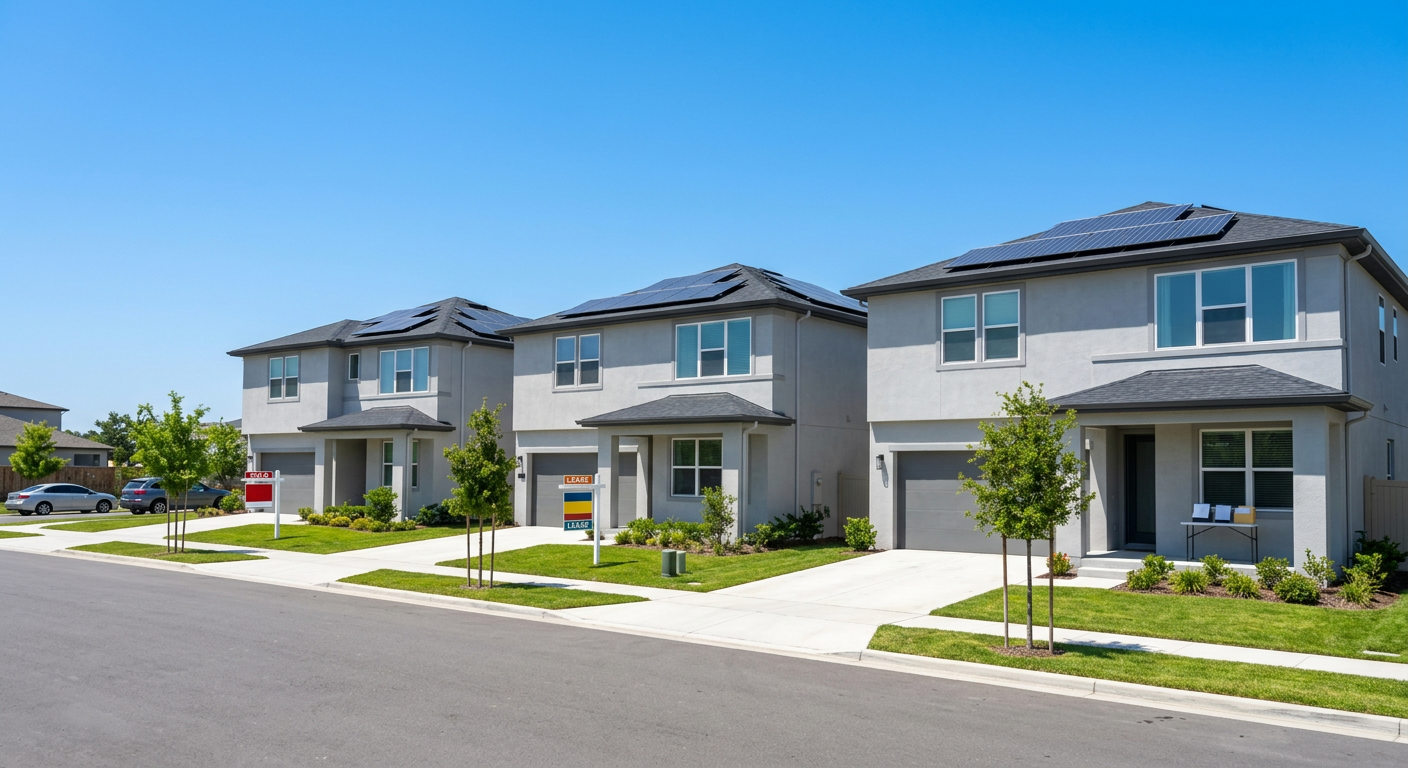
Installing solar panels is not just a way to save on electricity — it is a home improvement that actually pays you back at resale. Multiple studies from leading research institutions have consistently found that solar-equipped homes sell for more money and spend less time on the market.
For Colorado homeowners weighing the decision to go solar, the home value impact is an important piece of the financial puzzle. Here is what the research says.
What the Research Shows
The Lawrence Berkeley National Laboratory Study
The most comprehensive study on solar and home values was conducted by Lawrence Berkeley National Laboratory (LBNL), analyzing over 22,000 home sales across eight states. Key findings:
- Solar homes sold for a premium of approximately $4 per watt of installed capacity
- A typical 7 kW (7,000 watt) system increased home value by approximately $28,000
- The premium was consistent across different markets, home sizes, and price ranges
- Solar homes sold for 3.7 to 4.1 percent more than comparable non-solar homes
Zillow's Analysis
Zillow's research team analyzed millions of home sales nationwide and found:
- Solar homes sold for 4.1 percent more than comparable homes without solar
- In Colorado specifically, the premium was slightly above the national average
- The premium was highest in markets with high electricity rates and strong solar awareness
The Appraisal Institute
The Appraisal Institute, the professional association for real estate appraisers, has recognized solar as a value-adding home improvement. They have developed specific guidelines (the PV Value tool) for appraising solar-equipped homes based on the present value of future energy savings.
National Bureau of Economic Research
A 2023 NBER study found that solar panels increase home values by 3 to 4 percent in most markets, with the premium being directly related to local electricity rates — the higher the rates, the more valuable the solar system.
How Much Value Does Solar Add in Colorado?
Using the $4-per-watt benchmark and Colorado's average system sizes:
| System Size | Estimated Value Increase | Net Cost (After ITC) | Instant Equity Gain |
|---|---|---|---|
| 5 kW | $20,000 | $9,800 | $10,200 |
| 7 kW | $28,000 | $14,700 | $13,300 |
| 10 kW | $40,000 | $19,600 | $20,400 |
These numbers suggest that installing solar in Colorado can create immediate positive equity — the increase in home value exceeds the net cost of the system from day one.
Colorado's strong real estate market, high solar awareness, and above-average electricity rates create favorable conditions for solar premiums. Buyers in cities like Denver, Boulder, Fort Collins, and Colorado Springs are increasingly solar-savvy and willing to pay for a home that comes with locked-in low energy costs.
Factors That Affect the Solar Premium
Owned vs. Leased Systems
The ownership structure of the solar system has a dramatic impact on home value:
Owned systems (cash or loan): Full value increase. The system is a permanent improvement to the property, like a new kitchen or bathroom. If you have a solar loan, it can be paid off before sale or the buyer assumes the remaining balance.
Leased systems: Complicated. The buyer must qualify for and agree to assume the lease. Some buyers view this as a liability rather than an asset. Real estate agents report that leased solar can slow down sales and occasionally deter buyers entirely.
This is another strong argument for purchasing your system rather than leasing. For a detailed financing comparison, see Solar Loans vs. Leases vs. PPAs.
System Age and Condition
Newer systems with remaining warranty coverage command higher premiums than older systems. A 2-year-old system with 23 years of warranty remaining is far more valuable to a buyer than a 15-year-old system with 10 years of warranty left.
The panels ProGreen Solar installs from REC, Meyer Burger, and QCell carry 25 to 30-year warranties, ensuring maximum value at resale for decades.
System Size Relative to Home
The premium is highest when the system is appropriately sized for the home's electricity needs. An 8 kW system on a 2,000-square-foot home generates strong savings and commands a proportional premium. The same 8 kW system on a 5,000-square-foot home may be undersized and viewed as a partial solution.
Local Electricity Rates
In markets with high electricity rates, solar premiums are larger because the savings are more significant. Colorado's rates ($0.12-$0.18/kWh depending on utility and tier) create meaningful savings that buyers value highly.
Aesthetic Quality
A clean, professional installation with all-black panels and minimal visible wiring looks like a premium upgrade. A poorly installed system with misaligned panels, visible conduit, and clashing panel colors can actually detract from curb appeal.
Quality matters. This is why ProGreen Solar emphasizes clean installations with aesthetically consistent equipment — we are protecting your home's value in addition to reducing your energy costs.
Property Tax Implications
One common concern: "If solar increases my home value, will my property taxes go up?"
In Colorado, the answer is no. Colorado law provides a property tax exemption for residential solar energy systems. The value added by your solar panels is completely excluded from your property tax assessment. You get the full benefit of increased market value without paying any additional property taxes.
This exemption is automatic — you do not need to file any special paperwork. Your assessor is required to exclude the solar system's value from your taxable property valuation.
How Solar Affects the Home Selling Process
Marketing Advantage
Solar-equipped homes have a distinct marketing advantage. Real estate listings can highlight:
- Monthly energy savings
- Environmental benefits
- Modern, energy-efficient home features
- Transferable warranties
In Colorado's eco-conscious market, solar is a selling feature that resonates with many buyers.
Appraisal Considerations
Getting a fair appraisal for a solar home is essential. Not all appraisers are familiar with solar valuation. Tips for ensuring an accurate appraisal:
- Provide documentation — Give the appraiser your system specifications, production data, and savings records.
- Request a solar-aware appraiser — Ask your real estate agent for an appraiser trained in the PV Value methodology.
- Show comparable sales — If possible, provide examples of recent solar home sales in your area that demonstrate premiums.
Disclosure Requirements
When selling a solar-equipped home, you should disclose:
- System specifications and age
- Warranty documentation (panels, inverters, workmanship)
- Production history (available through your monitoring system)
- Ownership structure (owned outright, remaining loan balance, or lease terms)
- Maintenance history
Transfer Process
For owned systems, the transfer is simple — the system conveys with the home like any other permanent fixture. If there is a remaining solar loan balance, it is typically paid off at closing from the seller's proceeds.
For leased systems, the new buyer must qualify for and agree to assume the lease. This adds complexity to the sale and can be a sticking point in negotiations.
Long-Term Value Trajectory
Solar's value to future buyers is likely to increase over time:
- Rising electricity rates make solar savings more valuable each year
- Growing environmental awareness makes solar more desirable to buyers
- Increasing EV adoption means more buyers value a home that can "fuel" their car
- Grid reliability concerns make homes with solar (and battery) more attractive
- Building codes are moving toward solar requirements for new construction, normalizing solar in the housing market
Comparison to Other Home Improvements
How does solar compare to other home upgrades in terms of return on investment?
| Home Improvement | Average Cost | Value Added | ROI |
|---|---|---|---|
| Solar panels (7 kW) | $14,700 | $28,000 | 190% |
| Kitchen renovation | $30,000 | $22,000 | 73% |
| Bathroom addition | $25,000 | $18,000 | 72% |
| New windows | $12,000 | $8,400 | 70% |
| New roof | $15,000 | $10,500 | 70% |
| Deck addition | $10,000 | $7,200 | 72% |
Solar delivers the highest ROI of any major home improvement, and it is the only one that also generates ongoing savings (reduced electricity bills) before you sell.
The Bottom Line
Solar panels are one of the few home improvements that increase your home's value by more than they cost. For Colorado homeowners, the combination of a strong real estate market, high solar awareness, favorable property tax treatment, and meaningful energy savings creates an exceptionally favorable environment for solar property value premiums.
Whether you are planning to stay in your home for 25 years or thinking about selling in 5, solar adds measurable financial value.
Ready to invest in your home and your energy future? Get your free solar estimate or call ProGreen Solar at (303) 484-1410. We will show you exactly how solar pencils out — both as a monthly savings tool and as a value-adding home improvement.