When shopping for solar panels, efficiency is one of the first specifications you encounter — and one of the most misunderstood. A panel rated at 22 percent efficiency sounds impressive, but what does that number actually mean? Is it worth paying more for higher efficiency? And how much difference does a few percentage points really make on your roof?
This guide cuts through the marketing hype and explains what solar panel efficiency truly means for homeowners.
What Is Solar Panel Efficiency?
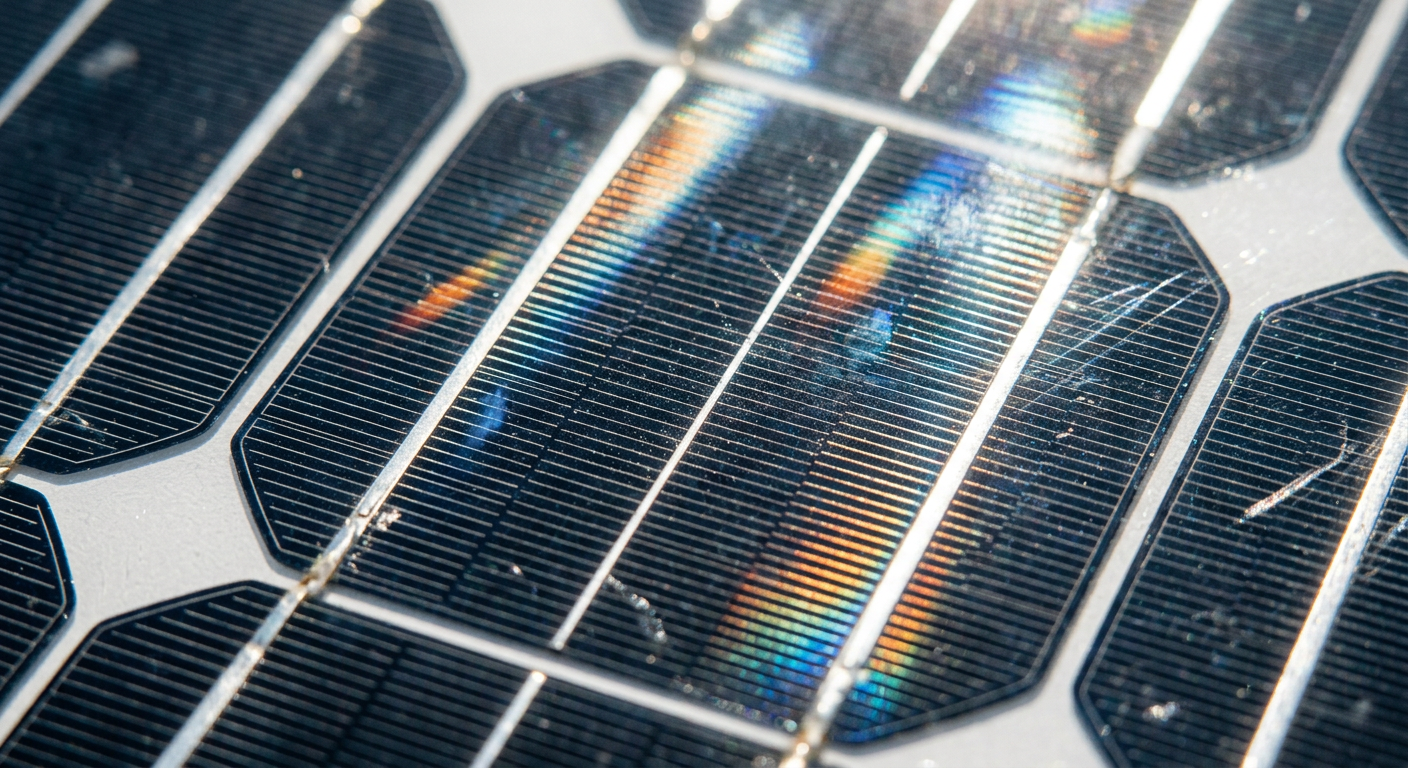
Solar panel efficiency is the percentage of sunlight energy that a panel converts into electricity. If 1,000 watts of sunlight hit a panel with 20 percent efficiency, it produces 200 watts of electricity. The remaining 800 watts are reflected, absorbed as heat, or lost to other conversion inefficiencies.
As of 2026, residential solar panels range from about 17 percent to 22.8 percent efficiency. Laboratory cells have achieved over 47 percent, but commercial panels are limited by manufacturing costs and real-world constraints.
Here is where the major panel brands stand:
| Manufacturer | Top Model | Efficiency | Wattage |
|---|---|---|---|
| REC Alpha Pure-R | Pure-R Series | 22.3% | 430W |
| Meyer Burger | White Series | 22.1% | 410W |
| SunPower Maxeon | Maxeon 7 | 22.8% | 440W |
| QCell | Q.PEAK DUO ML-G11 | 21.4% | 420W |
| Canadian Solar | HiHero | 22.5% | 445W |
| LONGi | Hi-MO 7 | 22.0% | 425W |
How Efficiency Affects System Size
Higher efficiency panels produce more electricity per square foot. This matters primarily when roof space is limited. Let us compare:
Scenario: A home needing a 7 kW system
- 20% efficiency panels (370W each): Need 19 panels, approximately 350 square feet
- 22% efficiency panels (420W each): Need 17 panels, approximately 310 square feet
The higher-efficiency option requires 2 fewer panels and 40 fewer square feet of roof space. For a large roof with plenty of available space, this difference is negligible. For a smaller or complex roof, those extra square feet could be the difference between meeting your energy goals and falling short.
Types of Solar Cells and Their Efficiency
Monocrystalline Silicon
Monocrystalline cells are cut from a single silicon crystal, giving them a uniform appearance and the highest efficiency of standard silicon technology. They dominate the residential market in 2026 and are what we install at ProGreen Solar.
Efficiency range: 19 to 22.8 percent Appearance: Black or very dark blue Cost: Moderate to premium Best for: Most residential installations
Polycrystalline Silicon
Polycrystalline cells are made from multiple silicon crystals melted together. They are slightly less efficient but less expensive to manufacture.
Efficiency range: 16 to 18 percent Appearance: Blue with a speckled pattern Cost: Budget-friendly Best for: Large installations where space is not a constraint (primarily commercial)
Heterojunction (HJT)
Heterojunction technology combines crystalline silicon with thin-film amorphous silicon layers, achieving higher efficiency and better temperature performance. Meyer Burger is a leader in HJT technology.
Efficiency range: 21 to 23 percent Appearance: Black Cost: Premium Best for: Homeowners wanting the latest technology with the best temperature coefficients
N-Type vs. P-Type
Within monocrystalline panels, the silicon can be either N-type or P-type:
- P-type: The traditional standard. Good performance, lower cost. Slightly more susceptible to light-induced degradation (LID).
- N-type: Newer technology. Higher efficiency, better degradation resistance, superior low-light performance. Most premium panels in 2026 use N-type cells. REC Alpha panels use N-type HJT cells.
What Actually Affects Real-World Efficiency
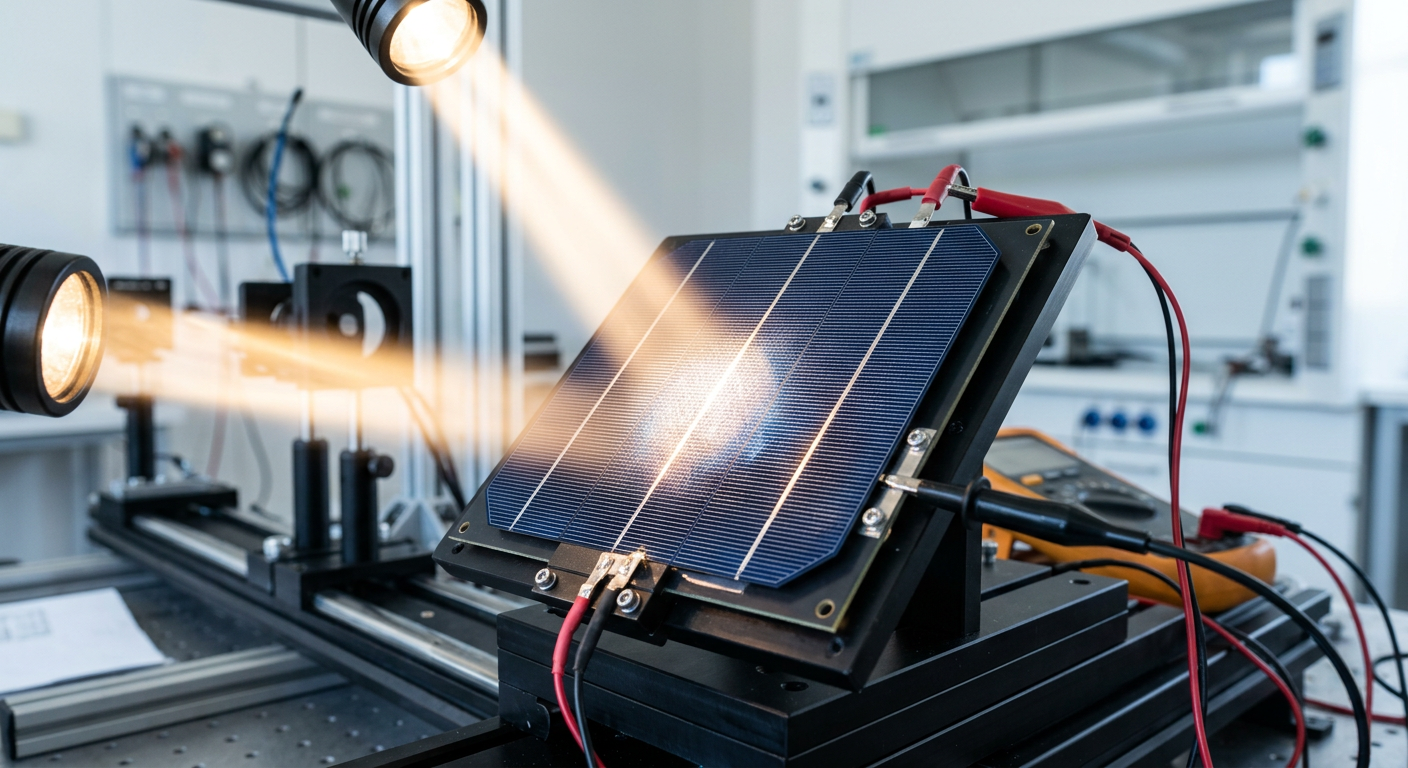
Laboratory efficiency ratings are measured under Standard Test Conditions (STC): 1,000 W/m2 irradiance, 25 degrees C cell temperature, and air mass 1.5. Real-world conditions differ significantly. Here is what affects your panels' actual performance:
Temperature Coefficient
This is arguably more important than the headline efficiency rating, yet most homeowners never hear about it. The temperature coefficient tells you how much efficiency a panel loses as it heats up above 25 degrees C.
Typical values:
- Standard panels: -0.35 to -0.40% per degree C
- Premium panels: -0.26 to -0.30% per degree C
- HJT panels (Meyer Burger, REC Alpha): -0.24 to -0.26% per degree C
Real impact: On a summer day when panel surface temperature reaches 65 degrees C (common in direct sun), a panel with a -0.40% coefficient loses 16 percent of its rated efficiency, while an HJT panel with -0.26% loses only 10.4 percent. Over a year, this difference translates to 3 to 5 percent more energy production from the HJT panel.
In Colorado's sunny but moderate climate, the temperature coefficient is particularly relevant during our intense summer sun. It is one reason we recommend panels from REC and Meyer Burger — their HJT cells maintain efficiency better in heat.
Low-Light Performance
Panels behave differently under low-light conditions (early morning, late afternoon, cloudy days). Some panels maintain a higher percentage of their rated output in low light than others. This is especially relevant in Colorado, where we can experience rapid transitions between direct sun and cloud cover.
N-type and HJT cells generally outperform P-type cells in low-light conditions by 3 to 8 percent.
Degradation Rate
Every solar panel loses a small amount of efficiency each year as the silicon cells degrade from exposure to UV radiation and temperature cycling. The degradation rate determines how much energy your panels will produce over their lifetime, not just in year one.
- Budget panels: 0.5 to 0.7% degradation per year
- Standard panels: 0.4 to 0.5% per year
- Premium panels: 0.25 to 0.35% per year
25-year impact: A panel degrading at 0.5% per year produces 88.1% of its original output after 25 years. A premium panel degrading at 0.25% per year produces 93.9% after 25 years. For a 7 kW system, that is roughly 700 kWh more production per year at year 25 — about $100 in annual savings.
Shading Tolerance
How a panel handles partial shading depends on its cell design and the inverter technology:
- Half-cut cells (now standard on most panels) reduce shading losses by splitting each panel into two independent halves.
- Shingled cells further reduce the impact of partial shading.
- Microinverters (Enphase) isolate shading effects to individual panels, preventing one shaded panel from dragging down the entire array.
Does Higher Efficiency Always Mean Better Value?
Not necessarily. Here is why:
The Cost-Per-Watt Calculation
What matters financially is not the efficiency percentage but the cost per watt — how much you pay for each watt of installed capacity. A 20 percent efficient panel that costs $0.80 per watt produces cheaper electricity than a 22 percent efficient panel that costs $1.20 per watt, assuming you have sufficient roof space for either.
When Higher Efficiency Is Worth the Premium
- Limited roof space: If you need every panel to produce maximum power, higher efficiency is essential.
- Aesthetics: Higher efficiency panels are smaller and can create a cleaner, more uniform appearance on your roof.
- Hot climates: Panels with better temperature coefficients maintain their advantage in real-world heat.
- Long-term ownership: Lower degradation rates mean premium panels produce more cumulative energy over 25 to 30 years.
When Standard Efficiency Is Fine
- Plenty of roof space: If your roof can easily accommodate enough panels at standard efficiency, the extra cost of premium panels may not pencil out.
- Budget-focused: If minimizing upfront cost is your priority, standard-efficiency panels from reputable manufacturers deliver excellent value.
- Short holding period: If you plan to sell your home within 10 years, the long-term degradation advantage of premium panels matters less.
ProGreen Solar's Approach to Panel Selection
We do not believe in a one-size-fits-all approach to panel selection. Instead, we match the right panel to each homeowner's specific situation:
- For compact roofs or high-demand homes: We recommend REC Alpha or Meyer Burger for their class-leading efficiency and lowest degradation rates.
- For standard installations with ample roof space: QCell Q.PEAK DUO panels offer outstanding performance at a more accessible price point.
- For maximum technology and warranty: Meyer Burger's 30-year product and performance warranty is unmatched in the industry.
Every system we design uses modeling software to predict real-world performance — not just STC ratings — accounting for your specific roof angle, orientation, shading, and local weather patterns.
The Bottom Line
Efficiency matters, but it is one factor among many. The best solar panel for your home is the one that delivers the most lifetime energy production per dollar invested, considering your roof constraints, climate, and financial goals.
A 22 percent efficient panel is not automatically better than a 20 percent efficient panel. What matters is the complete picture: efficiency, temperature performance, degradation rate, warranty, manufacturer reputation, and price.
Ready to find the best panels for your home? Get a free solar consultation or call ProGreen Solar at (303) 484-1410. We will recommend the optimal equipment for your specific situation — no upselling, just honest guidance.