"How much electricity will my solar panels actually produce?" It is the question every homeowner asks — and the answer depends on several measurable, predictable factors. The good news is that solar production is not a guessing game. With decades of weather data and sophisticated modeling software, we can estimate your system's annual output with remarkable accuracy — typically within 5 percent.
In this guide, ProGreen Solar breaks down the real numbers behind solar electricity production, what affects output, and how to calculate what your home needs.
The Basics: How Solar Production Is Measured
Before diving into numbers, let us clarify the units:
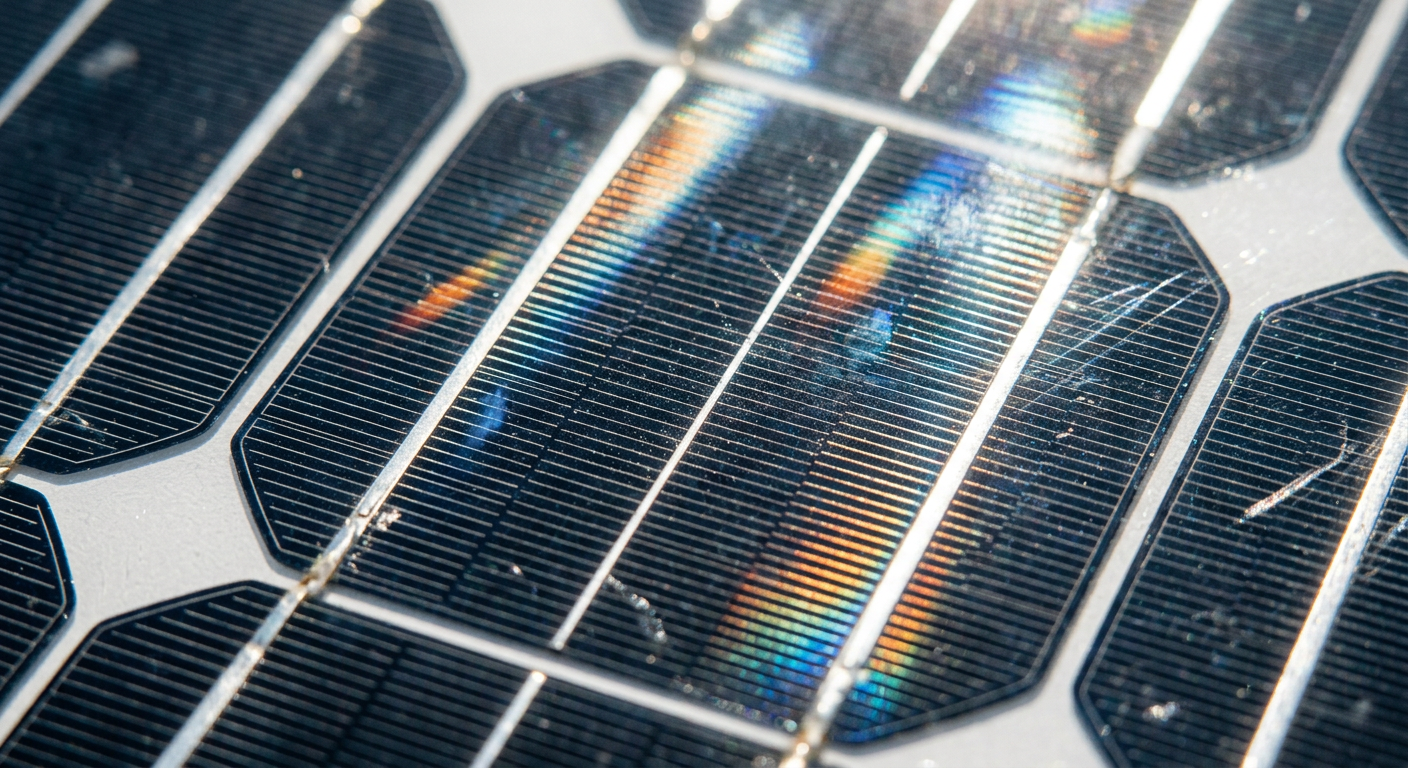
- Watts (W) — The instantaneous power output of a panel. A single modern residential panel produces 350 to 450 watts at peak conditions.
- Kilowatts (kW) — 1,000 watts. System sizes are described in kW. A "7 kW system" has panels that together produce 7,000 watts at peak.
- Kilowatt-hours (kWh) — The actual energy produced over time. One kW of panels producing electricity for one hour generates 1 kWh. Your electric bill is measured in kWh.
The key metric that connects system size to actual production is the capacity factor or, more practically, the number of peak sun hours your location receives daily.
Peak Sun Hours: The Key to Production Estimates
A "peak sun hour" is one hour of sunlight at 1,000 watts per square meter (the standard test condition for solar panels). Colorado averages 5.0 to 5.7 peak sun hours per day annually, making it one of the best states in the country for solar production.
Here is how different Colorado cities compare:
| City | Average Peak Sun Hours/Day | Annual kWh per kW Installed |
|---|---|---|
| Denver | 5.4 | 1,550 - 1,650 |
| Colorado Springs | 5.5 | 1,575 - 1,675 |
| Fort Collins | 5.2 | 1,500 - 1,600 |
| Boulder | 5.3 | 1,525 - 1,625 |
| Longmont | 5.3 | 1,525 - 1,625 |
| Pueblo | 5.7 | 1,625 - 1,725 |
| Grand Junction | 5.8 | 1,650 - 1,750 |
For context, the national average is about 4.5 peak sun hours per day. Colorado exceeds this by 15 to 25 percent, which means our solar panels produce significantly more electricity per dollar invested than systems in most other states.
How Much Electricity Does Each System Size Produce?
Using Colorado's average solar resource, here is what each common system size produces annually:
| System Size | Panels (400W) | Annual Production | Monthly Average | Daily Average |
|---|---|---|---|---|
| 4 kW | 10 panels | 6,200 - 6,800 kWh | 517 - 567 kWh | 17 - 19 kWh |
| 5 kW | 13 panels | 7,750 - 8,500 kWh | 646 - 708 kWh | 21 - 23 kWh |
| 6 kW | 15 panels | 9,300 - 10,200 kWh | 775 - 850 kWh | 25 - 28 kWh |
| 7 kW | 18 panels | 10,850 - 11,900 kWh | 904 - 992 kWh | 30 - 33 kWh |
| 8 kW | 20 panels | 12,400 - 13,600 kWh | 1,033 - 1,133 kWh | 34 - 37 kWh |
| 10 kW | 25 panels | 15,500 - 17,000 kWh | 1,292 - 1,417 kWh | 42 - 47 kWh |
| 12 kW | 30 panels | 18,600 - 20,400 kWh | 1,550 - 1,700 kWh | 51 - 56 kWh |
The average Colorado home uses approximately 700 to 900 kWh per month (8,400 to 10,800 kWh per year). A 7 kW system typically covers 100 percent of this consumption.
Factors That Affect Solar Production
Panel Efficiency
Higher-efficiency panels produce more electricity from the same amount of sunlight. Modern residential panels range from 19 to 22.5 percent efficiency. The panels we install at ProGreen Solar — from REC, Meyer Burger, and QCell — are at the top of this range, producing 5 to 15 percent more electricity than budget panels.
Roof Orientation
The direction your panels face significantly impacts production:
- South-facing: 100 percent of potential production (ideal)
- Southwest/Southeast-facing: 92 to 97 percent of south-facing production
- West/East-facing: 80 to 85 percent of south-facing production
- North-facing: 50 to 65 percent (generally not recommended)
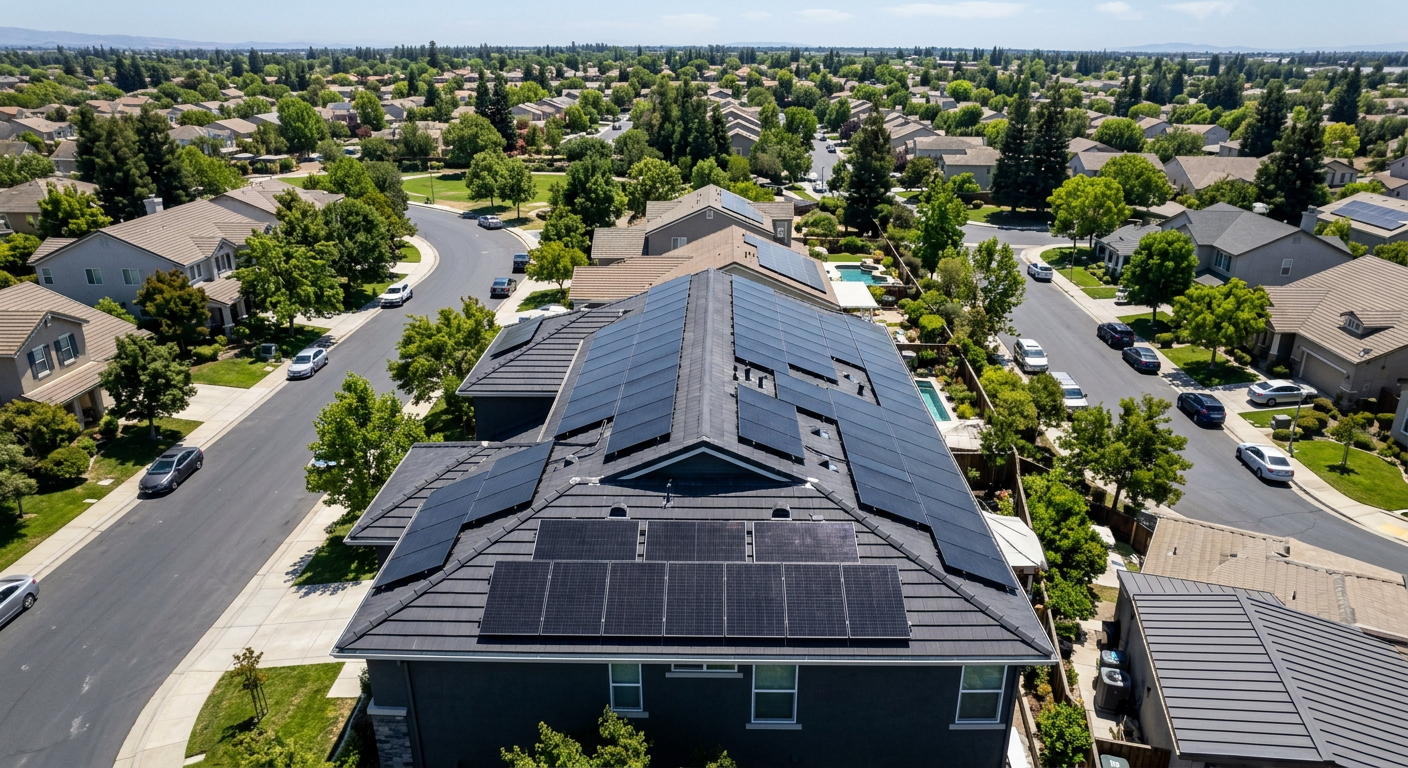
Most Colorado roofs have at least one south, southeast, or southwest-facing surface suitable for panels.
Roof Pitch (Tilt Angle)
The optimal tilt angle for Colorado is approximately 37 to 40 degrees, which corresponds to our latitude. Fortunately, most residential roofs have a pitch between 20 and 45 degrees, all of which produce within 5 to 10 percent of optimal output.
Flat roofs can use tilted racking systems to achieve the optimal angle.
Shading
Shading from trees, buildings, or roof features can significantly reduce production. The impact depends on the type of inverter:
- String inverters: Shading on one panel reduces the output of the entire string. Even a small shadow can cause a 20 to 50 percent loss for the affected string.
- Microinverters (Enphase) or power optimizers (SolarEdge): Only the shaded panel is affected. Other panels continue producing at full capacity. This is why we strongly recommend Enphase or SolarEdge for any roof with partial shading.
Temperature
Solar panels lose efficiency in heat. The temperature coefficient for most silicon panels is -0.3 to -0.4 percent per degree Celsius above 25 degrees C. On a 95 degree F day, panels may produce 10 to 15 percent less than their rated capacity.
Colorado's moderate temperatures are actually a significant advantage. While we get intense sunshine, our altitude keeps temperatures cooler than desert states. Denver's average summer high of 88 degrees F is far less punishing to panels than Phoenix's 106 degrees F average.
Soiling and Snow
Dust, pollen, and bird droppings can reduce production by 2 to 5 percent. Colorado's frequent rain and occasional snow typically keep panels clean enough without manual intervention.
Snow coverage temporarily eliminates production, but panels are dark-colored and warm slightly during operation, causing snow to slide off relatively quickly on angled surfaces. In most Colorado locations, snow has a minimal annual impact of 2 to 5 percent.
Seasonal Production Patterns in Colorado
Solar production varies significantly throughout the year. Here is a typical monthly production profile for a 7 kW system on the Colorado Front Range:
| Month | Production (kWh) | % of Peak Month |
|---|---|---|
| January | 650 | 50% |
| February | 750 | 58% |
| March | 950 | 73% |
| April | 1,100 | 85% |
| May | 1,200 | 92% |
| June | 1,300 | 100% |
| July | 1,250 | 96% |
| August | 1,150 | 88% |
| September | 1,050 | 81% |
| October | 850 | 65% |
| November | 650 | 50% |
| December | 500 | 38% |
| Annual Total | 11,400 | — |
Notice the dramatic difference between June (peak) and December (minimum). June produces 2.6 times more electricity than December. This is why net metering is so important — it allows you to bank summer surpluses to cover winter deficits.
How to Size Your System
The formula for sizing a solar system is straightforward:
System Size (kW) = Annual Energy Usage (kWh) / Annual Production per kW (kWh/kW)
Example: A home consuming 10,000 kWh per year in the Denver area, where each kW of solar produces approximately 1,600 kWh annually:
10,000 kWh / 1,600 kWh per kW = 6.25 kW system
We would round up to a 6.5 or 7 kW system to ensure full coverage, accounting for panel degradation over time.
Finding Your Energy Usage
Check your electric bill for your annual kWh consumption, or add up the last 12 monthly bills. Most utilities also provide this information through their online portals. In Colorado:
- Small household (1-2 people, modest home): 6,000 - 8,000 kWh/year
- Average household (3-4 people): 8,500 - 11,000 kWh/year
- Large household (5+ people, large home): 12,000 - 18,000 kWh/year
- Home with EV: Add 3,000 - 5,000 kWh/year
- Home with electric heat: Add 4,000 - 8,000 kWh/year
Planning for Future Consumption
If you plan to buy an electric vehicle, add a hot tub, or finish a basement, factor that additional consumption into your system sizing now. It is more cost-effective to install a slightly larger system upfront than to add panels later.
Individual Panel Output: What to Expect
A single modern solar panel produces:
- Peak output: 350 to 450 watts (under standard test conditions — 1,000 W/m2, 25 degrees C)
- Typical real-world output: 250 to 380 watts (accounting for temperature, angle, and atmospheric conditions)
- Daily production: 1.4 to 2.2 kWh per panel (Colorado average)
- Annual production: 520 to 750 kWh per panel
Higher wattage panels mean fewer panels needed for the same system size, which is advantageous for roofs with limited space.
Monitoring Your Production
Modern solar systems include real-time monitoring through smartphone apps. Both Enphase and SolarEdge offer excellent monitoring platforms that show:
- Real-time power output (down to the individual panel with microinverters)
- Daily, weekly, monthly, and annual production history
- Consumption vs. production comparison
- Grid import/export tracking
- System health alerts
This transparency means you always know exactly how your system is performing and can verify that it is meeting production guarantees.
Production Guarantees
Reputable solar installers provide production guarantees — a commitment that your system will produce a minimum amount of electricity in its first year (and sometimes beyond). At ProGreen Solar, our designs are based on conservative estimates using industry-standard modeling software (PVWatts, Helioscope), and we stand behind our production projections.
If your system underperforms the guarantee, the installer should investigate and remedy the cause — whether it is a faulty panel, an inverter issue, or unexpected shading.
Get Your Personalized Production Estimate
While the numbers in this guide provide a solid baseline, every home is unique. Your specific roof geometry, orientation, shading profile, and local weather patterns all affect production. The only way to know exactly how much electricity solar will produce for your home is to get a professional assessment.
Use our free solar calculator for an instant estimate, or call ProGreen Solar at (303) 484-1410 for a comprehensive analysis. We use satellite imagery and advanced modeling software to predict your system's annual production with a high degree of accuracy — and we guarantee it.