One of the most compelling aspects of solar energy is its longevity. Unlike a car that depreciates and eventually breaks down, or a furnace that needs replacement every 15 to 20 years, solar panels are a remarkably durable investment. They have no moving parts, require almost no maintenance, and continue generating electricity for decades.
But how long do they really last? What happens as they age? And what do those warranty numbers actually guarantee? This guide answers every question about the lifespan of your solar investment.
The Short Answer: 25 to 40+ Years
Modern solar panels are warrantied for 25 to 30 years, but they do not simply stop working when the warranty expires. Research by the National Renewable Energy Laboratory (NREL) has tracked panels installed in the 1980s and found that many still produce over 80 percent of their original rated capacity after four decades.
The first solar panel ever installed — on a New York City rooftop in 1884 — obviously used primitive technology. But panels from the early days of modern photovoltaics (1970s and 1980s) are still generating electricity today. With the manufacturing improvements of the last decade, panels installed in 2026 can be reasonably expected to produce useful electricity for 40 to 50 years.
Understanding Solar Panel Degradation
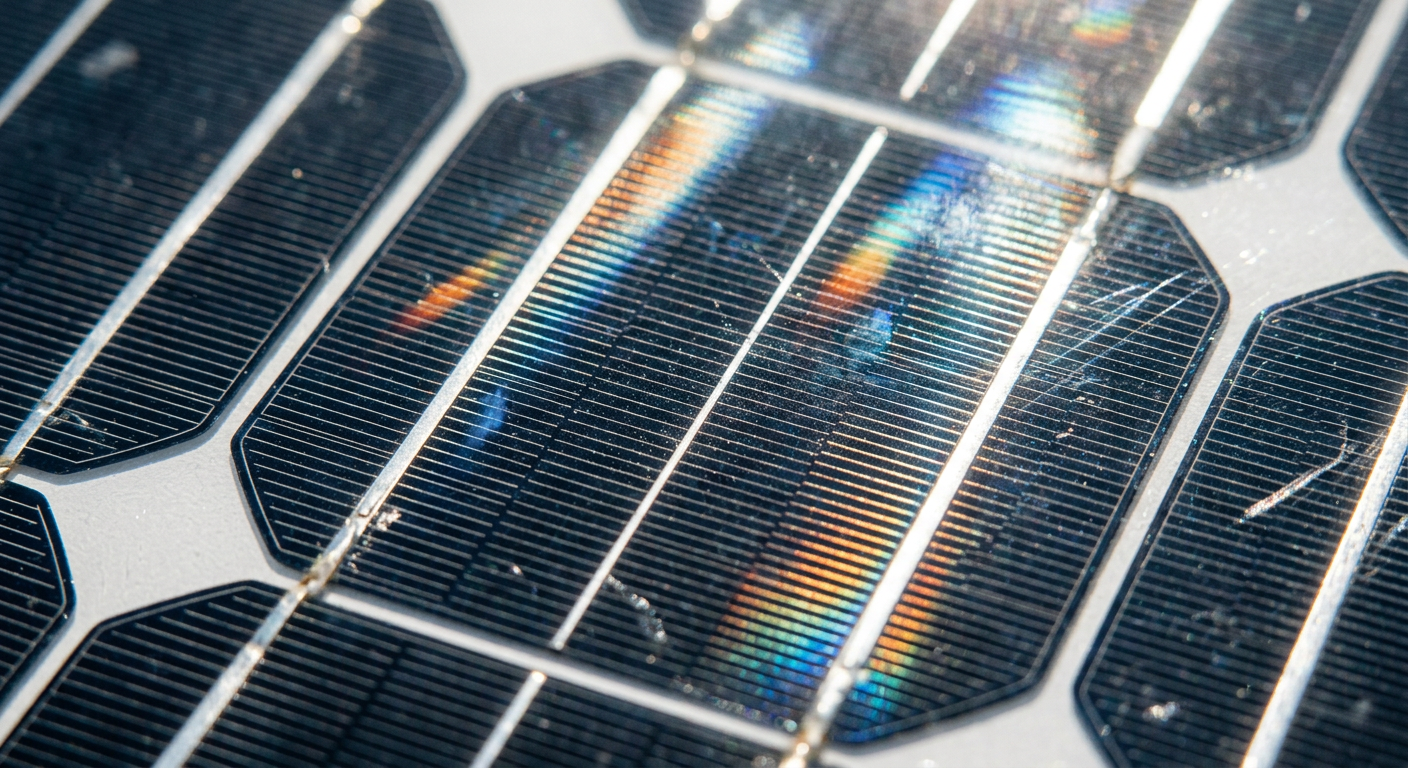
Solar panels do not fail suddenly. Instead, they experience gradual degradation — a slow, predictable decline in output over time. Understanding degradation is key to understanding long-term value.
What Causes Degradation?
Several factors contribute to the slow decline in panel output:
- UV exposure: Prolonged ultraviolet radiation causes minor chemical changes in the silicon cells and encapsulation materials.
- Thermal cycling: Daily temperature swings expand and contract panel materials microscopically, eventually creating micro-cracks in cells.
- Potential-Induced Degradation (PID): Voltage differences between cells and the frame can cause ion migration, reducing output. Modern panels are engineered to resist PID.
- Light-Induced Degradation (LID): Some panels experience a small initial drop in output (1 to 3 percent) within the first few hundred hours of sun exposure. This is a well-understood phenomenon and is already factored into manufacturer ratings.
Degradation Rates by Panel Type
The annual degradation rate is the percentage of output a panel loses each year. Here are typical rates:
| Panel Category | Annual Degradation | Output at Year 25 | Output at Year 30 |
|---|---|---|---|
| Budget (P-type poly) | 0.5 - 0.7% | 83 - 88% | 80 - 85% |
| Standard (P-type mono) | 0.4 - 0.5% | 88 - 90% | 85 - 88% |
| Premium (N-type mono) | 0.25 - 0.35% | 91 - 94% | 89 - 92% |
| Ultra-premium (HJT) | 0.20 - 0.30% | 93 - 95% | 91 - 93% |
The panels we install at ProGreen Solar — from manufacturers like REC, Meyer Burger, and QCell — fall in the premium to ultra-premium categories with degradation rates of 0.25 to 0.35 percent per year.
What Degradation Means in Real Numbers
For a 7 kW system producing 11,400 kWh in year one, here is the production trajectory:
- Year 1: 11,400 kWh
- Year 5: 11,240 kWh (98.6%)
- Year 10: 11,080 kWh (97.2%)
- Year 15: 10,920 kWh (95.8%)
- Year 20: 10,770 kWh (94.5%)
- Year 25: 10,620 kWh (93.2%)
- Year 30: 10,470 kWh (91.8%)
These numbers assume a 0.35 percent annual degradation rate (typical for premium panels). At year 30, your system is still producing over 91 percent of its original output. Given rising electricity rates, that year-30 production may be worth more in dollar terms than year-1 production.
Understanding Solar Panel Warranties
Solar panel warranties have two distinct components, and understanding both is essential:
Product Warranty (Workmanship)
The product warranty covers manufacturing defects — things like delamination, cell cracking, junction box failure, and frame defects. If your panel fails due to a manufacturing issue, the manufacturer replaces it at no cost.
Typical product warranty lengths:
- Budget panels: 10 to 12 years
- Standard panels: 15 to 20 years
- Premium panels: 25 years (REC, QCell)
- Ultra-premium panels: 30 years (Meyer Burger)
Performance Warranty
The performance warranty guarantees a minimum output level over time. If your panel degrades faster than the warranted rate, the manufacturer must repair, replace, or compensate you.
Typical performance warranty terms:
- Budget panels: 80% output at year 25
- Standard panels: 83-85% output at year 25
- Premium panels: 90-92% output at year 25
- Meyer Burger: 92% output at year 30 (industry-leading)
What Makes a Good Warranty
Look for these elements in a solar panel warranty:
-
Linear vs. step warranty: A linear warranty guarantees a smooth, predictable degradation curve (e.g., no more than 0.35% per year). A step warranty might guarantee 90% at year 10 and 80% at year 25, leaving gaps. Linear warranties offer better protection.
-
Manufacturer financial stability: A warranty is only as good as the company behind it. Choose panels from financially stable manufacturers with a long track record. Companies like REC, QCell, and Meyer Burger have the financial backing and established service networks to honor claims decades from now.
-
Coverage scope: Some warranties cover only the cost of the replacement panel, not the labor to install it. Better warranties cover both parts and labor.
Inverter Lifespan: The Other Half of the Equation
While panels last 25 to 40+ years, inverters have shorter lifespans — and they are equally important to your system's operation.
String Inverters
Traditional central string inverters have a typical lifespan of 10 to 15 years. Most come with 10 to 12-year warranties, with options to extend to 20 or 25 years for an additional cost. You should budget for one inverter replacement during the life of your panels.
Replacement cost: $1,500 to $3,000 installed.
Microinverters (Enphase)
Enphase microinverters are warrantied for 25 years, matching the lifespan of the panels themselves. Because each microinverter operates independently, a failure in one unit only affects that single panel — the rest of your system continues producing normally. This 25-year warranty with no single point of failure is a major advantage of the microinverter approach.
Power Optimizers + Inverter (SolarEdge)
SolarEdge power optimizers carry a 25-year warranty. The central inverter is warrantied for 12 years, extendable to 25 years. The optimizer longevity matches the panels, but you may need to plan for a central inverter replacement at the 12 to 15-year mark if you do not purchase the extended warranty.
Other Components and Their Lifespans
Racking and Mounting
Quality racking systems are made from anodized aluminum and stainless steel. They are warrantied for 20 to 25 years and can easily last 40+ years. Racking rarely requires attention after installation.
Wiring and Connectors
Solar wiring and MC4 connectors are rated for 25 to 30 years of outdoor exposure. They are UV-resistant and waterproof. Degradation is rare.
Monitoring Systems
Monitoring hardware (like Enphase Envoy or SolarEdge gateways) typically has a 5 to 10-year lifespan. The cost of replacement is modest ($200-$500), and newer monitoring units are usually backward-compatible.
Batteries (If Installed)
Battery storage systems have shorter lifespans than panels. The Tesla Powerwall is warrantied for 10 years, and Enphase IQ Batteries for 10 to 15 years. After the warranty period, batteries retain about 70 percent of their original capacity. You may choose to replace them or continue using them at reduced capacity.
How to Maximize Your System's Lifespan
While solar panels are remarkably low-maintenance, a few simple practices can help your system perform at its best for decades:
Annual Inspection
Have a professional inspect your system once a year. They will check for loose connections, cracked panels, racking integrity, and inverter health. ProGreen Solar offers ongoing monitoring and maintenance plans for our customers.
Keep Panels Clean
In most of Colorado, rainfall is sufficient to keep panels clean. However, if you live near agricultural land, a dusty road, or in an area with significant pollen, an annual cleaning can boost production by 2 to 5 percent. Use water and a soft squeegee — never use abrasive cleaners or pressure washers.
Manage Shade Growth
Trees grow. A tree that was not a shading concern at installation might become one in 10 years. Monitor tree growth near your array and trim branches as needed to maintain clear solar access.
Monitor Performance
Use your system's monitoring app (Enphase Enlighten or SolarEdge mySolarEdge) to track production regularly. A sudden or unexplained drop in output could indicate a panel issue, inverter problem, or new shading source. Catching issues early prevents lost production.
Maintain Your Roof
Before installing solar, ensure your roof is in good condition with at least 15 years of remaining life. If your roof needs replacement during the life of your panels, the panels will need to be removed and reinstalled — an added cost of $1,500 to $3,000 that is easily avoided with upfront planning.
The Long-Term Value Proposition
Solar panels are a rare investment that continues to increase in value over time:
- Year 1-8: Your system pays for itself through electricity savings, tax credits, and net metering credits.
- Year 9-25: Pure profit. Every kilowatt-hour your panels produce is free electricity, and the value of that electricity increases each year as utility rates rise.
- Year 26-40+: Panels continue producing at 85 to 92+ percent of original capacity. No additional investment required. Your panels from 2026 are still generating free electricity in 2066.
Over a 30-year span, a 7 kW system in Colorado produces approximately 320,000 kWh of electricity. At current rates with 3 percent annual increases, that electricity would cost over $70,000 if purchased from the grid. Your system costs roughly $15,000 after the tax credit. The return on investment is extraordinary.
Get Your System Designed for Maximum Longevity
At ProGreen Solar, we design every system for the long haul. We use only premium panels with the industry's lowest degradation rates, pair them with 25-year-warrantied inverters, and install them with meticulous attention to quality. Our systems are built to perform for decades.
Get your free solar estimate or call us at (303) 484-1410 to learn how a ProGreen Solar system will perform on your home for 25, 30, or even 40 years.