As solar energy adoption accelerates, a natural question arises: what happens to solar panels when they reach the end of their useful life? With millions of panels installed across the United States — and the first large wave approaching retirement age — solar panel recycling is moving from a future concern to a present-day industry.
The good news is compelling: solar panels are highly recyclable. Modern recycling processes recover 95 percent or more of panel materials by weight, including glass, aluminum, silicon, copper, and silver. The infrastructure to handle large-scale recycling is growing rapidly, and several Colorado-based companies are leading the way.
At ProGreen Solar, we believe responsible end-of-life management is part of the solar promise. This guide covers what panels are made of, how they are recycled, where the industry stands today, and what legislation is shaping the future.
What Is Inside a Solar Panel?
Understanding what can be recycled starts with understanding what a panel contains. A typical crystalline silicon solar panel is composed of:
| Material | Percentage by Weight | Recyclable? |
|---|---|---|
| Glass | 75% | Yes — standard glass recycling |
| Aluminum frame | 8% | Yes — standard aluminum recycling |
| EVA encapsulant | 5% | Partially — thermal or chemical recovery |
| Silicon cells | 4% | Yes — purification and reuse |
| Backsheet (polymer) | 4% | Emerging processes |
| Copper wiring | 1% | Yes — standard copper recycling |
| Silver contacts | Less than 0.1% | Yes — high value recovery |
| Junction box/connectors | 3% | Yes — electronics recycling |
By weight, approximately 85 to 90 percent of a solar panel consists of readily recyclable materials (glass, aluminum, copper) using established recycling infrastructure. The remaining 10 to 15 percent requires specialized processes but is increasingly being recovered as well.
When Do Solar Panels Need Recycling?
Most solar panels are warrantied for 25 to 30 years and have expected useful lives of 30 to 40 years. They do not simply "die" at a specific age — they gradually produce less electricity due to degradation.
Panels typically enter the recycling stream for several reasons:
Age-related retirement. After 25 to 35 years, panels may degrade to 75 to 85 percent of original capacity. While still functional, they may be replaced with higher-efficiency modern panels. A panel installed in 2000 at 150 watts might produce 120 watts today — while a new panel occupying the same space produces 400 or more watts.
Early replacement. Some panels are removed before end of life when homeowners remodel, re-roof, or upgrade to more efficient panels. These "pre-retirement" panels are often resold in secondary markets rather than recycled.
Damage. Hail, storm debris, fallen trees, or installation accidents can damage panels beyond repair. Colorado's hailstorms are a common cause. Damaged panels should be recycled, not landfilled.
Manufacturing defects. A small percentage of panels develop defects (delamination, hotspots, broken interconnects) within their warranty period. These are typically returned to manufacturers and recycled.
The Coming Wave
The first major wave of residential solar installations occurred between 2010 and 2015. These panels will reach their 25-year warranty expiration between 2035 and 2040. The International Renewable Energy Agency (IRENA) estimates that cumulative global solar panel waste could reach 78 million metric tons by 2050.
This is not a crisis — it is an opportunity. Those 78 million tons of "waste" contain enormous quantities of valuable, recyclable materials.
How Solar Panels Are Recycled
Several recycling processes exist, ranging from mechanical to thermal to chemical approaches. Most commercial recyclers use a combination of methods.
Step 1: Collection and Transportation
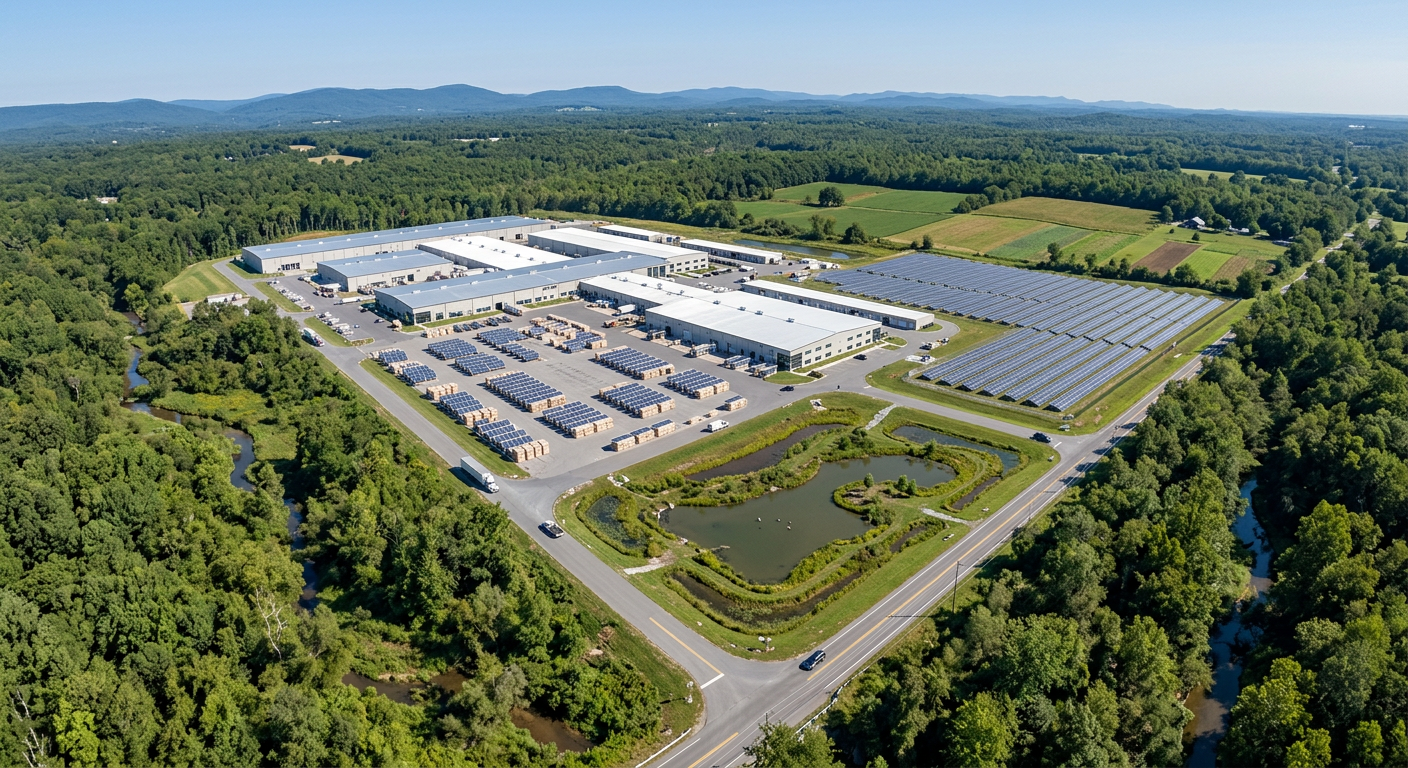
Decommissioned panels are collected from installation sites and transported to recycling facilities. Currently, dedicated solar recycling facilities exist in Arizona, Texas, South Carolina, and several other states. Colorado-based companies are developing local recycling capacity to reduce transportation costs and emissions.
Step 2: Disassembly
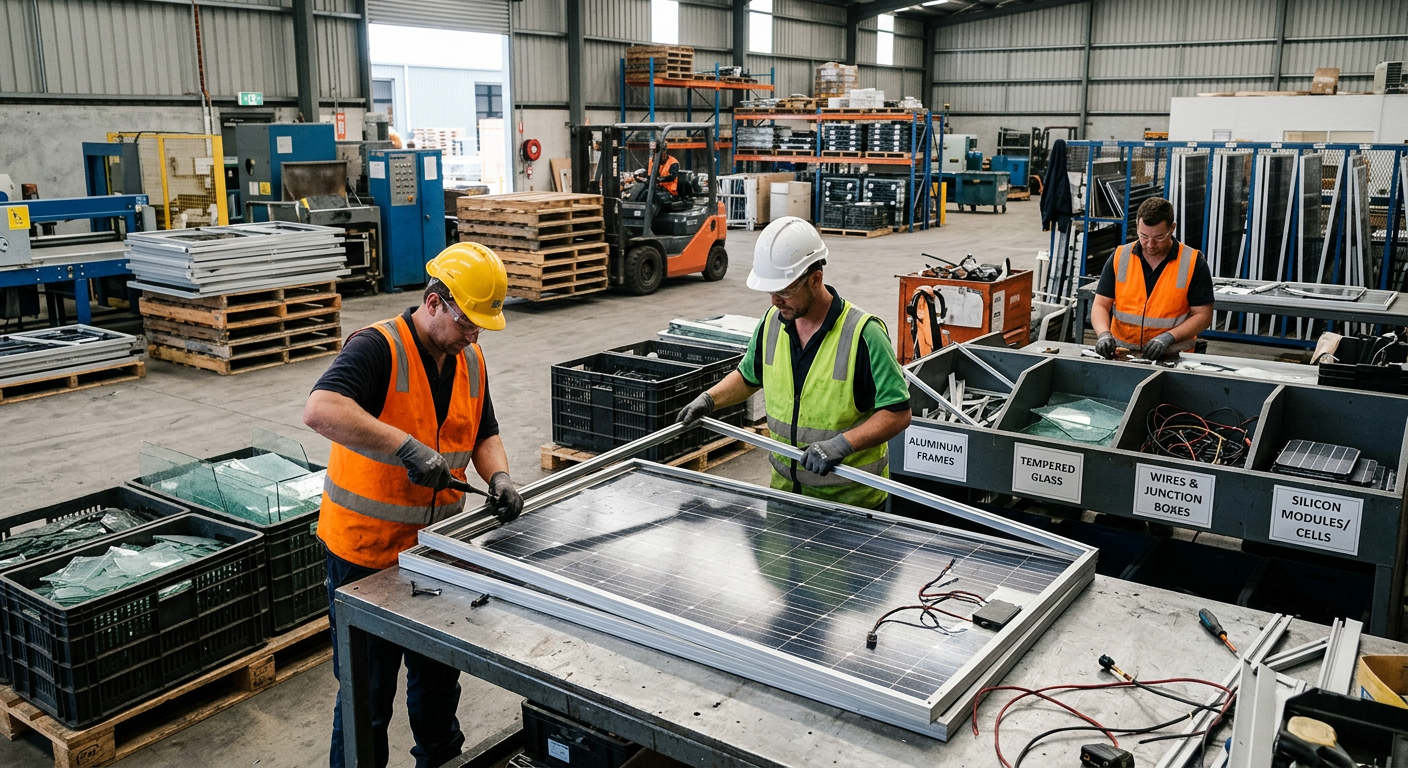
The aluminum frame is removed mechanically — this is simple and recovers pure aluminum scrap that goes directly into standard aluminum recycling streams. The junction box and wiring are also removed for separate electronic waste processing.
Step 3: Glass Separation
The glass front sheet is separated from the remaining sandwich of EVA, cells, and backsheet. This can be done through:
- Mechanical methods — Crushing and screening to separate glass from other materials
- Thermal processing — Heating to 400 to 600 degrees Celsius to decompose the EVA adhesive, allowing clean glass separation
- Chemical methods — Solvents that dissolve the EVA without damaging the glass or cells
Thermal processing currently delivers the highest-quality glass recovery. The recovered glass is clean enough for re-use in new solar panels or in standard glass applications (insulation, fiberglass, containers).
Step 4: Cell and Material Recovery
After glass removal, the silicon cells are recovered through:
- Thermal treatment — Burns off remaining polymer materials, leaving bare silicon cells
- Chemical etching — Removes metal contacts (silver, aluminum) and anti-reflective coatings from cell surfaces
- Silicon purification — Recovered silicon is re-processed for use in new solar cells or other semiconductor applications
The silver recovered from solar cell contacts is particularly valuable. A single panel contains approximately 10 to 20 grams of silver worth $8 to $16 at current prices. At scale, silver recovery alone can offset a significant portion of recycling costs.
Step 5: Output Materials
A fully recycled solar panel yields:
| Recovered Material | Amount per Panel | Market Value |
|---|---|---|
| Glass cullet | 12-15 kg | $0.50-$1.50 |
| Aluminum scrap | 1.2-1.8 kg | $2.00-$4.00 |
| Silicon | 0.5-0.7 kg | $5.00-$15.00 |
| Copper | 0.1-0.2 kg | $0.80-$1.60 |
| Silver | 10-20 g | $8.00-$16.00 |
| Total recovered value | $16-$38 per panel |
Current recycling costs range from $15 to $45 per panel, meaning the economics are approaching or have reached breakeven depending on material prices and processing efficiency. As volumes increase and processes improve, recycling is expected to become consistently profitable.
Current Recycling Infrastructure
United States
The US solar recycling infrastructure is in a growth phase:
First Solar operates the world's largest thin-film solar recycling facility in Ohio, recovering 90 percent of semiconductor material and 90 percent of glass for reuse in new panels. However, this facility processes only First Solar's cadmium telluride panels.
SOLARCYCLE (formerly SolarRecycle) operates recycling facilities in Texas and plans expansion. They recover 95 percent of panel materials and have partnerships with major installers for panel collection.
We Recycle Solar processes panels in Arizona and New York, handling both crystalline silicon and thin-film technologies.
Enviro Solar Recycling and several other smaller companies are developing regional recycling capacity across the country.
Colorado-Specific Options
Colorado homeowners currently have several options for panel recycling:
- Regional drop-off points for damaged or decommissioned panels
- Installer take-back programs (ProGreen Solar assists customers with end-of-life panel management)
- Mail-back programs for small quantities
- Growing local recycling capacity as Colorado's early installations begin reaching retirement age
Legislation and Policy
Regulatory frameworks for solar panel recycling are developing rapidly:
European Union
The EU has been the global leader in solar recycling policy. Under the Waste Electrical and Electronic Equipment (WEEE) Directive, solar panels are classified as e-waste, and manufacturers are required to fund collection and recycling. This producer-responsibility model has driven investment in European recycling infrastructure and could serve as a template for US policy.
United States — Federal
There is currently no federal requirement for solar panel recycling in the US. However, panels are not classified as hazardous waste (crystalline silicon panels pass the EPA's TCLP leachability tests), which means they can legally be landfilled in most states.
The Inflation Reduction Act included provisions that incentivize domestic solar manufacturing, which indirectly supports recycling by creating demand for recovered materials.
United States — State Level
Several states have enacted or are considering solar recycling legislation:
- Washington — First US state to require manufacturer-funded recycling programs (effective 2025)
- California — Classifies solar panels as "universal waste" requiring special handling, with recycling mandates under development
- New Jersey, North Carolina, Minnesota — Various bills introduced requiring recycling programs
- Colorado — Monitoring other states' approaches; several legislative proposals under discussion
Industry Self-Regulation
The Solar Energy Industries Association (SEIA) has established a national solar recycling program that partners with recycling companies to provide collection and processing services. Many major manufacturers have committed to recycling programs voluntarily.
The Circular Economy Vision
The ultimate goal is a circular economy for solar panels, where:
- End-of-life panels are collected efficiently
- Materials are recovered at high purity
- Recovered materials are used to manufacture new panels
- The cycle repeats indefinitely
This vision is achievable because solar panel materials do not degrade through recycling. Recovered glass is still glass. Recovered aluminum is still aluminum. Recovered silicon can be re-purified to solar grade. Unlike fossil fuels, which are consumed and converted to CO2, solar panel materials are preserved and reusable.
Design for Recycling
Next-generation panels are being designed with end-of-life in mind:
- Lead-free solder — Eliminates the only potentially hazardous material in panel construction
- Mechanical fasteners instead of adhesives — Easier disassembly
- Standardized junction boxes — Simpler automated removal
- Alternative encapsulants — Materials that separate more easily than EVA
- Material passports — Digital records tracking exactly what materials each panel contains
These design changes will make future panels even easier and more economical to recycle than today's models.
What About Thin-Film and Other Technologies?
While this guide focuses on crystalline silicon panels (which represent over 95 percent of the market), other technologies have different recycling profiles:
Cadmium telluride (CdTe) — First Solar: Contains cadmium, a toxic heavy metal. First Solar has operated an industry-leading take-back and recycling program since 2005, recovering 90 percent or more of cadmium and tellurium. Despite the toxicity concern, CdTe panels actually have a smaller environmental footprint than crystalline silicon due to lower manufacturing energy requirements.
CIGS (Copper Indium Gallium Selenide): Contains small amounts of rare elements. Recycling processes are less developed but advancing.
Perovskite (emerging): Still in early commercialization. Recycling processes are being developed alongside the technology, with the advantage of designing recycling into the product from the start.
Comparing Solar to Other Energy Sources
When critics raise concerns about solar panel waste, it is worth comparing to the waste generated by other energy sources:
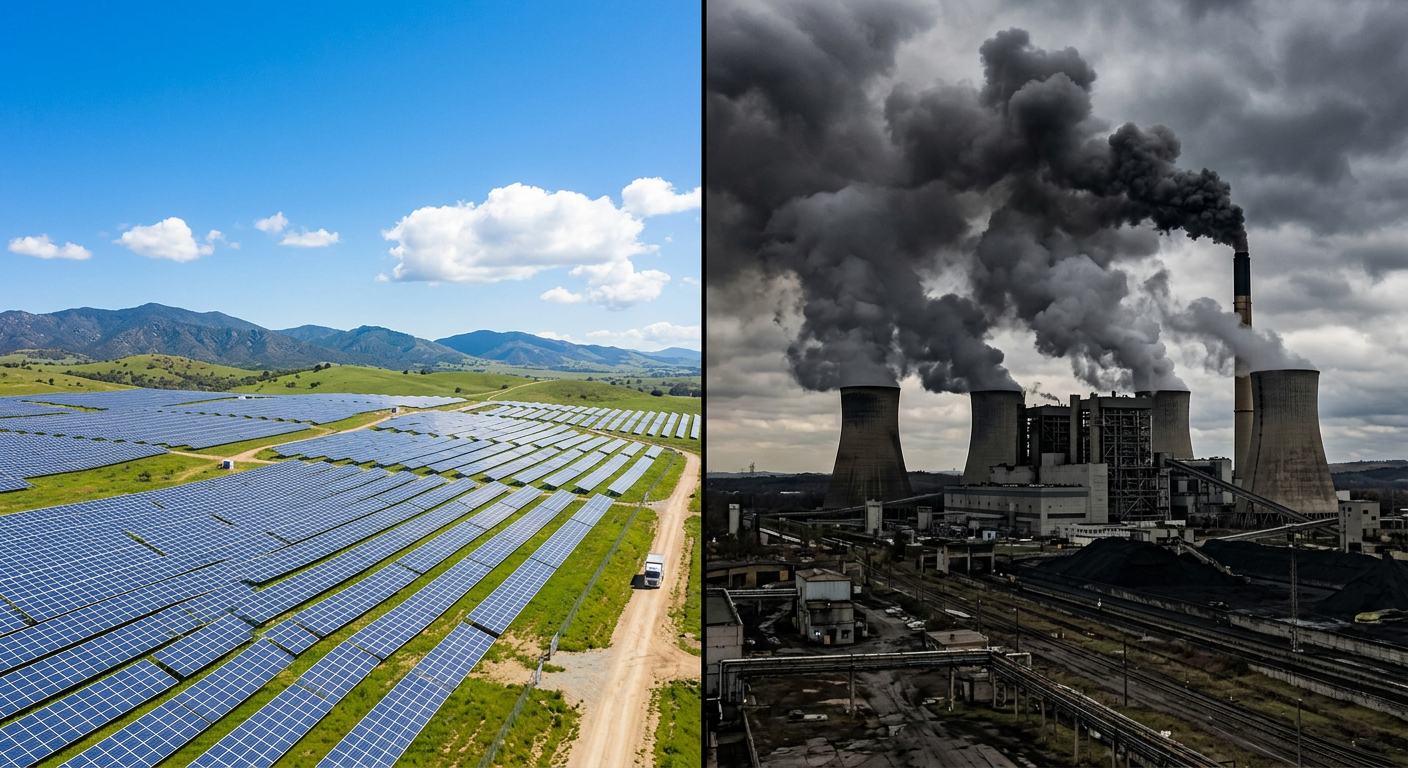
Coal: Produces 120 million tons of toxic coal ash per year in the US alone, containing arsenic, mercury, lead, and other hazardous materials. Coal ash ponds have caused catastrophic environmental disasters.
Natural gas: Produces CO2, methane leaks, and contaminated produced water from fracking. No material recovery is possible — the waste is permanent atmospheric pollution.
Nuclear: Produces highly radioactive waste that remains dangerous for thousands of years and has no permanent disposal solution in the US.
Solar: Produces panels that are 95 percent recyclable, contain no hazardous materials (crystalline silicon), and whose materials can be reused indefinitely.
The comparison is not even close. Solar's end-of-life challenge is one of the most manageable waste streams of any energy technology.
What ProGreen Solar Customers Should Know
If you are considering solar panels for your home, here is what to know about end-of-life:
Your panels will likely last 30 to 40 years. Modern panels degrade slowly and maintain useful output well beyond their warranty period. Recycling is a future consideration, not an immediate concern. Read more about solar panel lifespan.
Recycling infrastructure will be mature by the time you need it. By 2040 to 2050, when today's panels approach retirement, the recycling industry will have scaled to handle large volumes economically.
Your installer matters. Choose an installer committed to responsible end-of-life management. ProGreen Solar tracks every panel we install and will assist customers with recycling when the time comes.
The environmental math is overwhelming. Even in the unlikely scenario that every solar panel ever made ended up in a landfill (which they will not), solar would still have a vastly smaller environmental impact than fossil fuel electricity generation. Learn more about the full carbon footprint of solar panels.
Ready to Go Solar?
Solar panels are one of the most recyclable energy technologies ever created. When you install solar on your Colorado home, you are investing in technology that generates decades of clean energy and can be fully recycled at end of life.
Use our solar calculator to design your system, or call (303) 484-1410 to discuss how solar fits your goals. At ProGreen Solar, we are committed to the full lifecycle of your solar investment — from installation through decades of production to responsible end-of-life management.