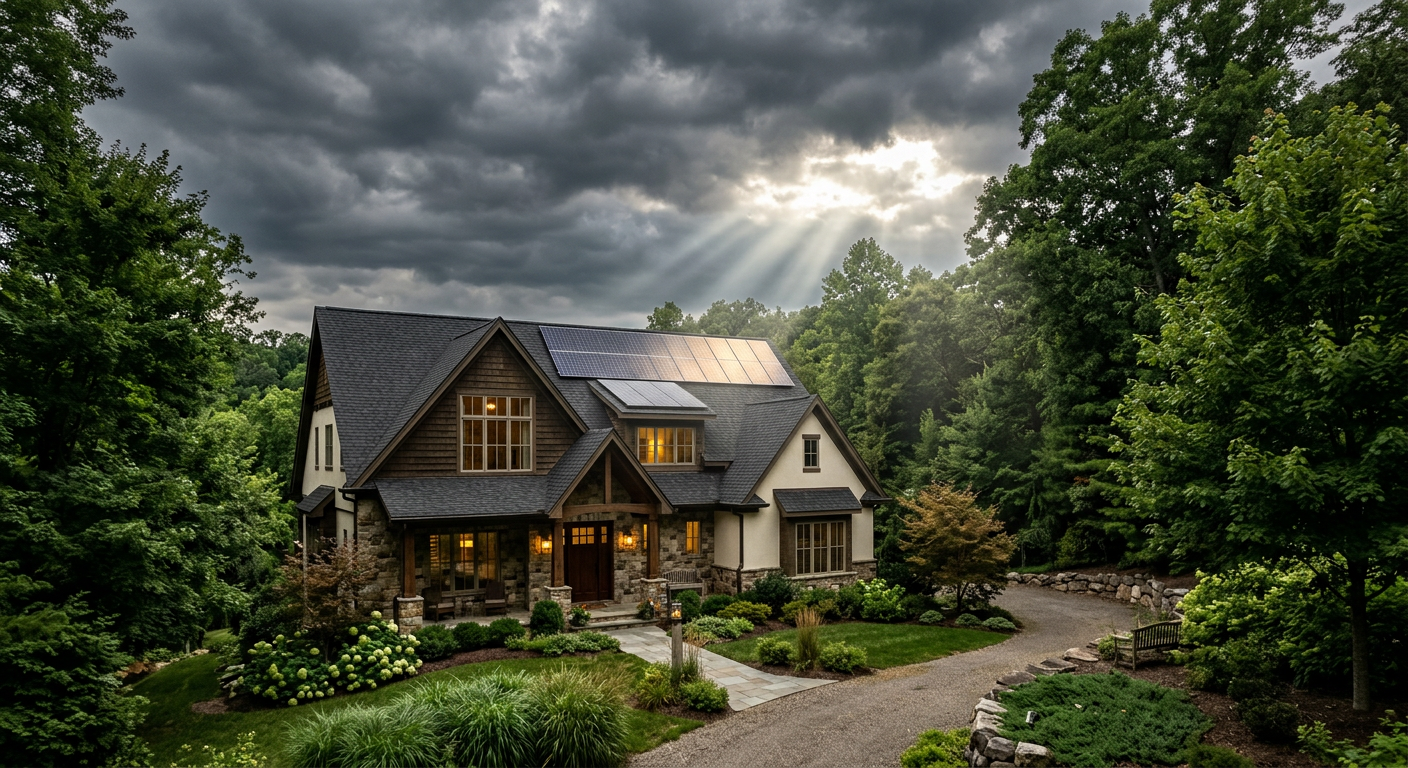
It is the number-one question we hear from homeowners considering solar: "What happens when it is cloudy?" The concern is understandable. If solar panels need sunlight, does that mean they are useless during Colorado's occasional overcast days, spring snowstorms, or afternoon thunderstorms?
The short answer is reassuring: solar panels work on cloudy days. They produce less electricity than on a clear day, but they still generate meaningful power. And when you factor in Colorado's 300 days of sunshine per year plus net metering, cloudy days barely dent your annual savings.
Let us dig into the details.
How Solar Panels Generate Electricity in Overcast Conditions
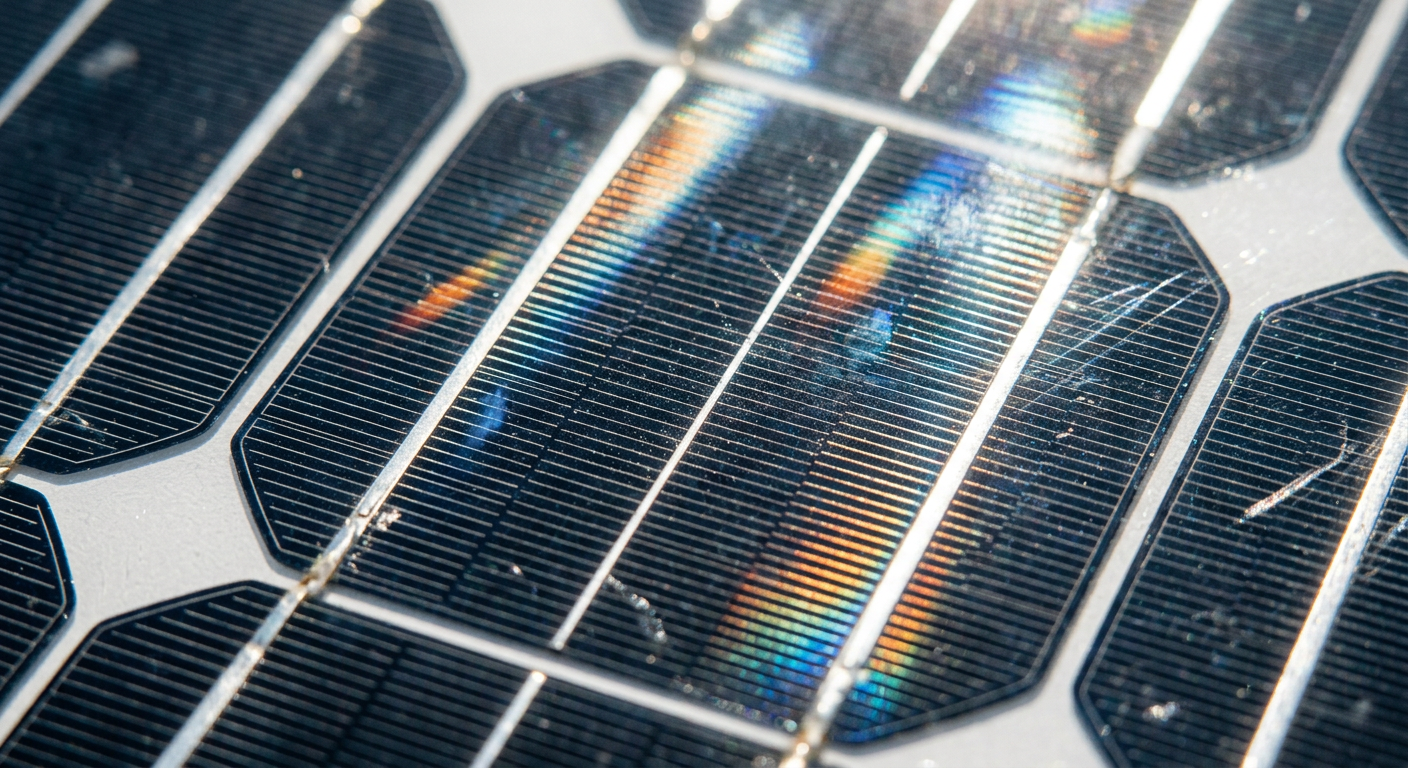
Solar panels convert light — not heat or direct sunshine specifically — into electricity. Even on a cloudy day, light passes through the clouds and reaches your panels. This is called diffused light (or diffuse irradiance), as opposed to the direct beam radiation of a clear day.
On a cloudy day, your panels receive diffused light from all directions as photons scatter through the cloud layer. While this diffused light is less intense than direct sunlight, it still carries enough energy to knock electrons loose in the silicon cells and generate electricity.
Here is what production looks like under different sky conditions:
| Sky Condition | Production vs. Clear Day |
|---|---|
| Full clear sky | 100% |
| Light haze or thin clouds | 75 - 90% |
| Partly cloudy | 50 - 75% |
| Overcast (heavy clouds) | 15 - 35% |
| Dense storm clouds | 5 - 15% |
| Rain (light) | 10 - 25% |
| Snow coverage on panels | 0 - 5% |
So even on a thoroughly overcast day, your panels are still producing 15 to 35 percent of their rated output. That is not nothing — for a 7 kW system, that is roughly 1 to 2.5 kW of continuous power, enough to run your refrigerator, internet, lights, and several other appliances simultaneously.
The "Edge of Cloud" Effect
Here is something interesting that often surprises homeowners: panels can actually produce more power than their rated capacity on certain partly cloudy days. This phenomenon is called the edge of cloud effect or cloud lensing.
When the sun is near the edge of a cloud, the cloud acts like a magnifying lens, temporarily intensifying the sunlight that reaches your panels. For brief periods (seconds to minutes), irradiance can spike to 120 to 140 percent of clear-sky levels. On a partly cloudy day with frequent cloud edges, total daily production can actually exceed a completely clear day.
We have seen this effect regularly on Colorado Front Range installations, particularly during our characteristic afternoon cumulus cloud buildups in spring and summer.
Colorado's Cloudy Day Advantage
Colorado is not just good for solar — it is exceptional, even accounting for our cloudy days. Here is why:
300 Days of Sunshine
Colorado averages approximately 300 days with some sunshine per year. This does not mean 300 cloudless days — it means 300 days where the sun makes a meaningful appearance. Our climate is characterized by predominantly clear mornings, with afternoon cloud buildups being common in summer. This pattern is actually ideal for solar: panels produce at full capacity during the morning and early afternoon hours, which are the most productive part of the day.
High Altitude Means Thinner Atmosphere
Denver sits at 5,280 feet, and many Colorado communities are even higher. Our thinner atmosphere means:
- More solar radiation reaches the panels (approximately 5 to 10 percent more than sea level)
- Even our clouds are thinner and less dense, transmitting more light
- UV intensity is higher, which silicon cells can partially convert to electricity
Dry Climate
Colorado's low humidity means fewer water vapor molecules in the atmosphere scattering and absorbing sunlight. Even on hazy days, our air transmits more solar energy than the muggy air of the Southeast.
Cool Temperatures
As we discuss in our solar panel efficiency guide, panels perform better when they are cooler. Colorado's moderate temperatures — even in summer — give our panels a performance advantage over hotter states. A cloudy, cool day in Colorado can actually produce more electricity than a clear, scorching day in Arizona when you factor in the temperature coefficient losses.
Real-World Production Data: A Colorado Year
Let us look at real monthly production data for a 7 kW system in the Denver metro area. This includes all weather conditions — sunny, cloudy, rainy, and snowy:
| Month | Actual Production | Clear Days | Partly Cloudy | Overcast |
|---|---|---|---|---|
| January | 650 kWh | 18 | 8 | 5 |
| February | 750 kWh | 16 | 7 | 5 |
| March | 950 kWh | 17 | 9 | 5 |
| April | 1,100 kWh | 16 | 10 | 4 |
| May | 1,200 kWh | 17 | 11 | 3 |
| June | 1,300 kWh | 19 | 9 | 2 |
| July | 1,250 kWh | 18 | 11 | 2 |
| August | 1,150 kWh | 19 | 9 | 3 |
| September | 1,050 kWh | 20 | 7 | 3 |
| October | 850 kWh | 20 | 7 | 4 |
| November | 650 kWh | 19 | 6 | 5 |
| December | 500 kWh | 18 | 7 | 6 |
Annual total: approximately 11,400 kWh — well above the 10,000 kWh national average for a 7 kW system. Colorado's cloudy days reduce theoretical maximum production by only about 10 to 15 percent, which is already factored into every system design and production estimate.
How Net Metering Smooths Out Cloudy Days
Even if cloudy days reduce your daily production, net metering ensures they do not reduce your savings. Here is why:
On a sunny day, your system might produce 40 kWh but your home only uses 25 kWh. The 15 kWh surplus goes to the grid as credits.
On a cloudy day, your system might produce only 15 kWh while your home uses 25 kWh. You draw 10 kWh from the grid, but your credits from the sunny day cover it.
Over the course of a month, the sunny days vastly outnumber the cloudy days in Colorado. The credits accumulate rapidly, ensuring that a few cloudy days — or even a cloudy week — barely affects your monthly bill.
This is exactly why system sizing is based on annual production, not daily output. Your system does not need to produce enough every single day; it needs to produce enough over the entire year, with net metering bridging the daily and seasonal gaps.
What About Rain, Hail, and Snow?
Rain
Light rain has minimal impact on production — panels still generate 10 to 25 percent of rated capacity through the cloud layer. And rain actually provides a free cleaning service, washing away dust and pollen that accumulate on panel surfaces. Many system owners notice a slight production boost in the days following a rain as panels are operating at peak cleanliness.
Hail
Colorado's hail is a legitimate concern, but modern solar panels are remarkably tough. They are tested to withstand 1-inch hailstones at 50 mph (the standard UL 61703 test). Premium panels like those from REC and QCell often exceed this standard. In ProGreen Solar's installation history, we have had zero panels destroyed by Colorado hail.
The panels on your roof are likely more hail-resistant than the windows in your house.
Snow
Snow that covers panels does temporarily block production. However, several factors minimize this impact:
- Panels are dark and absorb heat, causing snow to melt and slide off faster than from a bare roof
- Panels are installed at an angle, helping snow slide off under gravity
- Colorado's sunny days between storms quickly clear remaining snow
- Winter is already the lowest-production season, so the impact on annual totals is minimal (2 to 5 percent)
Some homeowners worry about the weight of snow on panels. Solar racking systems are engineered to handle Colorado's snow loads, and panels add structural support to the roof beneath them.
Technologies That Help on Cloudy Days
Microinverters
Enphase microinverters optimize each panel independently. On partly cloudy days, when some panels are in sun and others are shaded by clouds, microinverters ensure that shaded panels do not drag down the sunlit ones. This is a significant advantage over string inverters in variable weather.
Bifacial Panels
Some newer panels capture light from both sides. On cloudy days, when light comes from all directions (diffused), the rear side of a bifacial panel can contribute 5 to 15 percent additional production. While not yet standard for residential installations, bifacial technology is gaining traction.
Optimized Cell Design
Modern half-cut and shingled cell designs improve performance in diffused light conditions. The panels we install at ProGreen Solar incorporate these latest cell technologies.
Comparing Colorado to Other States
To put Colorado's cloudy-day performance in perspective:
| Location | Annual Sunshine (hours) | Annual kWh per kW Installed |
|---|---|---|
| Denver, CO | 3,100 | 1,600 |
| Phoenix, AZ | 3,400 | 1,750 |
| Seattle, WA | 2,170 | 1,150 |
| New York, NY | 2,530 | 1,300 |
| Portland, OR | 2,340 | 1,200 |
| Miami, FL | 2,900 | 1,500 |
| Germany (average) | 1,600 | 950 |
Colorado ranks among the top five states for solar production. And Germany — which receives barely half our sunshine — was the world's top solar power producer for years and remains a global leader. If solar works in Germany, it absolutely works in Colorado, cloudy days and all.
The Bottom Line
Cloudy days are a non-issue for Colorado solar owners. The combination of 300 days of sunshine, high altitude, generous net metering, and modern panel technology ensures that weather variability has minimal impact on your savings.
Your solar system is designed and guaranteed to perform over an entire year, accounting for every cloudy day, snowstorm, and rainy afternoon. The numbers work — not despite Colorado's weather, but because of our exceptional solar resource.
Curious about how much your specific home can produce? Get your free solar estimate or call ProGreen Solar at (303) 484-1410. We will show you exactly what to expect from your system, rain or shine.