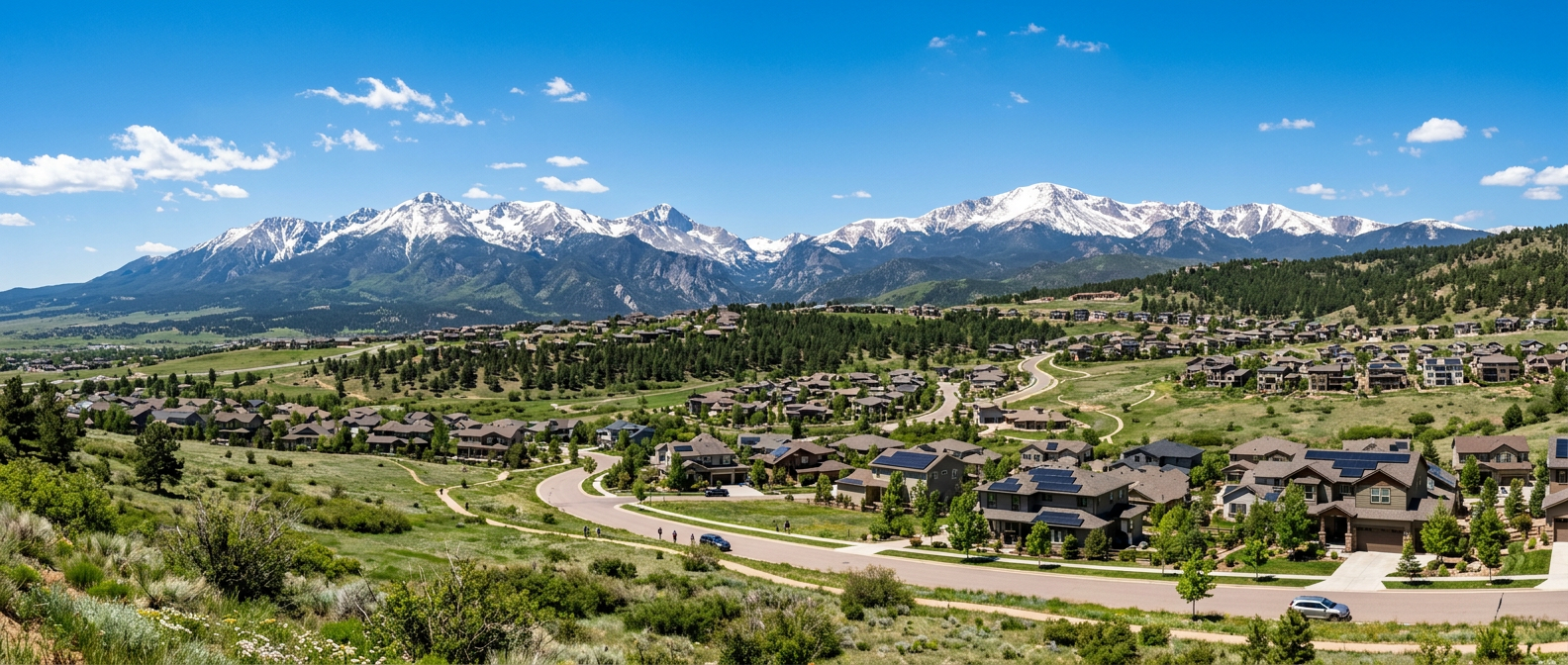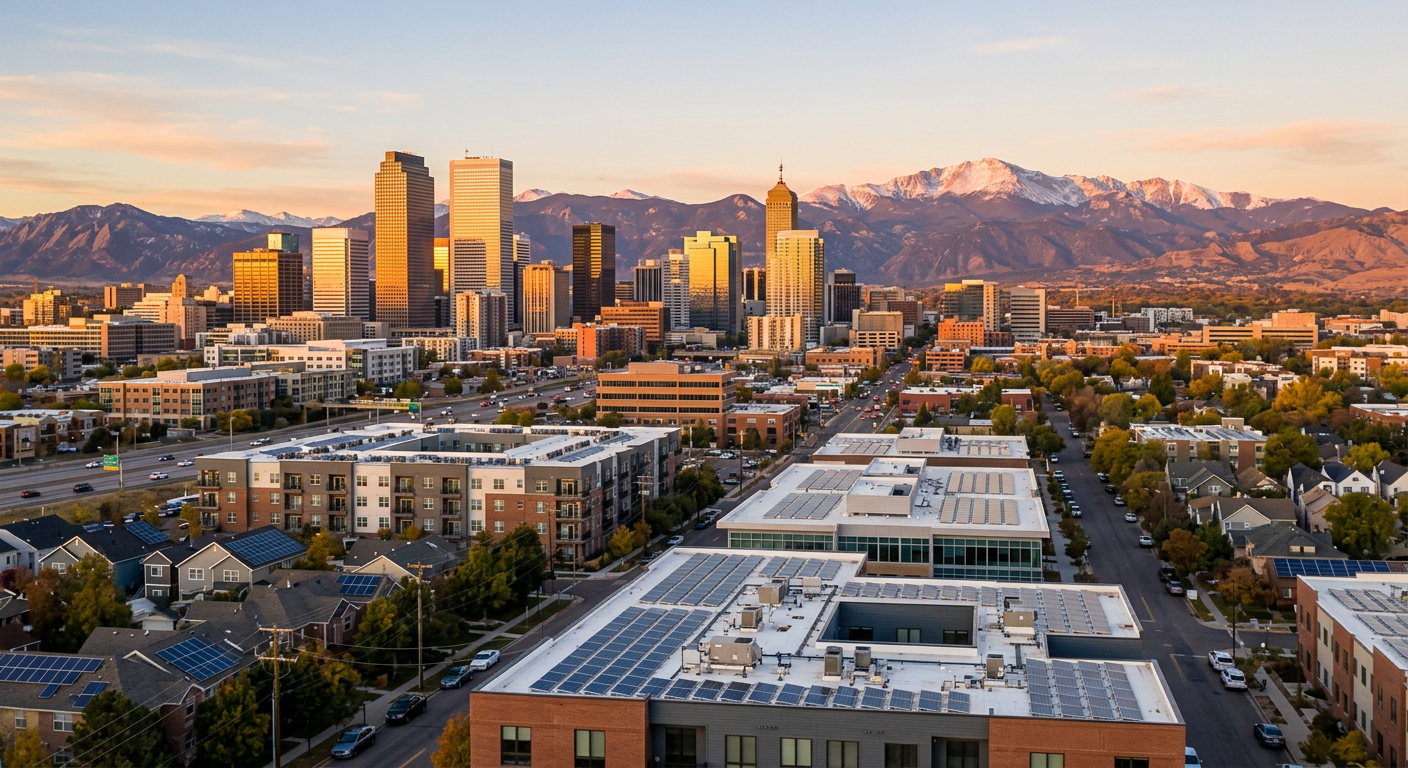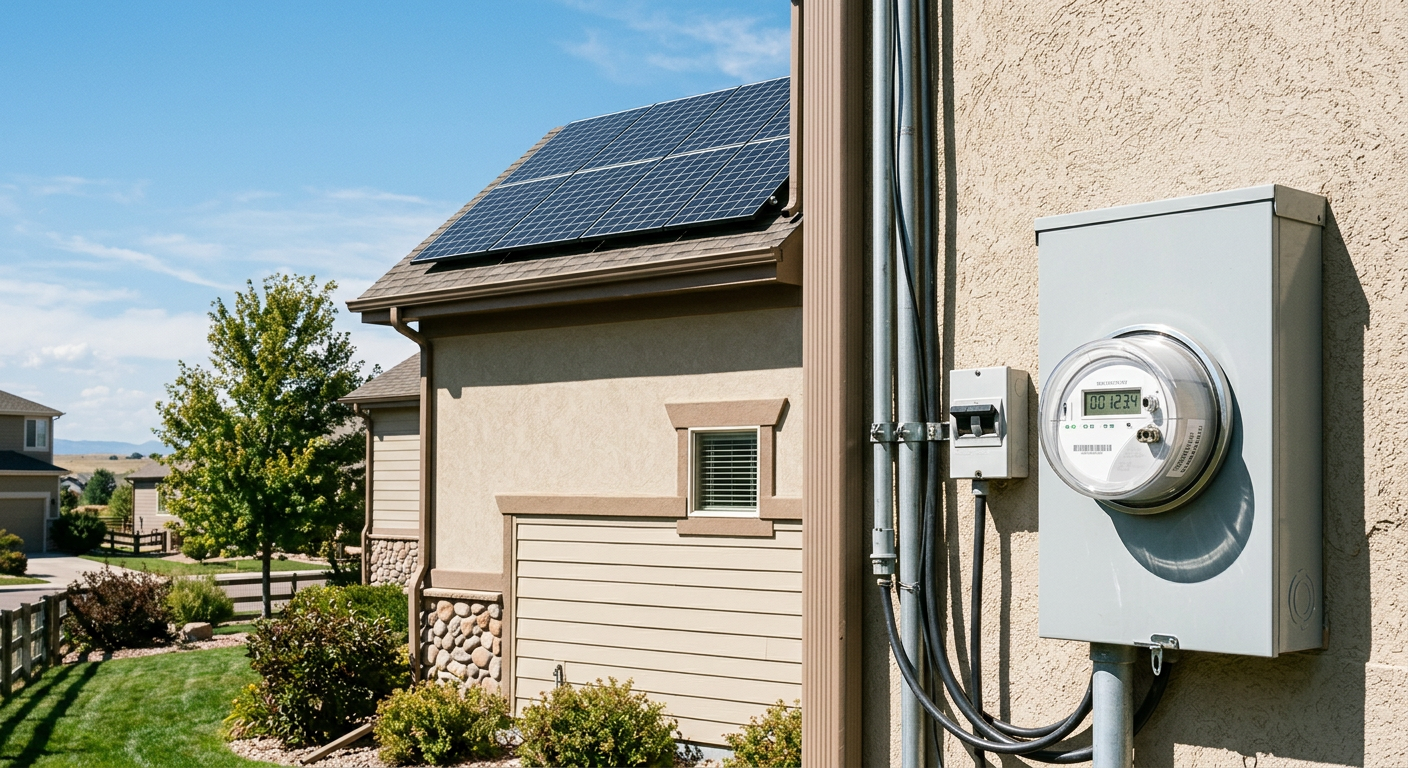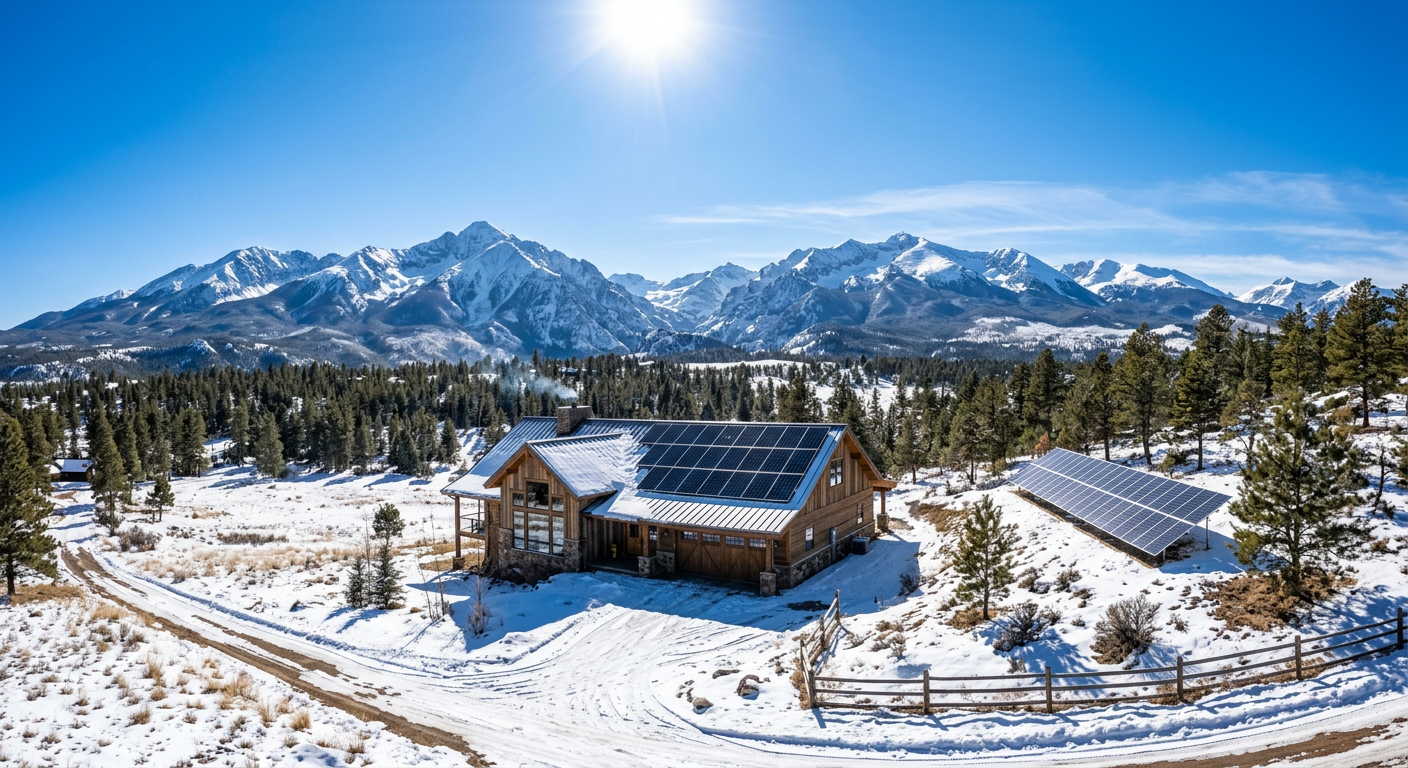
Colorado's climate is unique among major U.S. solar markets. The state combines intense high-altitude sunshine with dramatic temperature swings, regular snowfall, severe hailstorms, and over 300 days of sunshine per year. Each of these factors affects solar panel performance in ways that matter for system design, equipment selection, and realistic production expectations.
This guide examines each climate factor with real data and practical advice from our experience installing and monitoring solar systems across the Colorado Front Range.
The Altitude Advantage
Colorado's elevation is its single greatest solar asset. Denver sits at 5,280 feet. Colorado Springs is at 6,035 feet. Many mountain communities where we install systems are at 7,000 to 9,500 feet.
More Solar Radiation
At higher elevations, there is less atmosphere between the sun and your solar panels. Less atmosphere means:
- Less scattering and absorption of sunlight
- Higher direct normal irradiance (DNI) — the most valuable component of solar radiation
- More ultraviolet radiation — UV energy that panels can partially convert
The increase in solar irradiance with altitude is approximately 2 percent per 1,000 feet. At Denver's elevation, panels receive roughly 10 percent more direct solar radiation than identical panels at sea level, all else being equal. At 9,000 feet, the advantage increases to about 18 percent.
This is why Colorado's solar resource rivals that of Arizona and Nevada despite being at a significantly higher latitude. The altitude compensates for the shorter winter days.
Cooler Operating Temperatures
While Colorado's summer days can be hot at ground level (90-100 degrees F in Denver), the thinner atmosphere at altitude means cooler ambient temperatures than equivalent latitudes at sea level. Morning and evening temperatures are generally cooler than low-elevation locations, and even on hot days, the temperature drops quickly once the sun sets.
This matters because solar panels lose efficiency as they heat up. A panel's temperature coefficient — typically -0.25 to -0.40 percent per degree C — determines how much production drops as temperature rises above the standard test condition of 25 degrees C (77 degrees F). Learn more in our HJT solar cells guide, which covers why temperature coefficient varies by cell technology.
In practice, Colorado panels operate at lower average temperatures than panels in Arizona, Texas, or Florida, producing more energy per rated watt. Our monitoring data shows that Colorado systems outproduce their PVWatts estimates by 3 to 5 percent, partly due to the favorable temperature conditions.
Snow and Solar Panels
Snow is Colorado's most-discussed solar concern. The short answer: it matters less than most people think.
How Snow Affects Production
When snow covers your panels completely, production drops to zero. However, several factors minimize the overall impact:
Snow rarely stays long. Colorado is known for its clear, sunny days between storms. Even after a heavy snowfall, the combination of intense sun and dry air clears snow from panels within one to three days in most cases. Dark panel surfaces absorb solar energy even through a thin snow layer, accelerating melting from underneath.
Panel tilt helps. Solar panels in Colorado are typically mounted at 25 to 40 degrees from horizontal. This angle allows snow to slide off as it begins to melt at the panel surface. Smooth glass panel surfaces have minimal friction, and the slight warming from absorbed solar energy creates a melt layer between the snow and the glass.
Winter production is already lower. The months with the most snow (December and January) are already the lowest production months due to shorter days and lower sun angles. The marginal production loss from snow during these months represents a small percentage of annual production.
Quantifying Snow Losses
Based on our monitoring data across hundreds of Colorado Front Range installations:
- Annual production loss from snow: 2 to 5 percent of total annual production
- Worst-case month (December): 10 to 20 percent of that month's expected production
- Best case: Negligible, in years with light or intermittent snow
For a system producing 12,000 kWh per year, snow losses typically amount to 240 to 600 kWh — worth roughly $35 to $100 in electricity at current rates. This is not enough to significantly impact your system's financial return.
Should You Clear Snow from Panels?
In most cases, no. The risks of roof access in winter conditions outweigh the small production gains from removing snow a day or two earlier. Aggressive snow removal can also scratch panel glass or damage the mounting hardware.
Exceptions where snow removal may be warranted:
- Flat-mounted panels where snow cannot slide off naturally
- Extended periods of overcast weather after heavy snow (rare in Colorado)
- Off-grid systems where every kWh is critical
If snow accumulation is a concern, discuss panel placement and tilt angle with your installer during system design. Steeper tilt angles shed snow faster.
Temperature Effects
Colorado's temperature extremes test solar equipment more than most locations. Temperature swings of 40 to 60 degrees in a single day are common, and annual extremes range from -20 degrees F to 105 degrees F.
Panel Performance in Heat
On a hot July day in Denver, panel surface temperatures can reach 150 to 170 degrees F (65-75 degrees C). At these temperatures, a typical panel with a -0.35 percent per degree C temperature coefficient loses about 14 to 17 percent of its rated output.
This is why panel selection matters in Colorado. Panels with lower temperature coefficients — particularly HJT panels — retain more output in heat:
- Standard PERC panel (-0.35%/°C): Loses ~17% at 75°C panel temp
- TOPCon panel (-0.30%/°C): Loses ~15% at 75°C panel temp
- HJT panel (-0.24%/°C): Loses ~12% at 75°C panel temp
Over a full year, the temperature coefficient difference translates to 3 to 5 percent more production from HJT panels versus standard PERC panels in Colorado conditions. See our panel efficiency guide for more on performance factors.
Panel Performance in Cold
Cold temperatures actually benefit solar panel performance. When panels are below 25 degrees C (77 degrees F), they produce more than their rated output. On a clear, cold January morning in Colorado, panels can produce 5 to 10 percent above their nameplate rating — a pleasant bonus.
This cold-weather efficiency boost partially compensates for shorter winter days, keeping winter production higher than sun-angle calculations alone would suggest.
Thermal Cycling Stress
The rapid temperature changes in Colorado — cool mornings, hot afternoons, and cold nights — create thermal cycling stress on panels and their connections. Materials expand and contract with temperature changes, and over thousands of cycles, this can stress solder joints, cell interconnects, and frame seals.
High-quality panels from reputable manufacturers are designed to withstand 200+ thermal cycles in accelerated testing (per IEC 61215), which simulates decades of real-world temperature variation. Bargain panels from lesser manufacturers may not hold up as well.
This is one reason we recommend premium panels for Colorado installations. The incremental cost of a REC or QCell panel is small compared to the risk of premature degradation from a lesser product.
Hail and Severe Weather
Colorado ranks among the top states for hail frequency and severity. The Front Range "hail alley" from Denver to Colorado Springs experiences some of the most damaging hailstorms in the country. For a comprehensive treatment of this topic, see our dedicated article on hail and solar panels in Colorado.
Panel Hail Resistance
All solar panels sold in the United States are tested to IEC 61215 standards, which requires surviving impact from 25mm (1-inch) ice balls at 23 m/s (about 52 mph). Many premium panels exceed this standard, with some manufacturers testing to 35mm or 45mm hail at higher velocities.
In our Colorado installations, panel hail damage has been extremely rare. Even in the severe 2023 hailstorms that caused widespread roof and vehicle damage across the Front Range, the vast majority of our installed panels survived without damage. The panels that did sustain damage were covered by homeowner's insurance.
Wind Resistance
Colorado's occasional high-wind events (80+ mph in foothill areas) also test solar installations. Properly engineered mounting systems are designed for wind loads exceeding 100 mph. Panel racking is attached to the roof structure (rafters, not just decking) with appropriately rated hardware.
Proper installation engineering — accounting for Colorado's specific wind exposure — is critical. This is another reason to choose an experienced local installer who understands Colorado's building codes and wind conditions.
Seasonal Production Patterns
Understanding seasonal production helps set realistic expectations:
Spring (March-May)
Spring is an excellent production period. Days are lengthening rapidly, sun angles are increasing, and temperatures are cool enough to minimize heat losses. March through May often represents the sweet spot of good production with cool temperatures. Late spring storms bring occasional snow and clouds, but clear days between storms are highly productive.
Summer (June-August)
Summer brings the longest days and highest sun angles, producing the most absolute energy. However, the heat tax on panel efficiency means production per hour of sunshine is slightly lower than in spring. Still, June and July are typically the highest production months.
Monsoon moisture in July and August brings afternoon thunderstorms that can reduce production in the second half of the day. Morning production is usually excellent.
Fall (September-November)
September is often the last strong production month, with long days, mild temperatures, and generally clear skies. October sees a rapid decline as days shorten, and November marks the transition to winter production levels.
Winter (December-February)
December and January are the lowest production months — shorter days, lower sun angles, and occasional snow cover. However, Colorado's clear winter skies mean these months still produce meaningful energy. A typical December produces 40 to 50 percent of what a typical June produces.
February begins the recovery, with noticeably longer days and increasing sun angles. By late February, daily production approaches spring levels.
Designing for Colorado's Climate
Based on years of installation experience in Colorado, here are our design principles:
Panel Selection
Choose panels with low temperature coefficients and strong hail resistance. HJT panels and premium TOPCon panels perform best in Colorado's conditions.
Tilt Angle
Optimal tilt for Colorado is approximately 35 to 40 degrees — close to our latitude. Steeper angles improve winter production and snow shedding but reduce summer production slightly. Most roof-mounted systems follow the roof pitch (typically 25 to 35 degrees), which is close enough to optimal for excellent year-round performance.
Inverter Choice
Microinverters are particularly valuable in Colorado because they handle uneven snow clearing without production losses. When half your panels are snow-free and half are still covered, microinverters let the clear panels produce at full output. String inverters would drag down the entire string's output.
System Sizing
We size Colorado systems to offset 90 to 100 percent of annual consumption, accounting for Colorado-specific production factors including altitude gains, snow losses, and temperature effects. Our sizing models use local irradiance data and historical weather patterns for accuracy.
Real Production Data
Based on our Colorado installation portfolio, here are representative production figures for the Denver metro area:
- Average annual production per kW installed: 1,500-1,700 kWh
- A 10 kW system produces: 15,000-17,000 kWh per year
- Best production month (June): 180-210 kWh per kW
- Lowest production month (December): 75-100 kWh per kW
These numbers factor in all real-world conditions: shade, snow, heat, clouds, and equipment losses. They represent what homeowners actually see on their monitoring systems.
For a system-level understanding of production, see our article on how much electricity solar panels produce.
Get a Colorado-Optimized Design
Every Colorado roof is different, and system design should account for your specific conditions — roof orientation, shade patterns, local microclimate, and equipment choices. Use our solar calculator for an initial estimate, or call (303) 484-1410 to schedule a consultation. ProGreen Solar designs every system specifically for Colorado conditions, using local data and years of Front Range installation experience to deliver the best possible performance from your investment.