As solar technology matures, homeowners have more options for how solar integrates with their homes. The most significant aesthetic alternative to traditional solar panels is the solar shingle — a roofing material that generates electricity while looking like a conventional roof. Tesla's Solar Roof is the most prominent example, but other manufacturers including GAF Energy and CertainTeed also offer solar shingle products.
The question is whether solar shingles' sleeker appearance justifies their higher cost and different performance characteristics. This guide breaks down the comparison honestly so you can make an informed decision.
What Are Solar Shingles?
Solar shingles (also called solar tiles or building-integrated photovoltaics, or BIPV) are roofing materials with photovoltaic cells embedded directly into them. They replace your existing roofing material rather than sitting on top of it.
Tesla Solar Roof
Tesla's Solar Roof is the most well-known solar shingle product. The current version (V3.5) uses tempered glass tiles that come in two varieties: active tiles with embedded solar cells and inactive tiles that match the appearance but do not generate electricity. From ground level, the two types look identical.
Tesla Solar Roof tiles are rated for wind speeds up to 130 mph and carry a Class A fire rating (the highest). They also carry a Class 3 hail rating, which provides protection against 1.75-inch diameter hail stones.
GAF Energy Timberline Solar
GAF Energy, a subsidiary of the largest roofing manufacturer in North America, offers the Timberline Solar system. These are actual nailable roofing shingles with integrated solar cells, installed using standard roofing techniques. They look more like traditional asphalt shingles than Tesla's glass tiles.
CertainTeed SolarTile
CertainTeed (a subsidiary of Saint-Gobain) offers a solar roofing product that integrates with their roofing shingle lines. Availability has been limited compared to Tesla and GAF.
What Are Traditional Solar Panels?
Traditional solar panels are rectangular modules mounted on racking hardware attached to your existing roof. They sit a few inches above the roof surface, creating an air gap that actually helps with cooling. Modern panels come in black-on-black designs that minimize visual contrast with dark roofs.
For details on how traditional panels work, see our guide on how solar panels work.
Cost Comparison
This is where the comparison gets stark. Solar shingles cost significantly more than traditional panels for the same amount of electricity generation.
Solar Shingle Costs
Tesla Solar Roof: $3.00 to $4.50 per watt of solar capacity, depending on roof complexity, size, and the ratio of active to inactive tiles. For a 10 kW system on a typical 2,000 square foot roof, expect to pay $55,000 to $75,000 total (including both active and inactive tiles). This cost includes a complete new roof, so it is not a direct apples-to-apples comparison with panels alone.
GAF Timberline Solar: $2.80 to $3.50 per watt. Somewhat less expensive than Tesla but still carries a significant premium over traditional panels.
Traditional Solar Panel Costs
Traditional solar panel systems in Colorado typically cost $2.50 to $3.25 per watt fully installed, according to current market data. For a 10 kW system, that translates to $25,000 to $32,500. This does not include a new roof — if your roof needs replacement, add $10,000 to $20,000 for conventional roofing.
The Fair Cost Comparison
The fairest comparison accounts for whether you also need a new roof:
If your roof is in good condition (10+ years remaining):
- Traditional panels: $25,000 to $32,500 for a 10 kW system
- Tesla Solar Roof: $55,000 to $75,000 (includes unnecessary roof replacement)
- Premium for solar shingles: $22,500 to $47,500
If you need a new roof anyway:
- Traditional panels + new roof: $35,000 to $52,500
- Tesla Solar Roof: $55,000 to $75,000
- Premium for solar shingles: $15,000 to $27,500
Even when you need a new roof, solar shingles cost substantially more. The federal tax credit applies to both options, reducing the absolute dollar difference by 30 percent — but the relative premium remains.
For detailed cost analysis of traditional panels in Colorado, see our solar panel cost guide.
Efficiency and Performance
Power Output Per Square Foot
Traditional solar panels are more efficient than solar shingles. Current top-tier panels achieve 21 to 23 percent efficiency (see our solar panel efficiency guide), while solar shingles typically achieve 15 to 20 percent efficiency.
This means solar shingles need more roof area to produce the same amount of electricity. On a large roof this may not matter, but on a smaller or partially shaded roof, the efficiency difference limits total system capacity.
Temperature Performance
Traditional solar panels benefit from an air gap between the panel and the roof, which allows convective cooling. Solar shingles sit flush against the roof deck with minimal air circulation, causing them to run hotter. Since all solar cells lose efficiency as temperature increases (read about temperature coefficients), this reduces real-world energy production.
In Colorado's summer heat, the temperature penalty for roof-integrated shingles can reduce output by an additional 3 to 7 percent compared to rack-mounted panels at the same efficiency rating.
Shade and Orientation
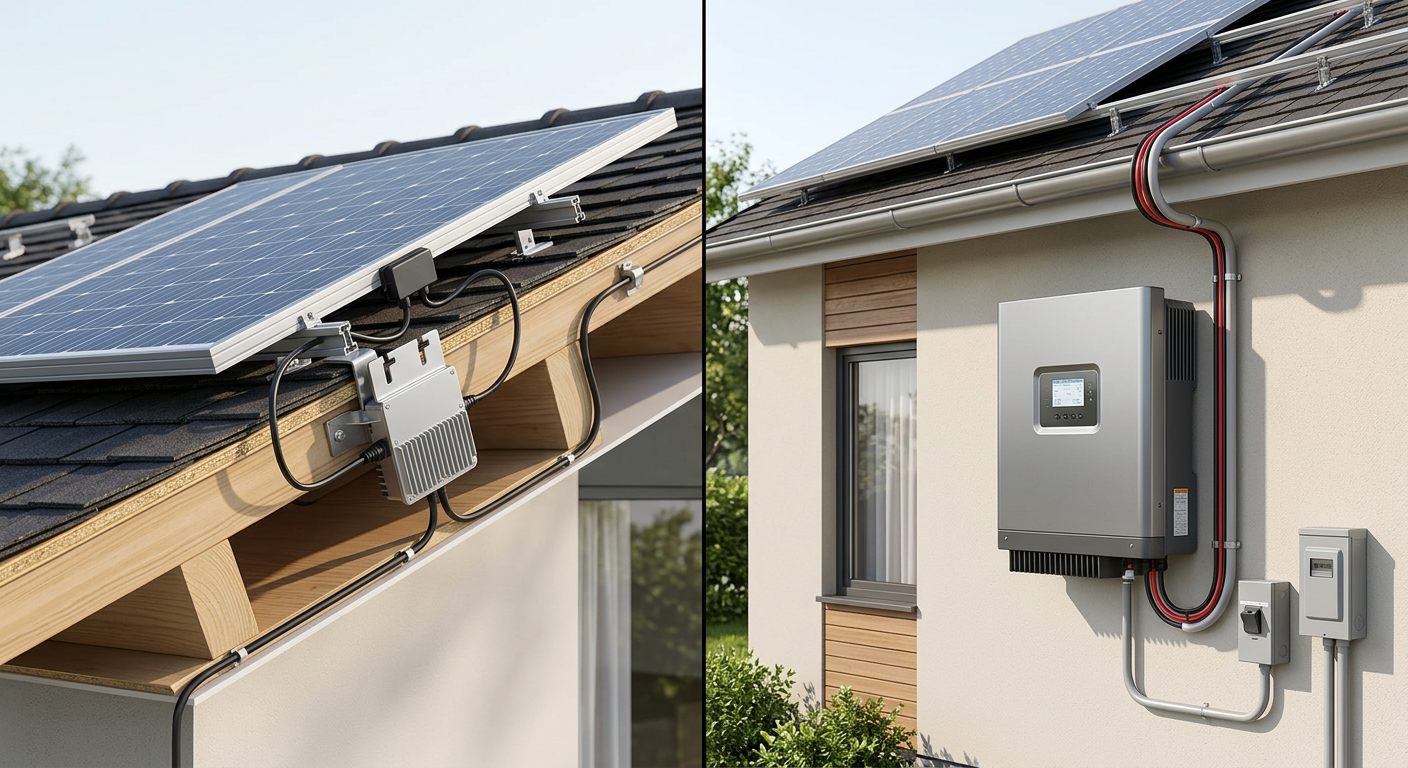
Traditional panels can be paired with microinverters that allow each panel to optimize independently, minimizing shade losses. Solar shingle systems have more limited optimization options. Some shingle systems use string-level optimization, meaning a shaded section can affect a larger area's production.
Long-Term Degradation
Both technologies degrade over time. Traditional panels from top manufacturers degrade at 0.25 to 0.50 percent per year. Tesla Solar Roof's degradation data is more limited given the product's shorter track record, but Tesla warrants at least 85 percent production at 25 years, implying a degradation rate around 0.5 to 0.6 percent per year.
Aesthetics
This is where solar shingles have an undeniable advantage.
Solar Shingles
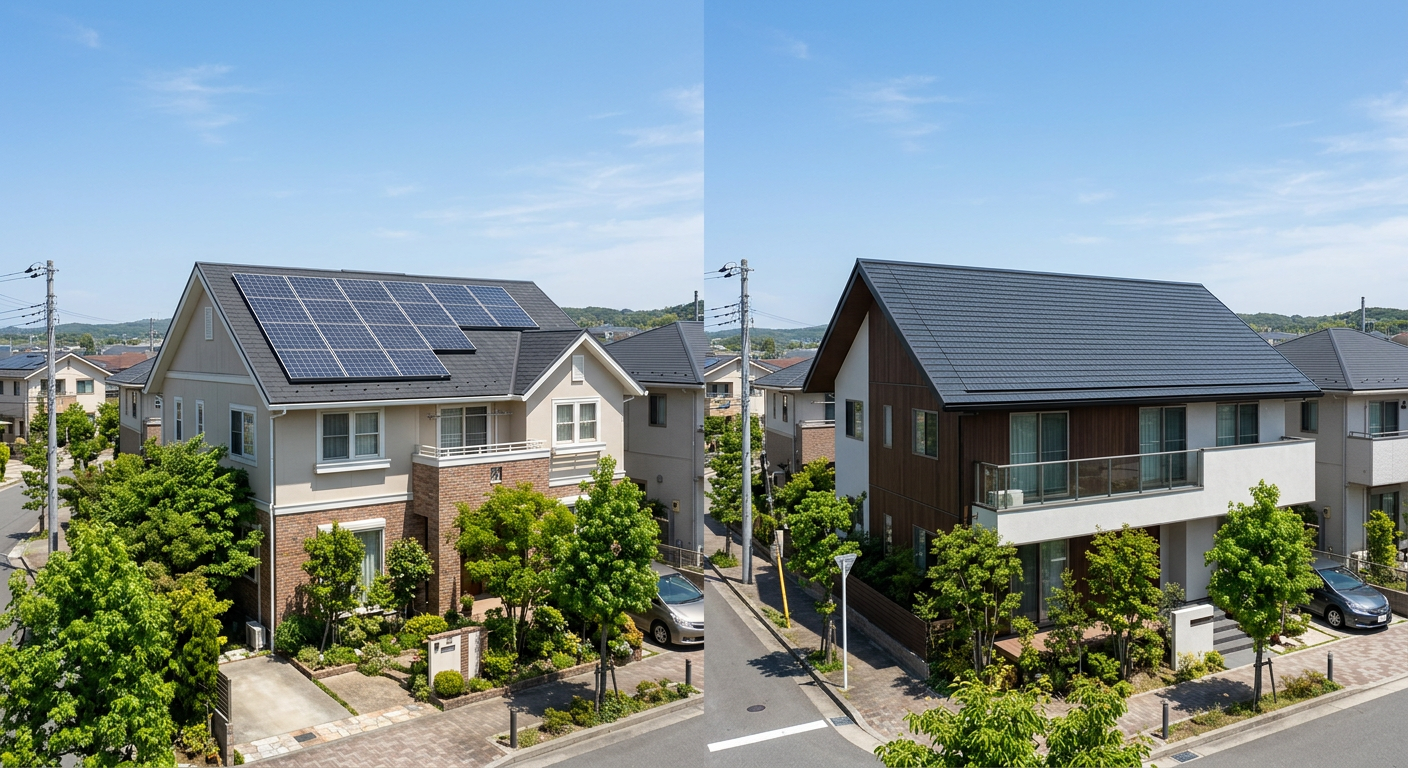
From street level, a well-installed solar roof is virtually indistinguishable from a conventional premium roof. Tesla's glass tiles have a subtle, uniform appearance. GAF's Timberline Solar looks like standard architectural shingles. For homeowners in neighborhoods with strict HOA rules or those who simply prefer their home not to look like it has panels, solar shingles solve the aesthetic concern entirely.
Traditional Panels
Modern all-black panels with black frames and black backsheets are far more attractive than the silver-framed, white-backsheet panels of a decade ago. On a dark roof, they blend reasonably well. However, they are still visibly "solar panels" — raised modules on a roof surface. Some homeowners and HOAs find this unacceptable.
It is worth noting that Colorado law (C.R.S. 38-30-168) prohibits HOAs from unreasonably restricting solar installations. HOAs can require reasonable aesthetic standards but cannot effectively ban solar panels. This legal protection reduces the aesthetic pressure that drives some homeowners toward solar shingles.
Installation and Logistics
Solar Shingle Installation
Installing solar shingles is a full roofing project. It requires:
- Complete removal of existing roofing material
- Installation of new underlayment
- Placing active and inactive shingles/tiles across the entire roof
- Electrical wiring integrated into the roofing installation
- Both roofing and electrical crews, often from different trades
Tesla Solar Roof installations typically take one to three weeks depending on roof size and complexity. The process requires specialized training, and the number of qualified installers is limited.
Traditional Panel Installation
Traditional panel installation is faster and less disruptive:
- Mounting hardware is attached to the existing roof
- Panels are secured to the mounting rails
- Wiring is run to the inverter
- Typical installation takes one to three days
The existing roof remains intact, and the panels can be removed or replaced independently of the roof. For a detailed walkthrough, see our solar installation process guide.
Durability and Warranty
Solar Shingles
Tesla Solar Roof comes with a 25-year tile warranty, 25-year power production warranty, and a weatherization warranty for as long as you own the home. The tempered glass tiles are extremely durable — more resistant to impact than most conventional roofing materials.
For Colorado homeowners concerned about hail damage, Tesla's Class 3 hail rating provides reasonable protection but falls short of the Class 4 rating offered by some impact-resistant conventional shingles.
Traditional Panels
Top-tier solar panels carry 25 to 30 year product and performance warranties. They are tested to withstand 1-inch hail at 52 mph per IEC 61215 standards, and many premium panels exceed this requirement. The panels sit above the roof surface, meaning hail must penetrate the panel to reach the roof — providing an additional layer of roof protection.
The underlying roof still needs its own maintenance and eventual replacement. However, studies have shown that solar panels extend roof life by shielding the roofing material from UV degradation and weather.
Return on Investment
This is where traditional panels pull decisively ahead.
Traditional Panel ROI
A $28,000 solar panel system in Colorado (after the 30 percent tax credit, that is about $19,600 net cost) producing $2,000 to $2,500 per year in electricity savings pays for itself in 8 to 10 years. Over 25 years, the return is roughly $30,000 to $45,000 in net savings. See our detailed analysis in is solar worth it.
Solar Shingle ROI
A Tesla Solar Roof at $65,000 (after the tax credit, about $45,500 net) producing the same $2,000 to $2,500 per year in electricity has a payback period of 18 to 23 years. The 25-year net savings are roughly $5,000 to $17,000 — substantially less than traditional panels.
If you subtract the cost of a new roof that you would need anyway ($15,000), the adjusted net cost drops to $30,500, improving the payback period to about 12 to 15 years. Better, but still slower than traditional panels.
When Solar Shingles Make Financial Sense
Solar shingles approach financial competitiveness with traditional panels only when:
- You need a complete roof replacement. The incremental cost over a premium new roof narrows the gap.
- You would choose a premium roof material anyway. If you were considering slate, tile, or premium architectural shingles at $15,000 to $25,000, the premium for solar shingles is more reasonable.
- The home's resale value benefits from the aesthetic. In premium housing markets, a solar roof may add more resale value than rack-mounted panels.
Maintenance Differences
Solar Shingles
- Cannot easily remove individual tiles for roof maintenance underneath
- Tile replacement requires matching and electrical disconnection
- Roof leaks may be more complex to diagnose and repair
- Snow removal must be gentle to avoid damaging the tiles
Traditional Panels
- Panels can be temporarily removed for roof repair
- Individual panel replacement is straightforward
- The air gap between panels and roof allows drainage and ventilation
- Snow typically slides off smooth glass surfaces more easily
Which Should You Choose?
Choose Solar Shingles If:
- Aesthetics are your top priority and you are willing to pay a premium
- You need a complete roof replacement in the near future
- Your HOA or neighborhood has strict visual standards (though Colorado law protects panel installations)
- You have a large roof area to compensate for lower efficiency
- Budget is not the primary concern
Choose Traditional Solar Panels If:
- Return on investment and savings matter most
- Your existing roof is in good condition
- You want maximum energy production per dollar
- You may want to expand your system later
- You want flexibility in panel and inverter technology choices
- You want the option to take your system with you if you move
Our Recommendation
For the vast majority of Colorado homeowners, traditional solar panels provide far better financial returns and energy production per dollar invested. The aesthetic difference with modern all-black panels is modest, and Colorado law protects your right to install them.
If you are building a new home or facing a complete roof replacement, and aesthetics are worth a $15,000 to $30,000 premium, solar shingles are a viable option. Just go in with realistic expectations about cost and payback.
Get a Custom Comparison
Every home is different. Use our solar calculator to see what a traditional panel system would cost and produce for your specific home, or call us at (303) 484-1410 for a consultation that includes both panel and shingle options. ProGreen Solar will give you honest numbers so you can make the right decision for your home and budget.