Solar panel prices are influenced by more than just manufacturing costs and technology improvements. Trade policy — specifically tariffs on imported solar panels and cells — has played a significant and sometimes controversial role in shaping what American consumers pay for solar energy.
Understanding solar tariffs matters because they directly affect installation costs, supply chain dynamics, and the broader trajectory of solar adoption in the United States. At ProGreen Solar, we navigate these trade policies daily to source the best panels at the best prices for our Colorado customers. This guide explains the history, current state, and future direction of solar trade policy.
Why Solar Tariffs Exist
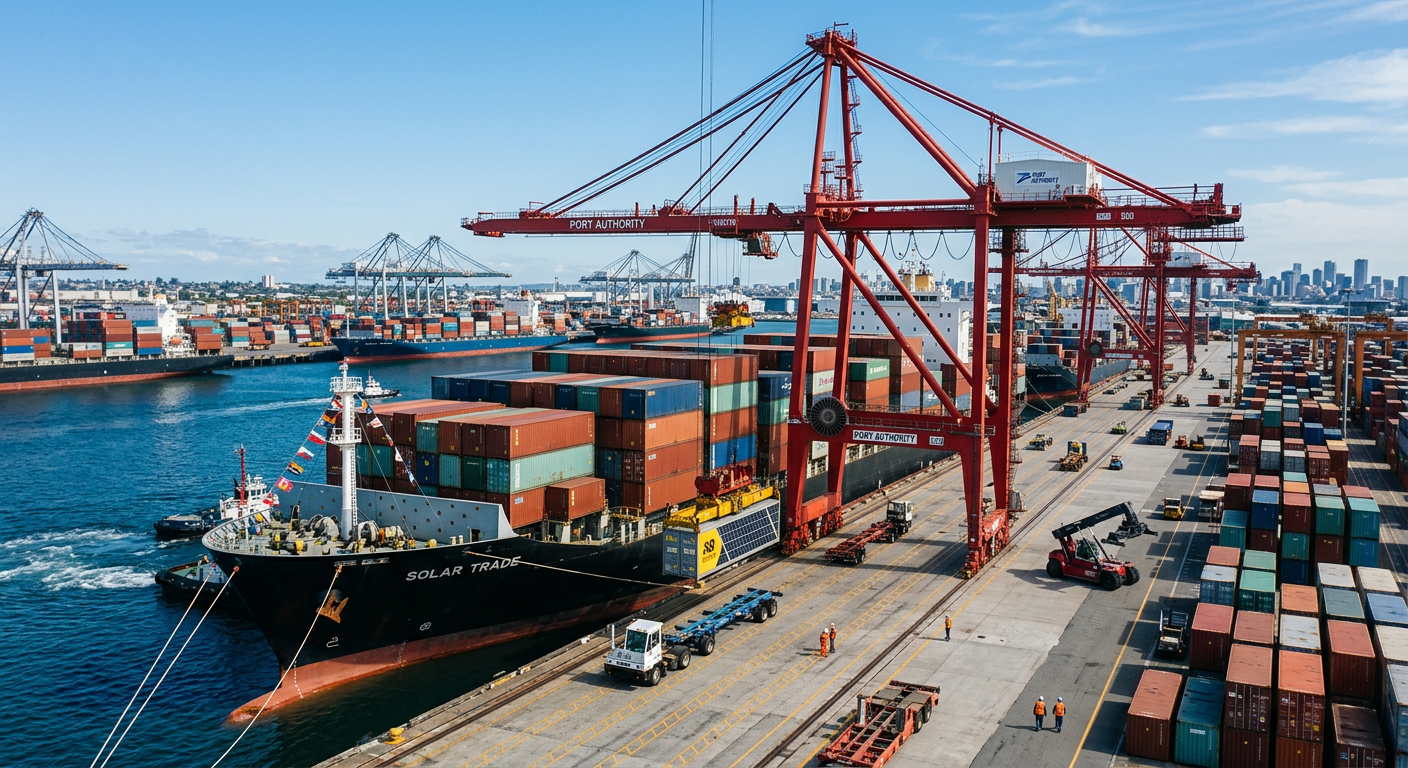
The fundamental tension behind solar tariffs is simple: the vast majority of solar panels installed in the United States are manufactured overseas, primarily in China and Southeast Asia. American solar manufacturers have argued that foreign competitors benefit from government subsidies and unfair trade practices, making it impossible for domestic producers to compete on price.
Tariff advocates argue that protecting domestic manufacturing preserves jobs, builds supply chain resilience, and ensures national security. Tariff opponents counter that higher panel prices slow solar adoption, costing jobs in the much larger installation sector and delaying the transition to clean energy.
Both sides have valid points, and the policy has swung back and forth as administrations balance these competing interests.
A History of Solar Tariffs
2012: The First Anti-Dumping Duties
The solar tariff saga began in 2012 when the US Department of Commerce imposed anti-dumping and countervailing duties on crystalline silicon solar cells manufactured in China. The duties ranged from 24 to 36 percent and were based on findings that Chinese manufacturers were selling panels below manufacturing cost (dumping) and receiving illegal government subsidies.
Impact: Chinese manufacturers quickly circumvented these duties by moving cell production to Taiwan and other countries while continuing to assemble modules in China. The tariffs had minimal impact on overall panel prices.
2015: Expanding the Duties
Recognizing the circumvention, the Commerce Department expanded duties to cover cells manufactured in Taiwan and modules assembled in China regardless of cell origin. Duty rates ranged from 11 to 50 percent depending on the manufacturer.
Impact: Production shifted to Southeast Asian countries — Vietnam, Malaysia, Thailand, and Cambodia — creating new supply chains outside the tariff scope.
2018: Section 201 Safeguard Tariffs
The most significant trade action came when the US International Trade Commission found that imported solar panels caused serious injury to domestic manufacturers. President Trump imposed Section 201 safeguard tariffs:
- Year 1 (2018): 30 percent tariff on all imported solar cells and modules
- Year 2 (2019): 25 percent
- Year 3 (2020): 20 percent
- Year 4 (2021): 15 percent
- First 2.5 GW of imported cells exempt from tariff each year
Impact: Panel prices increased 10 to 15 percent in 2018, slowing residential and utility-scale installations. The Solar Energy Industries Association estimated that the tariffs resulted in 62,000 fewer US solar jobs and 10.5 GW of delayed installations over the four-year period.
2022: Section 201 Extension
President Biden extended the Section 201 tariffs for an additional four years (through 2026), but at reduced rates:
- Year 5 (2022): 14.75 percent
- Year 6 (2023): 14.50 percent
- Year 7 (2024): 14.25 percent
- Year 8 (2025): 14.00 percent
Simultaneously, the administration issued a two-year moratorium on new anti-dumping duties on panels from Southeast Asian countries (Vietnam, Malaysia, Thailand, Cambodia), providing temporary relief from the prospect of additional tariffs.
2024-2025: Southeast Asia Anti-Circumvention
In 2024, the Commerce Department completed its investigation into whether Chinese manufacturers were circumventing existing tariffs by routing production through Southeast Asian countries. The findings were mixed:
- Some manufacturers were found to be conducting genuine manufacturing operations in Southeast Asia (not circumventing)
- Others were found to be merely assembling Chinese-made components (circumventing)
- Duty rates varied significantly by manufacturer and country
This created a complex landscape where the tariff rate on a given panel depends on which specific factory produced it and whether that factory was found to be circumventing duties.
2026: Current State
As of 2026, the tariff landscape includes:
| Tariff Type | Rate | Applies To |
|---|---|---|
| Section 201 safeguard | ~14% | All imported crystalline silicon panels |
| Anti-dumping (China) | 25-250%* | Panels with Chinese-origin cells |
| Countervailing (China) | 11-16% | Panels with Chinese-origin cells |
| AD/CVD (circumvention) | Varies by factory | Select Southeast Asian manufacturers |
*Effective rates vary dramatically by manufacturer. The highest rates apply to Chinese companies that did not cooperate with Commerce investigations.
The practical result is that very few panels are imported directly from China. The majority of panels installed in the United States are manufactured in Southeast Asia, South Korea, India, or (increasingly) domestically.
Impact on Panel Prices
The net effect of tariffs on what you pay for solar is real but has moderated over time:
Historical Price Impact
| Year | Global Panel Price | US Panel Price | Tariff Premium |
|---|---|---|---|
| 2017 (pre-Section 201) | $0.35/W | $0.40/W | 14% |
| 2019 (peak tariff) | $0.25/W | $0.35/W | 40% |
| 2022 (tariff + supply chain) | $0.22/W | $0.30/W | 36% |
| 2026 (current) | $0.12/W | $0.16/W | 33% |
US consumers consistently pay a premium over global panel prices due to tariffs. In 2026, this premium adds approximately $0.04 per watt, or roughly $280 for a typical 7 kW residential system. While not insignificant, it is a smaller factor than installation labor, permitting, or customer acquisition costs.
Why the Impact Has Moderated
Several factors have reduced the practical impact of tariffs:
Global price declines. Panel manufacturing costs have fallen so dramatically (90 percent over the past 15 years) that even with a 30 percent tariff, panels are far cheaper than a decade ago. Tariffs add a premium on an already very cheap product.
Supply chain diversification. Manufacturers have established genuine production capabilities in multiple countries, reducing dependence on any single supply chain subject to tariffs.
Domestic manufacturing growth. The Inflation Reduction Act has incentivized domestic panel manufacturing through production tax credits and domestic content bonus ITC adders. US manufacturing capacity is expanding rapidly.
The Domestic Manufacturing Push
The IRA fundamentally changed the economics of domestic solar manufacturing by providing:
Production Tax Credits
- $0.07/W for domestically manufactured solar modules (through 2032)
- Additional credits for domestic cells, wafers, and polysilicon
- Total stackable credits can reach $0.17/W or more for fully domestic supply chains
Domestic Content Bonus ITC
- Additional 10 percent ITC bonus (increasing total ITC from 30 to 40 percent) for commercial systems using specified percentages of domestic materials
- Creates demand-side pull for domestic panels
Results So Far
These incentives have catalyzed a wave of domestic manufacturing announcements:
- More than 50 GW of announced US solar manufacturing capacity
- Major facilities under construction or operational in Georgia, Texas, Ohio, Alabama, and other states
- Companies including First Solar, Qcells, Maxeon, Canadian Solar, and JA Solar building US factories
- Domestic production projected to reach 30 to 40 GW annually by 2028
What This Means for Colorado Homeowners
As domestic manufacturing scales up, Colorado homeowners will see:
- More domestic panel options. Made-in-USA panels from multiple manufacturers will be widely available.
- Potential price convergence. As domestic production reaches scale, the price gap between domestic and imported panels should narrow.
- Qualification for bonus incentives. Systems using domestic panels may qualify for commercial bonus ITC adders.
- Supply chain resilience. Less vulnerability to trade disputes, shipping disruptions, and geopolitical tensions.
What Consumers Should Know
Tariffs Should Not Delay Your Decision
While tariffs add a modest premium to panel prices, they should not cause you to delay going solar. The premium is small relative to total system cost, and it is more than offset by the 30 percent ITC. Waiting for tariffs to be reduced or eliminated is a speculative bet that risks missing years of electricity savings and potentially favorable net metering policies.
Your Installer Manages Tariff Complexity
At ProGreen Solar, we handle all supply chain and tariff considerations on your behalf. We source panels from manufacturers with established, compliant supply chains, ensuring competitive pricing without tariff-related complications. Our customers do not need to understand tariff rates — they need to know their installed system price, which we quote clearly and transparently.
Quality Is Not Determined by Origin
Some of the world's best solar panels are manufactured in China, Southeast Asia, South Korea, and the United States. Manufacturing quality depends on the specific company and factory, not the country of origin. We evaluate every panel we offer based on real-world performance data, regardless of where it is made.
Price Is Just One Factor
When choosing panels, tariff-affected price is just one consideration among many:
- Efficiency and temperature performance
- Warranty terms and manufacturer financial stability
- Degradation rate and long-term production
- Compatibility with your chosen inverter platform
- Aesthetic preferences
The cheapest panel is rarely the best value over a 30-year system life. We help customers evaluate total cost of ownership, not just upfront price.
The Bigger Picture
Solar tariffs reflect a broader tension in energy policy: the desire to build domestic manufacturing capability versus the urgency of deploying clean energy as rapidly and affordably as possible. Both goals are legitimate, and the IRA represents the most coherent attempt to pursue both simultaneously — using production tax credits to build domestic capacity while maintaining the deployment-focused ITC.
For individual homeowners, the practical message is encouraging. Solar panel prices remain near historic lows even with tariffs in place. Domestic manufacturing is scaling rapidly, creating both supply security and economic opportunity. And the financial case for going solar has never been stronger.
Get Your Solar Quote
Do not let tariff headlines delay your solar decision. The economics are strong, the technology is proven, and the incentives are in place. Use our solar calculator to see your specific costs and savings, or call ProGreen Solar at (303) 484-1410 for a detailed consultation. We will provide a clear, all-inclusive price for your system — one that already accounts for every tariff, incentive, and market factor in today's landscape.