The solar industry in 2026 is in a remarkable position: record installations, falling costs, technological breakthroughs entering commercial production, and a policy environment that provides a decade of certainty. Yet challenges remain — supply chain dynamics, grid integration hurdles, and political uncertainties all shape the landscape.
At ProGreen Solar, we live in this industry every day. We see the trends not through reports and forecasts but through the panels we install, the prices we negotiate, and the technology we evaluate. This is our honest assessment of where solar stands in 2026 and where it is headed.
Market Growth: Breaking Records Again
The US solar market continues its remarkable growth trajectory:
Installation Numbers
- 2025 US solar installations: Approximately 38 to 42 GW (across residential, commercial, and utility-scale)
- 2026 projected: 45 to 50 GW — another record year
- Residential sector: 6 to 7 GW annually, representing approximately 700,000 to 800,000 home installations per year
- Colorado specifically: 300 to 400 MW of new solar capacity annually, ranking in the top 15 states
What Is Driving Growth
Economics. Solar is now the cheapest new electricity source in most US markets. The levelized cost of residential solar has dropped below $0.06/kWh in sunny states, and even in Colorado, it is comfortably below $0.08/kWh — far below utility retail rates of $0.14 to $0.18/kWh.
Policy certainty. The Inflation Reduction Act locked in the 30 percent ITC through 2032, giving homeowners and businesses a decade to plan without incentive uncertainty. This is unprecedented in solar history.
Rising electricity rates. Utility rates across Colorado and nationally have been increasing 3 to 6 percent annually — faster than the historical average. Every rate increase makes the solar value proposition stronger.
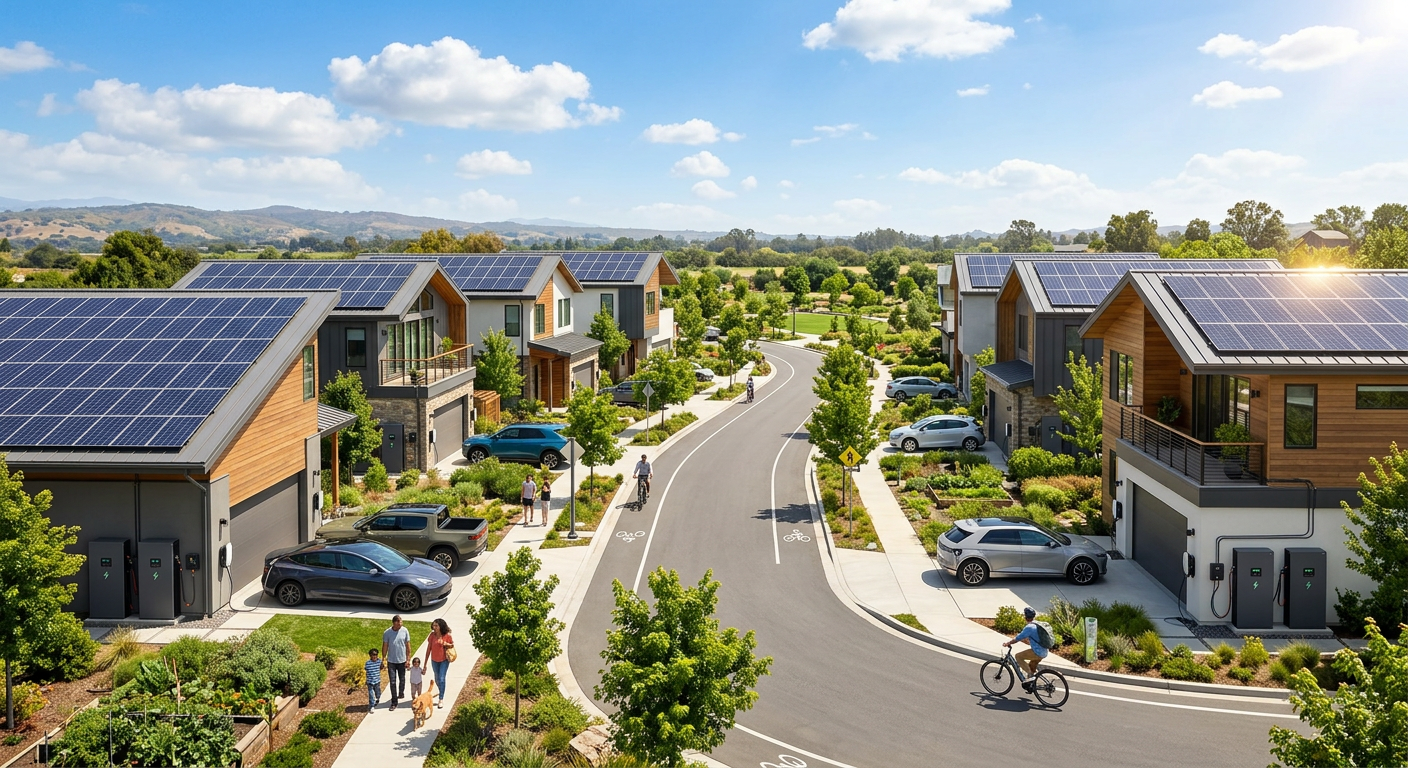
Battery integration. Falling battery prices and improved technology are making solar-plus-storage mainstream. Approximately 30 to 40 percent of new residential solar installations now include battery storage, up from less than 10 percent five years ago.
EV adoption. The EV-plus-solar combination is driving larger system sizes and bringing new customers who see solar as vehicle fueling infrastructure.
Price Trends: Still Falling
Panel Prices
Global solar panel prices have continued their long-term decline:
| Year | Average Panel Price ($/W) | Average Module Efficiency |
|---|---|---|
| 2015 | $0.60 | 16-17% |
| 2018 | $0.40 | 17-19% |
| 2021 | $0.25 | 19-21% |
| 2024 | $0.18 | 20-22% |
| 2026 | $0.13-$0.16 | 21-23% |
Panel prices have dropped to the point where they represent only 15 to 25 percent of total installed system cost. The "soft costs" — labor, permitting, customer acquisition, design, and overhead — now dominate.
Installed System Costs
| Segment | 2024 Installed Cost | 2026 Installed Cost | Change |
|---|---|---|---|
| Residential | $3.10-$3.50/W | $2.80-$3.20/W | -8 to -10% |
| Commercial | $1.80-$2.30/W | $1.50-$2.10/W | -10 to -15% |
| Utility-scale | $0.90-$1.20/W | $0.75-$1.05/W | -12 to -15% |
In Colorado, residential installed costs of $2.80 to $3.20 per watt translate to approximately $19,600 to $22,400 for a typical 7 kW system before the 30 percent ITC. Net costs of $13,700 to $15,700 make the financial case for solar strong for most homeowners.
Battery Prices
Battery storage costs have fallen dramatically and continue declining:
- 2020: $1,200-$1,500 per kWh installed
- 2023: $900-$1,200 per kWh installed
- 2026: $700-$1,000 per kWh installed
At these prices, the economics of battery storage are increasingly favorable, particularly for homeowners on time-of-use rate plans.
Technology Advances: What Is New
Perovskite Tandem Cells
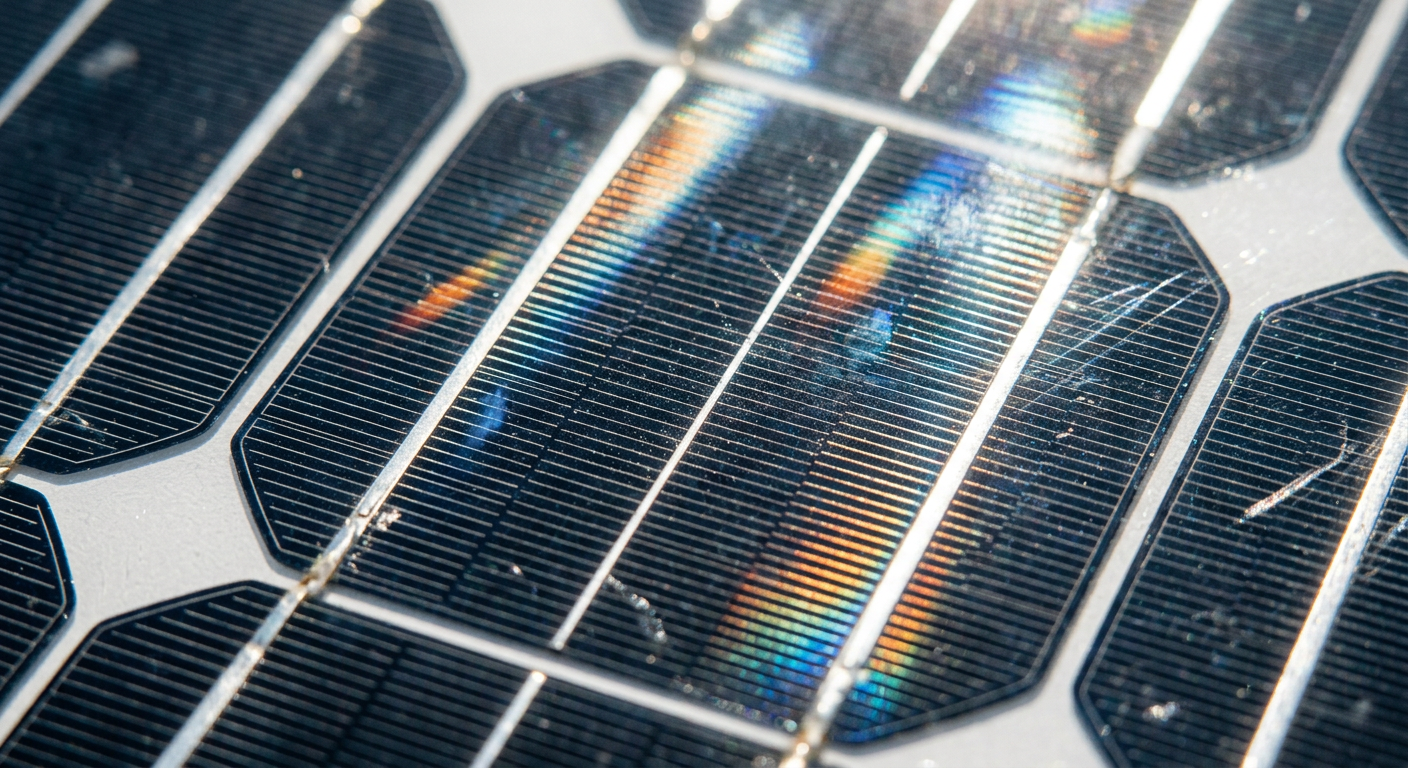
The most exciting technology development in solar is the commercialization of perovskite-silicon tandem cells. These cells layer a perovskite semiconductor on top of a traditional silicon cell, capturing a broader spectrum of sunlight.
Where we stand in 2026:
- Lab efficiencies exceeding 33 percent (versus 26.8 percent for pure silicon)
- First commercial perovskite tandem modules entering pilot production
- Expected market availability for residential installations: 2028 to 2030
- Potential efficiency gain: 3 to 5 percentage points over current best silicon panels
Perovskite tandems could deliver 25 to 28 percent efficiency modules within the next few years — meaning even more power from the same roof area. For homeowners with limited roof space, this is transformative.
TOPCon and Heterojunction Technology
While perovskites are the future, the current leading edge is the transition from PERC cells to TOPCon (Tunnel Oxide Passivated Contact) and heterojunction (HJT) technologies:
- PERC: The incumbent technology at 21 to 22.5 percent efficiency. Still the majority of panels shipped.
- TOPCon: Rapidly gaining market share at 22 to 24 percent efficiency. Lower temperature coefficient and better low-light performance.
- Heterojunction (HJT): Premium technology at 22.5 to 24.5 percent efficiency. Excellent temperature coefficient, but higher manufacturing cost.
The best solar panels in 2026 are increasingly TOPCon-based, with HJT in the premium tier. For Colorado's climate — high altitude, intense sun, significant temperature variation — both technologies offer meaningful advantages over older PERC cells.
Bifacial Panels
Bifacial panels generate electricity from both sides — the front captures direct sunlight while the back captures reflected light from the ground or roof surface. Gains of 5 to 15 percent over monofacial panels are typical, depending on installation conditions.
Bifacial panels are becoming standard in commercial and ground-mount installations. For residential rooftop installations, the benefit is more modest (3 to 8 percent) because roof surfaces are less reflective than optimal ground-mount conditions. However, when paired with white or cool roof membranes, bifacial residential panels can capture meaningful additional energy.
Microinverter and Optimizer Advances
Power electronics continue to advance:
- Enphase IQ8 and IQ9 series — Higher power handling, grid-forming capability, and integrated rapid shutdown. The IQ series supports Sunlight Backup — producing solar power during grid outages even without a battery.
- SolarEdge Home Hub — Integrated inverter, optimizer, and energy management in a single platform with EV charger integration.
- Tesla Powerwall 3 — Integrated solar inverter and battery in one unit, simplifying installation and reducing costs.
Smart Panels and AC Modules
AC solar modules — panels with microinverters factory-integrated — are gaining traction for their simplicity. Each panel is a complete AC power source that plugs into standard wiring, reducing installation labor and complexity.
Grid Integration Challenges
As solar penetration increases, grid integration challenges are becoming more significant:
Interconnection Queues
Utility interconnection processes — the approval required to connect your solar system to the grid — are facing increasing delays in some markets. In Colorado, Xcel Energy's interconnection process for residential systems typically takes 2 to 6 weeks, but larger commercial systems and areas with high solar penetration can face longer timelines.
Net Metering Evolution
Traditional net metering — where solar exports are credited at full retail rate — is evolving toward less generous structures in many states. California's NEM 3.0 drastically reduced export compensation in 2023, and other states are considering similar changes.
Colorado's net metering structure remains relatively favorable in 2026, but the trend is clearly toward reduced export compensation. This shift makes battery storage and self-consumption optimization increasingly important.
Grid Modernization
Utilities are investing in grid modernization to accommodate higher levels of distributed solar:
- Smart inverters with grid-support functions (voltage regulation, frequency response, reactive power)
- Distribution automation for real-time grid management
- Battery storage at the grid level for peak shaving and frequency regulation
- Virtual power plants that aggregate residential batteries for grid services
These investments benefit solar homeowners by improving grid reliability and creating new revenue opportunities through programs that pay for battery participation.
Policy Outlook
Federal
The IRA's solar provisions are well-established through 2032. However:
- Bonus depreciation is phasing down (20 percent in 2026, 0 percent in 2027 unless extended)
- Domestic content requirements for bonus ITC adders are becoming clearer but more stringent
- Trade policy including solar tariffs continues to evolve and affect panel pricing
Colorado State
Colorado continues to be a supportive state for solar:
- Strong renewable portfolio standard (100 percent clean electricity by 2040 for Xcel Energy)
- Net metering protections (though subject to periodic review)
- Property tax exemption for solar equipment value
- Growing community solar programs
- Supportive building codes for solar-ready construction
Local
Many Colorado municipalities are adopting solar-friendly policies:
- Streamlined permitting (same-day permits in some jurisdictions)
- Solar access rights (preventing shade from new construction)
- Green building requirements for new construction
- Community solar garden subscriptions for renters and those with unsuitable roofs
Predictions for 2027-2030
Based on current trends and our industry experience, here are our predictions:
1. Residential solar costs will fall below $2.50/W installed. Continued hardware cost declines, improved installation efficiency, and software-driven design optimization will push costs lower.
2. Battery storage will be included in 50 percent or more of new installations. Falling battery costs, declining net metering value, and growing interest in energy independence will make batteries standard rather than optional.
3. Perovskite tandem panels will enter the residential market. By 2029 to 2030, expect commercially available panels exceeding 25 percent efficiency at competitive prices.
4. Vehicle-to-home (V2H) will become mainstream. EVs will serve as backup power and energy storage, integrating with solar and home energy systems. Several automakers are already enabling bidirectional charging.
5. Colorado will revise its net metering structure. Following national trends, expect a move toward reduced export compensation, making batteries and self-consumption more valuable.
6. AI-driven energy management will become standard. Automated systems will optimize solar, battery, EV, and home loads in real time based on weather forecasts, rate schedules, and usage patterns. See our guide on smart home energy management.
7. Solar-plus-storage will become cheaper than grid-only for most homes. The crossover point where installing solar-plus-storage is less expensive than buying all electricity from the grid is approaching rapidly in Colorado.
What This Means for You
If you are considering solar in 2026, the timing is excellent. You get:
- Mature, reliable technology with proven 25 to 30 year track records
- The lowest hardware prices in history
- A locked-in 30 percent tax credit for the next six years
- Growing battery integration options at falling prices
- A supportive policy environment in Colorado
Waiting offers minimal benefit. Panel prices are already low, and while technology will continue improving, the panels available today are outstanding. The biggest risk of waiting is missing years of electricity savings and facing potential net metering policy changes.
Start Your Solar Journey
The state of solar in 2026 is strong — and it is only getting stronger. Use our solar calculator to see what current technology and incentives mean for your specific home, or call (303) 484-1410 for an expert consultation. At ProGreen Solar, we stay at the forefront of technology and policy so you get the best system available, designed for both today's performance and tomorrow's opportunities.