Solar panel systems are designed to operate reliably for decades, and most do exactly that. But like any technology exposed to the elements 24 hours a day, 365 days a year, issues can arise that require professional attention. Knowing when to call a solar professional — and when an issue is something you can handle yourself — saves you money, protects your system, and prevents small problems from becoming expensive repairs.
At ProGreen Solar, our service team handles everything from routine maintenance to complex troubleshooting. Over thousands of service calls, we have identified the specific warning signs that indicate professional attention is needed. This guide helps you recognize those signs and respond appropriately.
Warning Sign 1: Unexplained Production Drops
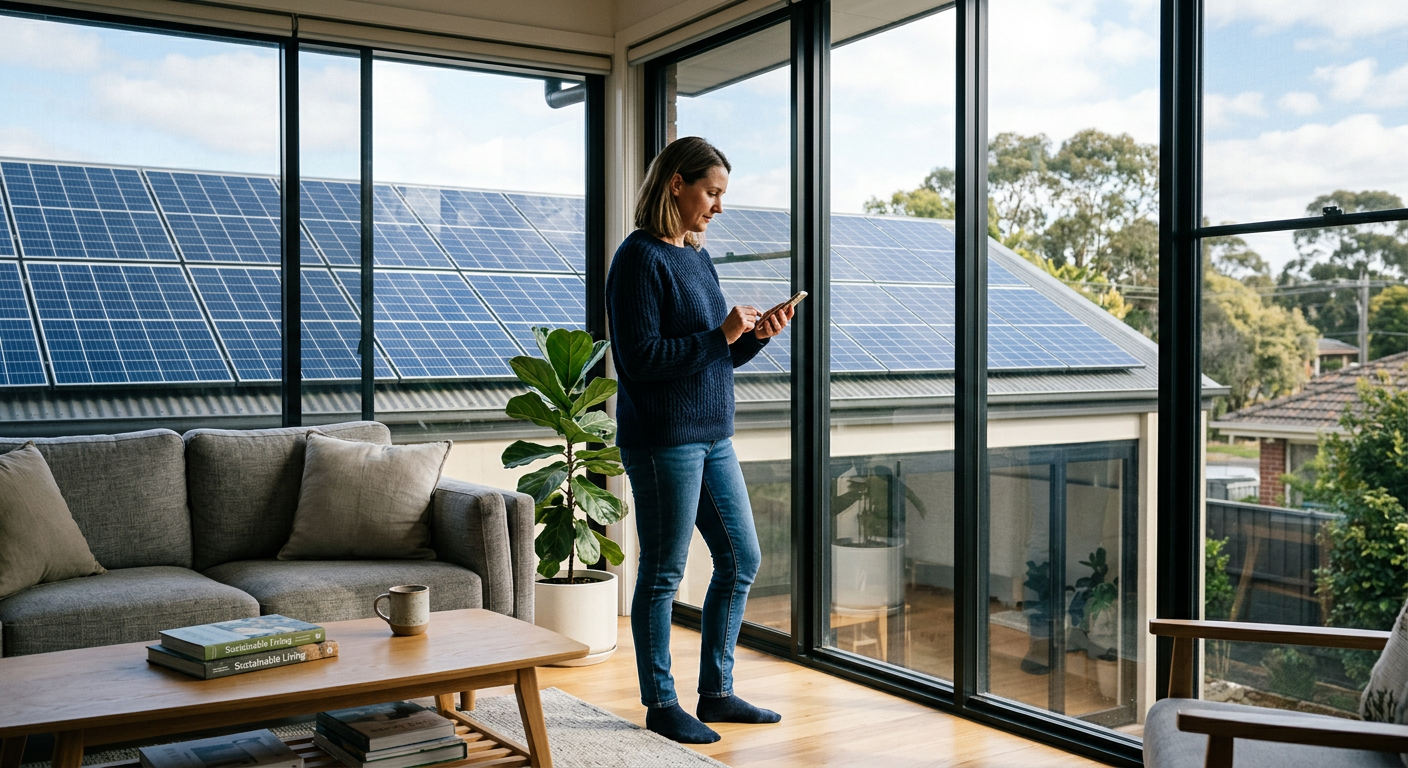
Your monitoring system is your first line of defense. When production drops without an obvious explanation, it warrants investigation.
When to Investigate Yourself
- Weather-related dips. Cloudy days, smoke, and snow all reduce production. Check local weather to confirm conditions match your monitoring data.
- Seasonal changes. Production naturally drops 40 to 50 percent from June to December due to shorter days and lower sun angle. This is normal. Review the seasonal expectations for your system.
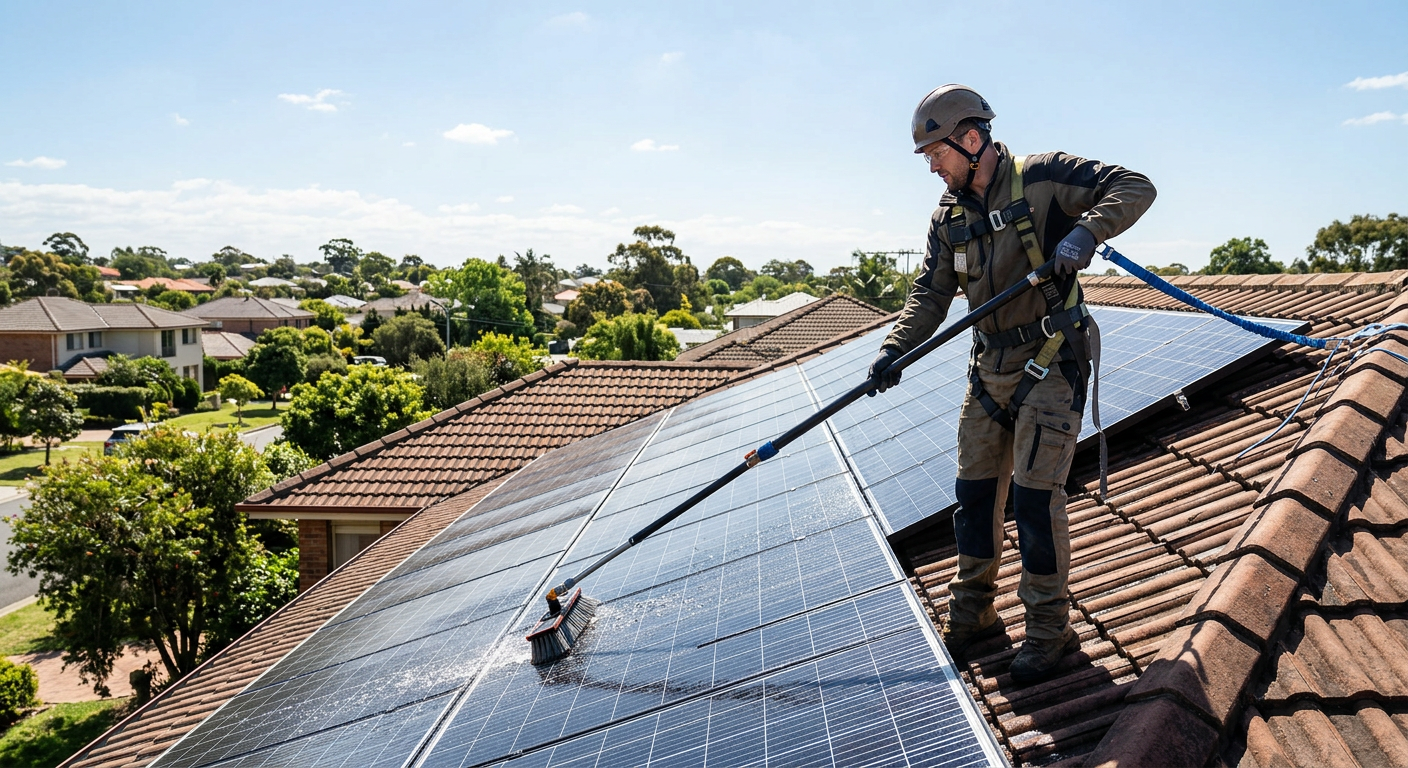
- Soiling. Dusty panels produce less. Check if your panels look dirty and clean them before calling for service.
- New shading. A growing tree, new construction, or even a satellite dish on a neighbor's roof can create new shadows. Check for shading during the time of day when production drops.
When to Call a Professional
Call if production drops more than 15 percent compared to the same period last year and you have eliminated weather, soiling, and shading as causes. Potential professional issues include:
- Failed microinverter or power optimizer
- String wiring problem reducing entire string output
- Inverter efficiency degradation
- Panel damage not visible from the ground
- Electrical connection issues
Call immediately if production drops to zero on a sunny day and you have verified that:
- The main solar breaker is not tripped
- The DC disconnect is in the ON position
- Your utility is not experiencing an outage
- Your inverter display shows no lights or shows error codes
A complete production stop usually indicates an inverter failure, breaker trip, or wiring issue — all of which require professional diagnosis.
Warning Sign 2: Inverter Error Codes and Alerts
Modern inverters communicate problems through error codes, warning lights, and monitoring alerts. While some errors are temporary and self-resolving, others require professional attention.
Self-Resolving Errors (Wait 24 Hours)
Grid voltage or frequency error: Your inverter detected the grid operating outside normal parameters and shut down temporarily. This is a safety feature. Most grid errors resolve within minutes to hours as the utility corrects the condition.
Overtemperature warning: On extremely hot days, inverters may temporarily reduce output (derate) or shut down. Production resumes as the temperature drops in the evening. If this happens regularly, the inverter location may need better ventilation.
Communication error: Your inverter lost internet connectivity, which affects monitoring but not production. Check your WiFi or Ethernet connection. Reboot your router if needed.
Errors That Require Professional Attention
Ground fault: The inverter detected current leaking to ground through the panel frames, mounting system, or damaged wiring insulation. The inverter shuts down for safety and will not restart until the fault is resolved. Do not attempt to reset or override ground fault protection.
Possible causes:
- Water infiltration in a junction box or connector
- Animal damage to wiring insulation
- Cracked panel with moisture ingress
- Deteriorated wiring insulation
Arc fault: The inverter detected electrical arcing (sparking) in the DC circuit. This is a fire safety feature. The system shuts down and requires professional inspection before restart.
Possible causes:
- Loose DC connector
- Damaged wire
- Corroded connection
- Animal chewing damage
Isolation fault: Similar to a ground fault, indicating compromised insulation between the DC circuit and ground. Requires professional diagnosis.
Repeated breaker trips: If your solar breaker trips and trips again after reset, there is an underlying issue. Do not keep resetting it — call a professional.
Warning Sign 3: Physical Damage
Any visible physical damage to your solar panels, wiring, or mounting equipment warrants professional assessment.
What to Look For (Ground-Level Visual Inspection)
Cracked or shattered glass. Hail, fallen branches, or thermal stress can crack panel glass. A cracked panel may still produce some electricity but is compromised — moisture can enter, creating electrical hazards and accelerating degradation. Cracked panels should be replaced under warranty.
Discoloration or browning. Yellowing or brown spots on the panel surface indicate encapsulant degradation or hot spots. While a small amount of yellowing over many years is normal, significant or localized discoloration is a warranty issue.
Sagging or displaced panels. Panels that appear shifted, tilted, or sagging relative to their neighbors may have mounting hardware issues. This can indicate loose bolts, failed clamps, or structural problems.
Exposed or damaged wiring. Any visible wire damage — frayed insulation, disconnected conduit, animal chew marks — is a safety concern and requires immediate professional repair.
Water stains or dripping. Water stains on your ceiling beneath the solar array may indicate a roof leak at a mounting attachment point. Report this to your installer promptly — most roof leaks related to solar installation are covered under the installer's workmanship warranty.
After Major Weather Events
Colorado's weather can be severe. After significant events, perform a visual ground-level inspection:
After hailstorms: Check for cracked glass, dents in frames, or damage to conduit. Document any damage with photos for insurance and warranty claims. Colorado homeowners' insurance typically covers hail damage to solar panels.
After high winds: Look for shifted panels, displaced wiring, or debris on the array. Check that the racking system appears intact and all panels are securely mounted.
After heavy snow: Once snow melts, check that all panels are clear and that snow sliding off panels did not damage gutters, landscaping, or the panels themselves.
After lightning strikes (nearby): Lightning can damage inverters and monitoring electronics even without a direct strike. Check that your system is producing normally after nearby lightning.
Warning Sign 4: Unusual Sounds or Smells
Solar systems are essentially silent. If you notice sounds or smells, something may be wrong.
Buzzing or humming from the inverter: A slight hum is normal for string inverters under load. Loud buzzing, clicking, or grinding is abnormal and may indicate a failing component.
Buzzing from the roof: Could indicate loose hardware vibrating in the wind or an electrical arcing issue. If it occurs only during windy conditions, it is likely a loose component. If it occurs during calm, sunny conditions, it could be electrical — call a professional immediately.
Burning smell near the inverter or electrical panel: This is an emergency. Turn off the solar breaker, turn off the DC disconnect (if safely accessible), and call your installer immediately. A burning smell indicates overheating connections that could be a fire risk.
Crackling or popping from the roof: Could be normal thermal expansion as panels heat up in the morning or cool in the evening. However, crackling during peak production on a hot day could indicate arcing. If you are unsure, err on the side of caution and call for inspection.
Warning Sign 5: Electricity Bill Increases
If your electricity bill increases unexpectedly after having been stable with solar, your system may have an issue.
Diagnostic Steps
-
Check your monitoring data. Is production lower than expected? If monitoring shows normal production but your bill increased, the issue is likely increased consumption, not a solar problem.
-
Check for consumption changes. Did you add an EV, install a pool heater, or run more AC this summer? Increased consumption with stable solar production means you are simply using more electricity than your system produces.
-
Check your utility rate. Did your rate increase? Rate adjustments happen annually and can increase your bill even with the same net usage.
-
Check net metering. Did your utility change your net metering arrangement? Some utilities have moved customers to less favorable billing structures.
-
If none of the above explains it, call your installer for a system evaluation. You may have an equipment problem that is not showing obvious error codes but is reducing production.
Warning Sign 6: Your System Is Getting Old
Annual Professional Inspection (Recommended)
We recommend a professional inspection every 2 to 5 years for newer systems and annually for systems older than 10 years. A professional inspection includes:
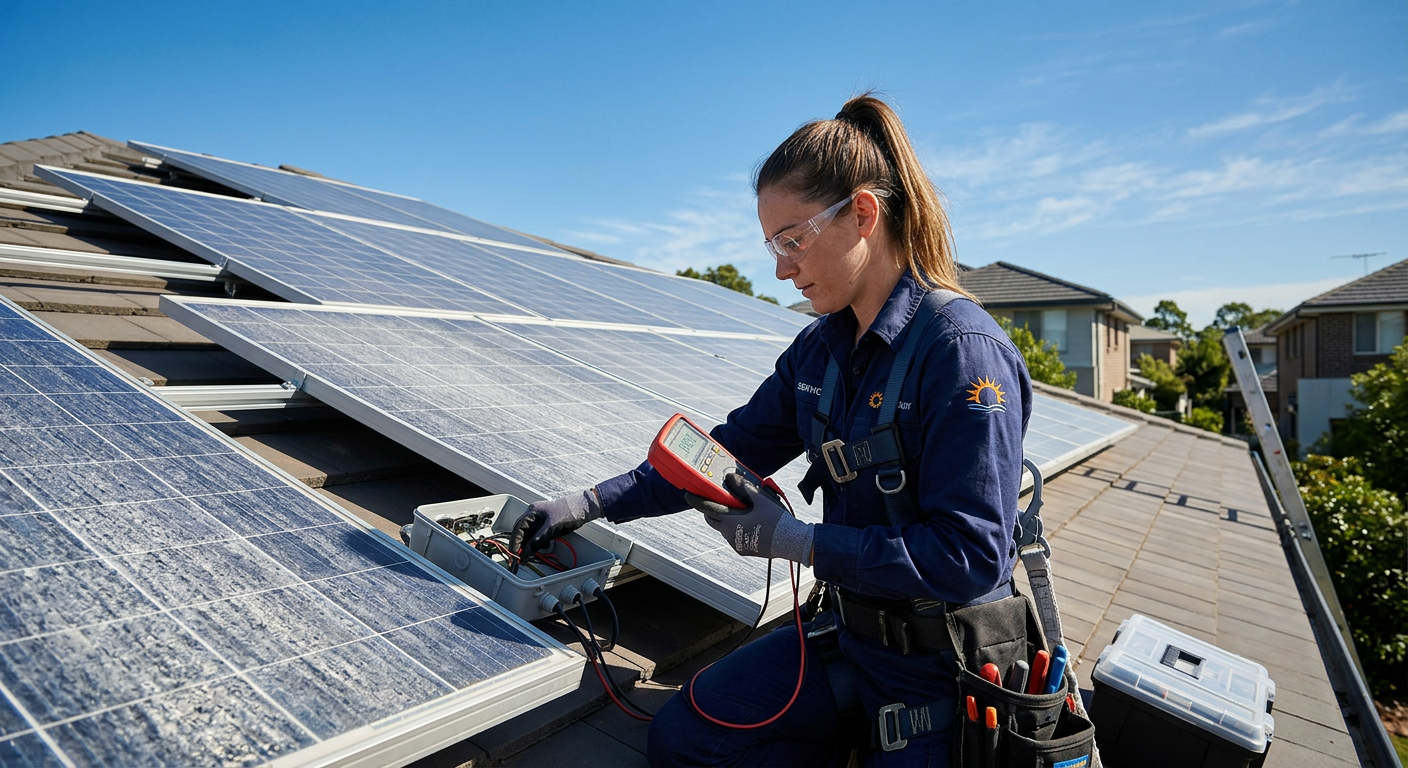
- Electrical testing — Verify DC string voltages, AC output, and ground continuity
- Thermal imaging — Infrared scan to detect hot spots, failing connections, and cell defects invisible to the naked eye
- Mechanical inspection — Check torque on mounting bolts, condition of flashing and sealants, and integrity of racking
- Wiring inspection — Check all conduit, connectors, junction boxes, and wire insulation for damage or degradation
- Inverter diagnostics — Download error logs, verify firmware is current, and check component health
- Production analysis — Compare current output to expected output based on system age and conditions
Midlife Inverter Check (Year 10-12)
String inverters typically last 10 to 15 years. Around year 10, have your inverter inspected and consider:
- Warranty status — is your inverter approaching warranty expiration?
- Performance — has efficiency declined?
- Technology — would a new inverter with battery compatibility or monitoring improvements be worth the upgrade?
Systems with microinverters (Enphase) or power optimizers (SolarEdge) have 25-year warranties and typically do not need midlife replacement.
ProGreen Solar's Service Guarantee
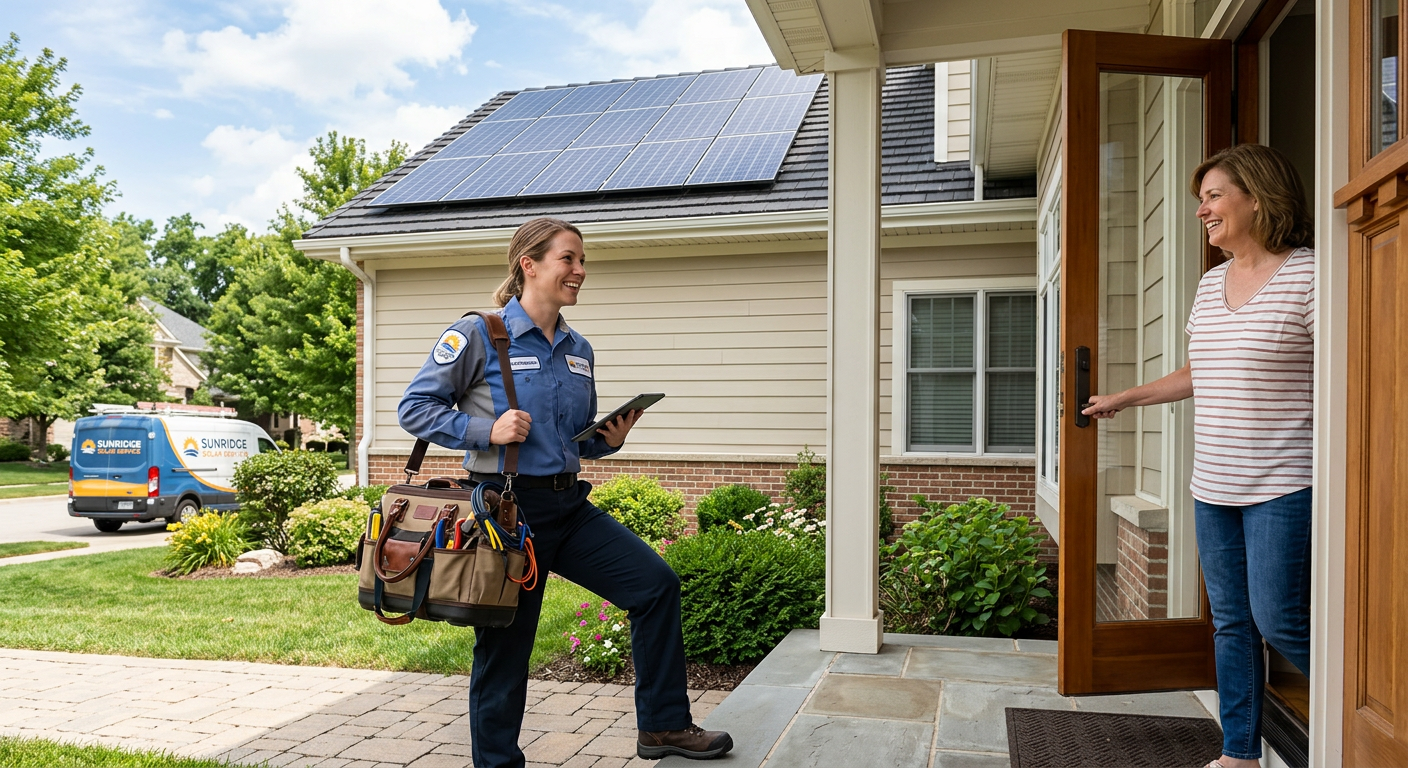
At ProGreen Solar, our relationship with customers does not end at installation. We provide:
Workmanship warranty: Our installation workmanship is warranted for 25 years. If a roof leak, wiring issue, or mounting problem is traced to our installation, we fix it at no cost.
Manufacturer warranty support: We handle all manufacturer warranty claims on your behalf for panels, inverters, and batteries. You do not need to navigate manufacturer customer service — we manage the process.
Service response: We respond to service requests within 24 to 48 hours for non-emergency issues and same-day for emergency situations (ground faults, arc faults, burning smells).
Monitoring support: We monitor our fleet of installed systems and proactively contact customers when we detect anomalies that may indicate problems.
Maintenance packages: For customers who want proactive maintenance, we offer annual inspection and cleaning packages that keep systems performing at their best.
The Decision Framework
Here is a simple decision tree for solar system issues:
Is anyone in immediate danger? (Smoke, fire, burning smell, exposed live wires)
- Yes: Turn off the system at the main breaker, call 911, then call us.
- No: Continue below.
Is the system producing zero power on a sunny day?
- Yes: Check breakers and DC disconnect. If both are on and utility power is present, call a professional.
- No: Continue below.
Is there a persistent error code?
- Yes: Note the code and call your installer. Do not reset ground faults or arc faults without professional guidance.
- No: Continue below.
Is there visible physical damage?
- Yes: Document with photos and call your installer for warranty assessment.
- No: Continue below.
Is production down more than 15 percent vs. same period last year?
- Yes: Rule out weather, soiling, and shading. If unexplained, call a professional.
- No: Your system is likely operating normally. Continue routine monitoring.
Your Solar System Deserves Expert Care
Solar panels are a 25 to 35 year investment. Protecting that investment with prompt professional attention when warning signs appear ensures you capture every kilowatt-hour of production and every dollar of savings over the system's lifetime.
If you are experiencing any of the warning signs described in this guide, call ProGreen Solar at (303) 484-1410. Our service team will diagnose the issue, determine whether it is covered under warranty, and get your system back to full production as quickly as possible.
Not yet a solar owner? Use our solar calculator to explore what a professionally designed, installed, and supported solar system can do for your home. With ProGreen Solar, you get not just panels on your roof — you get a team that stands behind your system for its entire life.