One of the biggest misconceptions about solar energy is that it requires a large cash outlay upfront. Many homeowners assume they need $15,000 or $20,000 in savings before they can even consider solar panels. That is simply not true.
In 2026, going solar with $0 down is not only possible — it is the most popular way Colorado homeowners go solar. And the best part? With $0 down solar loans, you own the system, receive the 30 percent federal tax credit, and often pay less per month than your current electric bill.
Let us explain exactly how it works.
How $0 Down Solar Works
The concept is simple: instead of paying the full cost of your solar system upfront, you finance it with a solar loan that requires no down payment. You make fixed monthly payments over 10 to 25 years, while your solar panels reduce or eliminate your electric bill from day one.
The Monthly Math
Here is a real example for a typical Colorado homeowner:
| Before Solar | After Solar (Day 1) |
|---|---|
| Electric bill: $155/month | Electric bill: $12/month (grid fee) |
| Solar payment: $0 | Solar loan: $128/month |
| Total: $155/month | Total: $140/month |
| Monthly savings: $15 |
From the very first month, you are paying less for electricity than you were before solar. And it gets better over time.
The Tax Credit Advantage
After your first year, you file your taxes and receive the 30 percent federal Investment Tax Credit. On this example system ($21,000), that is $6,300 back.
Many homeowners apply this tax credit directly to their loan principal. After re-amortization:
| After Tax Credit Applied | |
|---|---|
| Reduced loan balance | $14,700 |
| New monthly payment | approximately $98/month |
| Electric bill | $12/month |
| New total: $110/month | |
| Monthly savings: $45 |
Your monthly energy cost dropped from $155 to $110, and the gap widens every year as electricity rates rise while your fixed loan payment stays the same.
$0 Down Loan vs. $0 Down Lease: A Critical Difference
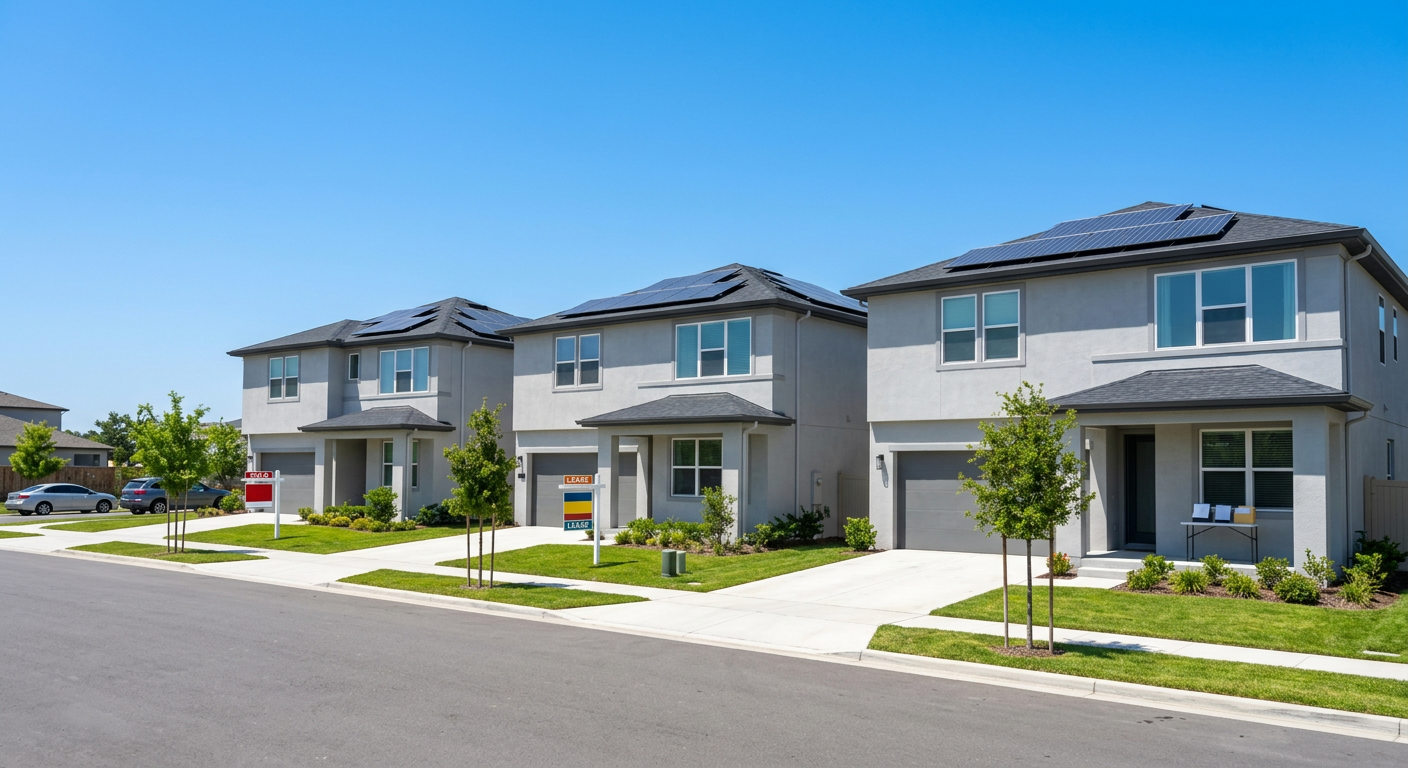
Both solar loans and solar leases can be marketed as "$0 down," but the financial outcomes are dramatically different.
$0 Down Solar Loan
- You own the system
- You claim the 30% federal tax credit ($4,500-$9,000+)
- Your home value increases
- You build equity in the system
- You can pay off the loan early anytime
- 25-year savings: $25,000-$35,000
$0 Down Solar Lease
- A company owns the system on your roof
- The company claims the tax credit (not you)
- Your home value impact is uncertain or negative
- You build no equity
- You are locked into a 20-25 year contract
- 25-year savings: $5,000-$15,000
The difference in 25-year savings is $10,000 to $20,000 or more. This is why at ProGreen Solar, we strongly recommend ownership through loans over leases for any homeowner who can benefit from the tax credit.
For a detailed comparison, read Solar Loans vs. Leases vs. PPAs.
Types of $0 Down Solar Loans
Standard Solar Loans
These are personal loans specifically designed for solar installations. They typically offer:
- $0 down payment
- Fixed interest rates (4-7% APR)
- Terms of 10 to 25 years
- No prepayment penalties
- Fast approval (24-48 hours)
Credit score requirements vary by lender but generally start at 650+ for the best rates.
Home Equity Loans (HELOC)
If you have significant equity in your home, a home equity line of credit can finance solar at very competitive rates (often 3-5% in the current environment). HELOCs use your home as collateral, which means:
- Potentially lower interest rates than solar-specific loans
- Interest may be tax-deductible (consult your tax advisor)
- Flexible draw and repayment schedules
- Your home is the collateral
FHA Title I Loans
Government-backed FHA Title I loans can be used for solar installations with favorable terms:
- Up to $25,000 for single-family homes
- Fixed rates, typically competitive
- No home equity required
- Available to homeowners with moderate credit
PACE Financing
Property Assessed Clean Energy (PACE) programs allow you to finance solar through your property tax assessment. The loan is attached to the property, not the homeowner:
- Transferred to the new owner if you sell
- Payments made through your property tax bill
- May have different qualification criteria than traditional loans
Qualifying for $0 Down Solar
Most homeowners qualify for $0 down solar financing. Here is what lenders typically evaluate:
Credit Score
- 720+: Qualifies for the best rates (4-5.5% APR)
- 680-719: Good rates available (5.5-6.5% APR)
- 650-679: Standard rates (6.5-7.5% APR)
- Below 650: May need a co-signer or alternative financing
Debt-to-Income Ratio
Lenders want to see that your total monthly debt payments (including the new solar loan) are manageable relative to your income. A debt-to-income ratio below 45 percent is typically required.
Home Ownership
You must own the home where the solar system is installed. The property serves as the basis for the loan (though most solar loans are unsecured and do not use your home as collateral).
Income Verification
Standard income verification (pay stubs, tax returns, or bank statements) is required to confirm your ability to make payments.
Maximizing Your $0 Down Solar Savings
Strategy 1: Apply the Tax Credit to Your Loan
When you receive your federal tax credit refund (typically $4,500-$9,000), apply it directly to your loan principal. This reduces your balance and monthly payment, increasing your ongoing monthly savings.
Some solar loan products have a "re-amortization" feature built in specifically for this purpose.
Strategy 2: Choose the Right Loan Term
Shorter loan terms mean higher monthly payments but less total interest:
| Loan Term | Monthly Payment* | Total Interest | Total Cost |
|---|---|---|---|
| 10 years | $223 | $5,760 | $26,760 |
| 15 years | $172 | $9,960 | $30,960 |
| 20 years | $147 | $14,280 | $35,280 |
| 25 years | $128 | $17,400 | $38,400 |
*Based on $21,000 at 5.5% APR before tax credit application.
Our recommendation: Choose a term where your monthly payment is at or below your current electric bill. This ensures savings from day one. You can always pay extra to shorten the loan.
Strategy 3: Avoid Hidden Dealer Fees
Some solar financing products include "dealer fees" — an origination fee of 10 to 25 percent that is rolled into the loan amount. A $21,000 system with a 20 percent dealer fee becomes a $25,200 loan. The advertised interest rate may look low (even 0.99%), but the actual cost is much higher.
How to spot dealer fees: Ask your installer directly: "Does this loan include any dealer fees or origination fees?" If yes, calculate the true cost and compare to a standard loan without dealer fees.
At ProGreen Solar, we work with lending partners who offer transparent terms without hidden dealer fees. The price on your proposal is the amount financed — no surprises.
Strategy 4: Use Rising Rates to Your Advantage
Your solar loan payment is fixed. Your electricity savings grow every year as utility rates increase. By year 5, your monthly savings may be $30 to $50 more than year 1. By year 10, the gap may be $60 to $100+. This compounding benefit makes solar an increasingly valuable asset over time.
Real Customer Scenario
Here is a real-world projection for a Colorado homeowner going solar with $0 down:
Profile: Family of four in the Denver metro area. 2,200 sq ft home. Monthly electric bill averaging $155. Good credit (720+).
System: 7.2 kW system with Enphase microinverters and REC Alpha panels
| Metric | Value |
|---|---|
| System cost | $22,000 |
| Down payment | $0 |
| Loan: 25 years at 4.99% | $128/month |
| New electric bill | $12/month |
| Monthly cost with solar | $140/month |
| Monthly savings (year 1) | $15/month |
| Tax credit received (spring) | $6,600 |
| Monthly payment after tax credit applied | $94/month |
| Monthly savings (year 2+) | $49/month |
| Monthly savings (year 10) | $85/month |
| Loan payoff | Year 25 |
| Monthly savings (year 26+) | $240+/month (just avoided electric bill) |
| 25-year total savings | $28,000+ |
| Home value increase | $28,800 |
This homeowner saves money from month one, builds $28,800 in home equity through the solar system, and accumulates $28,000+ in electricity savings over 25 years — all with zero dollars out of pocket.
Frequently Asked Questions
What if my credit is not great?
If your credit score is below 650, you may still qualify through certain lenders at higher rates, or with a co-signer. You might also consider improving your credit for 6 to 12 months before applying — the 30 percent ITC is available through 2032, so there is time.
Can I pay off my solar loan early?
Yes. Most solar loans have no prepayment penalties. If you receive an inheritance, bonus, or other windfall, you can pay down or pay off your solar loan at any time without fees.
What happens if I sell my home?
You can either pay off the remaining loan balance from the sale proceeds (your home's increased value more than covers it) or some loan types can be transferred to the buyer.
Does the loan affect my ability to get a mortgage?
A solar loan is a debt obligation that lenders will consider. However, the reduced electric bills offset the loan payment in most debt-to-income calculations. Many mortgage lenders view solar-equipped homes favorably.
Get Started with $0 Down
Going solar does not have to wait until you have saved up thousands of dollars. With $0 down financing, you can start saving money immediately while building equity in a system that increases your home's value.
Get your free solar estimate or call ProGreen Solar at (303) 484-1410. We will walk you through your financing options, run the numbers for your specific situation, and show you exactly how $0 down solar can work for your home. No money down, no surprises, no pressure.